About This Data

StateUniversity.com – U.S. University Directory   [ Home :: University List :: California ]

See also:

University of California-Los Angeles Introduction

Increase your salary, get your degree in your spare time - FREE Application to University of Phoenix for a limited time

UCLA is like a city within a city, drawing more than 60,000 people daily to its 419-acre campus, nestled in the hills of west Los Angeles five miles from the Pacific Ocean.

I love the view from the top of Janss Steps. Looking west, you can see the residence halls rising above the green athletics field and Drake Stadium. In the distance are the Santa Monica Mountains. Looking east, you face the heart of campus, where Royce Hall and Powell Library, the campus’ oldest and most famous buildings, stand majestically. Between them is a beautiful quad area and a brick fountain. Just breathtaking!

The “metropolis” of UCLA includes some ten libraries, two museums and an art gallery, three gardens, an elementary school, day-care facilities, residential complexes and buildings that house nearly 7,000 people, several theaters and performing arts auditoriums, stores, restaurants, gyms, a basketball arena, and a hospital. Additionally, the campus has its own police department, a chiller/cogeneration plant that assures the campus of low-cost power, hot water, and efficient cooling, its own postal system, a fleet of buses, and several newspapers.

In fact, UCLA and Los Angeles have nurtured one another through the years, ever since the precursor to UCLA, a two-year teaching college, was established in the little pueblo town of Los Angeles in the 1880s. As Los Angeles grew, so did UCLA. Founded in 1919, the university moved to its current Westwood home in 1929.

From then on, both the school and the city enjoyed phenomenal growth and development. Today, Los Angeles has the second largest population in the United States, and UCLA educated 37,000 students and is the most popular university in the United States among applicants.

In just over eighty years, the university has earned a worldwide reputation for the excellence of its programs and the achievements of its students and faculty. It has distinguished itself as the only campus among the nation’s top ten research universities that was established in the twentieth century.

UCLA is a large and complex institution devoted to undergraduate and graduate scholarship, research, and public service. Known for academic excellence, many of its programs are rated among the best in the nation, some among the best in the world.

UCLA really is the best of all worlds. Its prime location in metropolitan Los Angeles near the Pacific Ocean, Hollywood, and Los Angeles International Airport makes it an international gateway for culture and entertainment. The climate here is mild and pleasant all year. UCLA itself, as one of the finest research universities in the world, draws top scholars and scientists from around the globe, prime research dollars, worldwide attention for its cutting-edge research, and a reputation for all-around excellence. Many of its academic programs are ranked in the top ten nationally. Its medical center has been named the best hospital in the western United States for the thirteenth straight year. It is a leader in new technology. UCLA is one of the top athletics schools. It is known for the diversity and quality of its student body.

And UCLA’s reach can be felt all over the city, nation, and world, as the campus and its people outreach to those in need, from poverty-stricken inner-city Los Angeles families to war refugees. Both UCLA Extension, which is the largest urban-based continuing education program in the United States, and the Medical Center have several satellite sites to serve those all over the city. Professors conduct research in all parts of the world, and their work—whether it’s laying the groundwork for the Internet or finding a cure for AIDS— affects everyone.

Not only that, but UCLA is, from anyone’s perspective, a beautiful campus. The handsome red brick and terra-cotta Romanesque buildings at the center of campus evoke distinction and refinement, while some of the newer buildings shout innovation and creativity, and the gorgeous landscaping, striking architecture, and stunning views lend an inherent harmony to the entire campus.

No wonder UCLA is the most sought-after school in the nation!

University of California-Los Angeles Academics

As with anything, academic life at UCLA is all about balance. It’s about choosing a balanced class load, balancing class and work schedules, and balancing schoolwork and extracurricular activities.

It’s very easy, especially with new students, to lose that balance—for an active social life (i.e., partying) to leave no room for studying—or, at the other extreme, to become too overwhelmed with schoolwork to enjoy the recreational and extracurricular activities that are so important to a well-rounded college experience.

It often takes a while for students to find the groove that works for them—the best times to take classes, the best ways to study, how to approach test-taking, how to get away with the minimum amount of work—but trying to find that balance early on can be a real boost.

Orientation and academic counselors are available to help students plan class schedules and give advice about ways to lead a balanced college life. The campus also offers some academic skills and support workshops that can help as well.

The Basics

Unlike most schools, UCLA operates on a three-quarter, not a two-semester, system. This means more classes overall and less time per class, as instruction lasts only ten weeks a quarter plus one week for finals.

Students generally take three to four classes per quarter. Most lower-division classes earn five units each; undergraduates need a minimum of 180 units to graduate. Class time averages four hours a week per course. Grades are based on a four-point, letter-grade scale.

Students will take a combination of upper-division and lower-division coursework. Lower-division courses tend to be broad, introductory courses taken by first- and second-year students to satisfy general education requirements or major prerequisites. These are often large lectures with a smaller discussion section. Upper-division classes are more focused classes that tend to be taken usually during the junior and senior years of school by those majoring in the department.

The majority of UCLA’s 25,300 undergraduates choose majors from departments in the College of Letters and Science, which is the intellectual core of the campus with thirty-eight academic departments and thirty-seven specialized programs offering 103 majors. Additionally the campus has eleven professional schools, four of which grant undergraduate degrees: the arts and architecture, engineering, nursing, and theater, film, and television.

The members of the faculty at UCLA are some of the most distinguished in the world; among them are Nobel Laureates, Guggenheim fellows, Fulbright scholars, and members of the National Academy of Sciences and the American Academy of Arts and Sciences. Students will find them to be very knowledgeable and passionate about their subject matter, and most take a genuine interest in their students. The discussion sections and some seminar classes are usually led by graduate student teaching assistants.

Class grades are usually determined by some combination of midterms, finals, quizzes, paper, research or other projects, homework assignments, and participation. Students must declare a major by their junior level of school. The average time to graduation is four years and a quarter.

North and South Campuses

There exists at UCLA a healthy rivalry between its liberal arts and its science majors. An invisible line separates the north campus from the south campus, which indicates not just a physical distinction but an academic one as well: The north campus houses the arts, theater, film and television, the humanities, and the social sciences, while engineering, the medical complex, and the life and physical sciences call the south campus home.

General Education Clusters

Students are required to take, usually during the first couple of years of study, a set of general education (GE) courses intended to introduce them to the richness and diversity of the various academic departments and broaden their intellectual perspective. Taking GE courses is also a way for students in search of a major to explore different academic areas.

UCLA recently revamped its general education requirements by reducing the number of required courses to focus on writing, discussion, and broad theory in three “foundation” themes: arts and humanities, society and culture, and scientific inquiry.

Entering freshmen can gain invaluable academic experience by taking a Freshman Cluster course. Each cluster course spans three quarters and is team-taught by faculty members from various disciplines across campus. Each course focuses on a common theme, such as the global environment, and presents students with an interdisciplinary perspective for approaching certain problems. Freshmen get priority in the new Fiat Lux Program which provides seminar courses for small groups of students (15) with UCLA’s top faculty in a broad range of subjects.

Taking a cluster course is also a good way for incoming students to meet other freshmen and develop a sense of academic connectedness during the first year, get introduced to a variety of disciplines, and form relationships with faculty early on, as well as sharpen writing, quantitative reasoning, critical thinking, and information literacy skills that they need to excel at UCLA.

Undergraduate Research

UCLA is devoted to providing interested undergraduates with opportunities to conduct research, either alongside faculty or on their own projects. Several renowned programs support undergrads in independent research or partner students with faculty mentors in valuable research training and experience for advanced work and preparation for graduate school.

The Undergraduate Research Centers, which support scholarly, critical, and creative undergraduate research in the college, provide individual counseling, administer stipends and scholarships, sponsor the undergraduate research journals, and organize campuswide undergraduate research events, among other roles.

Additionally, students can engage in research for academic credit by enrolling in classes with a research component. This can include classes where a research assignment or paper is part of the coursework; special classes or programs within a department with a focus on research; or the departmental honors program, which awards honors to students who complete two quarters of individual research culminating in a senior thesis.

Many students also find jobs in labs or as assistants to professors, which is also a great way to gain exposure to research.

Research has provided me with a very rewarding way to not only learn about science, but also contribute to its body of knowledge. Most importantly, it has fostered my independence. From presenting work at professional conferences to the writing of papers and abstracts, I was forced to do many things on my own which were quite different from my classroom work.

Other Educational Opportunities

For those with personal or professional interests outside of Los Angeles, or a sense of wanderlust, there are several ways for students to combine education with travel.

The most obvious choice is to spend a year abroad. The UC system’s Education Abroad Program (EAP) offers study opportunities at more than one hundred universities in thirty-six countries. Students continue to be registered at UCLA and receive university units, grades, and financial aid.

If the year-long program is too much of a commitment, EAP also has one-term programs and summer programs in a variety of countries. UCLA Summer Sessions also offers summer programs abroad. In these programs, UCLA faculty members teach UCLA courses in a foreign city that is relevant to the subject matter.

The Center for American Politics and Public Policy, which sponsors the Quarter in Washington, D.C. Program, and the EXPO Internship and Study Abroad Services are two other sources for national and international study opportunities. The Center for Community creates opportunities for students to enhance their studies with work in the community or government agencies.

University of California-Los Angeles Admissions

If you decide to apply to UCLA, you’re in good company: No other university in the nation receives as many applications for freshman admission as UCLA, making it the country’s most popular school among applicant four years running with more than 44,000 applications received for a recent freshman class. Of those applicants, UCLA admitted 10,455 and enrolled 4,257. Because of the sheer number of students hoping to be admitted to UCLA, getting in has, predictably, become extremely competitive.

Grades and Test Scores

Here’s a sense of what it takes in terms of grades and test scores: The overall grade point average of those students admitted for the same freshman class, including extra weight given to honors and advanced placement courses, was 4.23. The raw grade point average, without calculating extra points for honors and AP courses, was 3.77. The median SAT I score of admitted students was 1,322. And admitted students took an average of 18.2 honors and advanced placement courses.

Academic Performance and Personal Achievement

While strong academic performance is exceedingly important and at least half the entering class is selected solely on academic criteria, UCLA does admit some students on a combination of academic performance and personal achievement. Personal achievement includes leadership and initiative in school or community organizations, special talents, ethnic/cultural awareness, and overcoming general life challenges particular to the student’s environment, personal/family situation, social or economic difficulties, or lack of educational opportunities.

The vast majority of Bruins come from California, though students hail from all over the nation and world. In fact, UCLA is considered one of the most racially, ethnically, and culturally diverse universities in the country and, as such, is especially committed to recruiting top underrepresented high school students.

Personal Essay

In addition to requiring the SAT or ACT standardized tests and two SAT Subject Tests— in two different subject areas—UCLA also asks applicants to submit a personal essay. No topic is specified for the essay; its purpose is to give admissions officers a better, more personalized feel for the applicants since UCLA does not conduct interviews as part of the admissions process. The personal statement also gives applicants a chance to provide information about themselves complementary to the rest of the application.

Application Filing

The application filing period for freshmen applying for fall admission of the following year is November 1–30. Application forms are available from California high school and community college counseling offices and at University of California campuses. One application can be used to apply for any of the University of California’s eight campuses that offer undergraduate instruction. The application cost for each school is $40. Notification of admission is sent out in March.

Transferring

Another, and somewhat less cutthroat, way to get into UCLA is by transferring from a community college. A lot of partnership programs are in place between UCLA and California community colleges that help facilitate the transfer process.

University of California-Los Angeles Financial Aid

Increase your salary, get your degree in your spare time - FREE Application to Search Online Universities for a limited time

UCLA is consistently ranked one of the top ten universities in the nation in surveys of academic excellenceand is considered—at under $4,225 a year (for in-state students)— a real bargain among the most competitive colleges. However, students—and their families—must still come up with the money as well as cough up an additional several thousand for books and living expenses. This is where financial aid comes in.

More than fifty percent of UCLA students receive some sort of financial aid; the average annual award amount is $8,000. Many also work part time.

Federal, state, and university funds provide four types of aid: scholarships based on grades and other achievements; need-based grants; loans that must be paid back after graduating; and work-study money, which is need-based and earned through part-time employment.

Entering undergraduates can apply for many state and federal scholarships in the scholarship section of their University of California application. Between January 1 and March 2, students must submit the Free Application for Federal Student Aid (FAFSA) to qualify for other forms of financial aid.

FAFSA applications are then evaluated for financial need, which is calculated by subtracting what students and their families can contribute from the estimated cost of education. The expected contribution amount takes into account the student’s and parents’ total income and assets (excluding home equity), savings, taxes, mandatory living expenses, parents’ ages and need for retirement income, number of children and other dependents in the family household, family members in college, and certain unusual financial circumstances.

The university then creates an awards package using several funding sources to cover the balance. Aid packages contain the maximum grant and university scholarship amount for which a student qualifies. Funds are generally distributed evenly over fall, winter, and spring quarter. In most cases, students must maintain at least half-time enrollment to receive aid.

Additionally, there are numerous opportunities for private scholarship, and the financial aid office and other resources can help match students with scholarships. UCLA and Westwood also offer plenty of opportunities for student employment for those who choose to work to help pay for school.

University of California-Los Angeles Students

UCLA is one of the most populated campuses nationwide, with several times the number of students as at a small, liberal arts college, so for a new student, being just one of so many faces in the crowd can be intimidating. But who’s got the time to feel out of place or lonely when there are so many different ways to meet people and get involved?

Granted, it’s not always easy to meet other students in a 200-person lecture, so the key to a large social circle at UCLA is really to break the campus down to its component parts. Again, think of the campus as a large city, and go out and find a sense of community in smaller-group situations, whether it’s through involvement in a community service group, participation in recreation class, or working on the student newspaper. Small group settings can be found in most classes. More than half of all classes have twenty-five students or less.

The great thing is that you’ll make friends across the campus, and through those people meet more and more people. Ninety percent of freshmen live on campus, and the vast majority of all undergrads live within a half-mile of UCLA.

So it really doesn’t matter if you don’t know anyone, you soon will. Just have fun doing the things that interest you—UCLA and Los Angeles certainly aren’t lacking for activities, just read on!—and before you know it, you’ll be making friends and leading an active social life.

Dorm and Apartment Life

The best way to feel a part of the college social community is to live on or near campus. The majority of the noncommuting student population lives either in residence halls, suites, and complexes, which are situated at the northwest part of campus, or in Westwood apartments located in a pocket southwest of the campus.

For freshmen, social life tends to revolve around the dorms. At UCLA, about ninety-three percent of incoming freshmen live on campus, so it’s really the best way to meet others during the first year. Students will have close contact with their roommates and those on their floor, and will tend to make many friends—some lifelong—from this group.

Students also have the option of choosing a “theme” floor, in which all those on the floor share a similar interest, such as the great outdoors, the arts, or health and fitness. All residence halls and complexes are coed except for designated single-sex theme floors.

UCLA’s Office of Residential Life offers a variety of academic and social programs for residents, while formal and informal gatherings, outings, parties, and other activities are always taking place, as well.

Looking back at my freshman year in the dorms brings back many fond memories. There was the time when eight or nine of us packed in a pickup truck to go to the USC football game. I remember my friends singing karaoke on my stereo to the Greasesoundtrack. I was so happy when some twenty people piled into my dorm room at midnight and sang “Happy Birthday” to me when I turned eighteen. I remember us ordering Thai food when late-night hunger struck. I remember us throwing water balloons out our sixth-story window at unfortunate passersby. I’ll never forget creating gross concoctions with our left-over foods and daring each other to eat them. And I’ll always remember a gaggle of us girls having long, serious talks, giving each other makeovers, and getting ready to hit the town.

While apartment life is less social and structured than living in the dorms, many students by their second or third year have their groups of friends, have found their interests and niches, and feel the need to be more independent. Most often, four students share a two-bedroom apartment, and social life tends to revolve around roommates and friends, hanging out at the apartment, or going out to parties or Westwood.

Parties and Nightlife

The apartments are the setting for a lot of the parties students attend. Usually several apartment parties take place each Friday and Saturday night, and the students who hold them often make them open to anyone who wants to come.

Fraternity houses usually hold parties every Thursday night for members and invited and female guests. Each house also has one or two big theme parties a year that are open to most students. Fraternities and sororities also often have private parties, exchanges, and other activities for their members.

By the time the students who used to frequent parties reach the age of twenty-one, they can often be found hanging out at Westwood bars and restaurants, where the big student nights tend to be Tuesday, Thursday, Friday, and Saturday.

The students who have cars and find that Westwood has grown too small for them often explore the nightlife offered by Santa Monica, Hollywood, and Manhattan and Hermosa Beach hotspots. UCLA is a designated “transportation hub” for three major municipal bus services. The campus is served by hundreds of bus stops each day.

Students can also often be found catching a new movie being shown at one of Westwood’s numerous theaters or hanging out at restaurants and coffeehouses in Westwood.

Campus Life

With more than 850 campus clubs and organizations, from student government to sports clubs, cultural organizations to fraternities and sororities, one would be hard-pressed not to find a group to join. But if so, then with a minimum of three people, students can start and register their own campus group.

Here is just a sampling of the variety of campus groups and programs available to students.

  • Aspiring writers, journalists, photographers, and designers may find invaluable experience working on the student paper, the Daily Bruin, which is one of the largest daily newspapers in Los Angeles.
  • The talented and the spirited might find a spot with the UCLA Marching Band or on the Spirit Squad as a cheerleader or yell leader.
  • The Undergraduate Students Association Council has six elected offices (president, internal vice president, external vice president, three general representatives) and seven student commissions (Academic Affairs, Campus Events, Community Service, Cultural Affairs, Facilities, Financial Supports, and Student Welfare). How about running for office or joining the staff of an elected student official?
  • The Community Service Commission serves Los Angeles through more than twenty programs to help disenfranchised groups such as juvenile inmates, the homeless, the mentally and physically disabled, the impoverished, and the abused. More than 2,500 students offer their services on a volunteer basis. Numerous other opportunities for volunteer work and community service exist across campus.
  • Help bring entertainment and cultural programming to campus by joining the Campus Events Commission or the Cultural Affairs Commission. Campus Events is responsible for bringing speakers such as Bill Gates, David Letterman, Whoopie Goldberg, Jesse Jackson, and Matt Groening to campus, as well as bands such as Rage Against the Marchine, Green Day, 10,000 Maniacs, and No Doubt for concerts. Cultural Affairs sponsors WorldFest, a celebration of campus diversity, and the annual Memorial Day weekend Jazz/Reggae Festival.
  • UCLA has an active Greek system. More than forty organizations, many with their own houses, provide members with multiple opportunities for social and academic support, leadership development, community service, and networking. At various times during the year, but particularly during the fall and spring, the various houses launch a series of “rush” events to recruit new members. About ten percent of the student population takes part in Greek life.

Feeding the homeless through Hunger Project was one of my greatest memories of UCLA. I feel like I made a true contribution to society. I took action in a cause that I truly believed in. Being at UCLA opened that door of opportunity for me and motivated me to create change.

Recreation

For those who enjoy playing sports as much as watching them, enter UCLA Recreation. The comprehensive recreation center includes facilities such as a weight room, tennis and racquetball courts, swimming pools, and a rock-climbing wall; programs such as martial arts, tennis, dancing, Tae-Bo and yoga classes; outdoor adventure trips; sailing, kayaking, and surfing lessons through the UCLA Marina Aquatic Center; private lessons; and refereed intramural sports competitions. Working out at the gym, taking some of the classes, or going on a trip are great ways to get in shape, let out some of that stress, and meet other students. It can also be a way to try new sports or discover one that can last a lifetime.

There are also plenty of opportunities at UCLA Recreation for student employment or involvement, from umpires for the IM tournaments to counselors for Bruin Kids summer camp; from lifeguards to class instructors and trip leaders. In most cases, the recreation center provides training for these positions.

Enrolled students do not have to pay anything extra for use of the facilities. A pass to take the drop-in fitness classes costs $45 a year. Some classes require a small fee. Classes at the marina and outdoor trips tend to be somewhat steeper, but still a bargain.

Los Angeles—Entertainment, Culture, and Beyond

Located in one of the largest, most vibrant, and well-known metropolitan cities in the world, UCLA offers its students Los Angeles as their backyard and playground. For those who love the outdoors, Los Angeles is just steps from the ocean, mountains, forests, rivers, and deserts, which means that activities such as surfing, rafting, snowboarding, hiking, camping, or just getting out of the city and looking at the stars in the clear night sky are less than a couple of hours drive away.

For another type of stargazer, Los Angeles is the place to be. Celebrities regularly come on campus to perform, give a talk, walk their dog, use the track, watch Bruin sports, or even get treated at the medical center. The campus has also hosted such events as rock concerts and the MTV Music Awards. Celebrities are routinely spotted in Westwood shopping, dining, or taking in a movie. Glamorous movie premieres for Hollywood blockbusters attract top stars to Westwood theaters on what seems to be almost a weekly basis. And that’s just in Westwood, with no mention of the famed Sunset Strip bars, Hollywood clubs, trendy restaurants, and chic Beverly Hills boutiques.

For a more refined sort of cultural pursuit, Los Angeles is also the home of the Getty Center, the premier $1-billion museum-cum-cultural center-cum-icon perched in the Brentwood hills just above campus. Other noted museums include the Los Angeles County Museum of Art and the Museum of Contemporary Art, as well as UCLA’s own Fowler Museum of Cultural History and the UCLA Hammer Museum. UCLA Performing Arts brings a roster of top international talents to perform, while Broadway productions often find their way to local venues such as the Ahmanson, the Pantages, and the Shubert theaters. Sports and music fans will find plenty of live athletic events and concerts at the Staples Center, Dodger Stadium, the Rose Bowl, the Great Western Forum, the Hollywood Bowl, and Universal Amphitheater.

Los Angeles is also the home of such top tourist attractions as Disneyland, Universal Studios, Six Flags Magic Mountain, Venice Beach, Mann’s Chinese Theater, and the Walk of Fame.

What college experience is complete without at least a couple of road trips to reminisce over with friends for years after? Las Vegas, San Diego, Santa Barbara, the San Francisco Bay Area, and Mexico, for example, are all within half a day’s drive away.

And for those whose sights are set even further, Los Angeles International Airport is less than ten miles away, convenient for spring break trips to Mazatlán and summer backpacking tours of Europe.

University of California-Los Angeles Athletics

Sports fans rejoice! With more national championships in men’s and women’s sports than any other university,UCLA is unsurpassed in the world of college athletics. When one talks about UCLA sports, one talks about winning championships, breaking records, and creating legends. UCLA has under its belt a total of 107 national championships, among them eighty-six NCAA team titles, the highest in the nation. Legendary coach John Wooden made UCLA a basketball institution when he led UCLA to a record-setting eighty-eight straight wins and ten national titles in twelve seasons.

UCLA has also been a consistent powerhouse in the Olympic Games. At the 2000 Sydney games, fifty-eight Bruins—alumni and current and incoming students—competed in fifteen sports, the most of any university. UCLA also ranked number one among all universities in gold medals (eight), overall medals (eighteen), number of different gold medalists (eight), and number of different medalists (seventeen). In fact, UCLA students and graduates have won so many gold medals that, as a group, they’ve consistently made the top ten on a country-by-country ranking. In a tally of gold medals, UCLA was the third most-decorated “country” in the 1984 Los Angeles games, the fourth in 1988 in Seoul, the ninth in 1992 in Barcelona, and the seventh in 1996 in Atlanta.

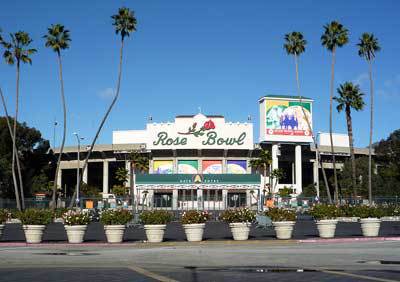
What does all this mean for UCLA students and Bruins sports fans? Come football season each fall, it means treks to the Rose Bowl in Pasadena, the nation’s most famous college football stadium and home to UCLA’s football team, for tailgating and barbecuing, exciting sports action, and suffusing feelings of school spirit and pride—just take a look at the alumni families in full Bruin regalia and you’ll understand. The annual UCLA vs. USC crosstown rivalry game is probably the most anticipated single annual sporting event. It’s highlighted by “Beat USC” week activities, including a huge pep rally and bonfire two nights before the game.

I remember when UCLA’s basketball team won the national championships in 1995. It was the most amazing, unforgettable feeling. My friends and I watched it on television and after the victory, we all walked into Westwood, where it seemed as though the whole school had gathered. So there we were, hundreds and thousands of proud and joyous Bruins celebrating, yelling, screaming, cheering, laughing, and hugging. It was my proudest Bruin memory ever!

Basketball season induces similar bouts of Bruin fanaticism. The most diehard students regularly camp out overnight in front of the ticket office to get the best student seats in the house—arena level at Pauley Pavilion. At the games you’ll find the atmosphere and the clapping, cheering, and chanting traditions infectious. Don’t worry if you can’t watch the games live: There is a good chance that a group of Bruins will be yelling and cheering, crowded in front of a television at someone’s apartment or at a bar, especially during “March Madness.” As the name would suggest, college basketball fans across the nation get a little insane for about two weeks every year during the NCAA basketball tournament, in which UCLA is a regular contender.

Those whose idea of sports enjoyment runs more toward the likes of volleyball, tennis, baseball, gymnastics, water polo, and track and field will still find plenty to cheer about at UCLA, which is also a national leader in those sports. Additionally, UCLA, on occasion, hosts major sporting events in its arenas. For example, the Mercedes-Benz Tennis Cup, which draws the world’s top male tennis players, is held annually at UCLA’s Los Angeles Tennis Center.

University of California-Los Angeles Alumni

UCLA graduates receive an education that prepares them for careers in almost any field, to be lead- ers, newsmakers, decision makers, policy makers, entrepreneurs. Alumni have found jobs in all fields, whether it’s in entertainment, sports, the corporate world, politics, or wherever they choose to be.

Some students get recruited or find jobs before graduating. Others find that the Career Center and Alumni Association provide a lot of career planning and networking advice and programs to help them find a job quickly. Many students also go on to graduate or professional school.

Prominent Grads

  • Tom Bradley, Former Mayor, Los Angeles
  • Lloyd Bridges, Actor
  • Ralph J. Bunche, 1950 Nobel Peace Prize Laureate
  • Carol Burnett, Actress-Comedienne
  • Benjamin Cayetano, Governor, Hawaii
  • Francis Ford Coppola, Screenwriter, Director, and Producer
  • R. Walter Cunningham, NASA Astronaut
  • James Dean, Actor
  • Agnes de Mille, Choreographer
  • Mike Medavoy, Chairman, Phoenix Pictures
  • Jim Morrison, Musician
  • Michael Ovitz, President, The Walt Disney Co.
  • Rob Reiner, Actor/Director
  • Tim Robbins, Actor/Director
  • Harold M. Williams, President and CEO, J. Paul Getty Trust
  • John Williams, Composer and Conductor

Information Summary

Ranks 91st overall and 7th in California

Increase your salary, get your degree in your spare time - FREE Application to University of Phoenix for a limited time
University of Phoenix
University of Maryland University College (UMUC)

Carnegie Foundation Classification

Research Universities (very high research activity)

UndergraduateArts & sciences focus, high graduate coexistence
GraduateComprehensive doctoral with medical/veterinary
Undergraduate PopulationFull-time four-year, more selective, higher transfer-in
EnrollmentMajority undergraduate
Size & SettingLarge four-year, primarily residential

General Characteristics

Highest offeringDoctoral degree
Calendar SystemQuarter
Years of college work requiredN/A
Variable TuitionYes

Special Learning Opportunities

Distance LearningYes
ROTC — Army / Navy / Airforce YesYes / Yes / Yes
Study AbroadYes
Weekend CollegeNo
Teacher CertificationNo

Student Tuition Costs and Fees

What are the typical tuition costs and fees for attending University of California-Los Angeles?

Ranks 143rd for total cost of attendance

  In District In State Out of State
FT Undergraduate Tuition N/A N/A $19,068
FT Undergraduate Required Fees $7,165 $7,165 $7,590
PT Undergraduate per Credit Hour N/A N/A N/A
FT Graduate Tuition N/A N/A $14,694
FT Graduate Required Fees $8,968 $8,968 $9,262
PT Graduate per Credit Hour N/A N/A N/A
Total Cost of Attendance — On-Campus $24,103 $24,103 $43,596
Total Cost of Attendance — Off-Campus w/out Family $22,135 $22,135 $41,628
Total Cost of Attendance — Off-Campus with Family $16,963 $16,963 $36,456

Student Tuition Costs for Professional Fields

What are the typical tuition costs and fees for getting a professional degree?

  In State Out of State
Medical Degree — Tuition N/A $12,245
Medical Degree — Required Fees $22,551 $22,551
Dentistry Degree — Tuition N/A $12,245
Dentistry Degree — Required Fees $26,266 $24,148
Law Degree — Tuition N/A $12,245
Law Degree — Required Fees $27,056 $27,056
Other Degree — Tuition N/A $12,245
Other Degree — Required Fees $28,447 $28,447

Student Tuition Cost History and Trends

Three year history and trends on the cost of attending

  In District In State Out of State
Published Tuition & Fees $6,504 trend  $7,165 $6,504 trend  $7,165 $24,324 trend  $26,658
  Cost (regardless of residency)
Books & Supplies $1,485 trend  $1,515
On-Campus – Room & Board $11,928 trend  $12,420
On-Campus – Other Expenses $2,178 trend  $3,003
Off-Campus w/out Family – Room & Board $9,000 trend  $9,537
Off-Campus w/out Family – Other Expenses $3,147 trend  $3,918
Off-Campus with Family – Room & Board $3,663 trend  $8,283

Admission Details

Application Fee RequiredN/A
Undergraduate Application Fee$60
Graduate Application Fee$60
First Professional Application FeeN/A
Applicants 47,317 (21,305 male / 26,012 female)
Admitted 12,188 (5,361 male / 6,827 female)
Admission rate 26%
First-time Enrollment 4,810 (1,952 male / 2,858 female)
FT Enrollment 4,712 (1,916 male / 2,796 female)
PT Enrollment 98 (36 male / 62 female)
Total Enrollment36,611

Admission Criteria

What criteria does University of California-Los Angeles use for admissions?

Required = Required, Recommended = Recommended, Neither required nor recommended = Neither required nor recommended
Open AdmissionsNo
Secondary School GPA / Rank / RecordRequired / N/A / Required
College Prep. CompletionRequired
RecommendationsN/A
Formal competency demoN/A
Admission test scoresRequired
TOEFLRecommended
Other testsN/A

Admission Credits Accepted

What types of credits does University of California-Los Angeles accept?

Dual CreditNo
Life ExperienceNo
Advanced Placement (AP)Yes

Athletics - Association Memberships

Sports / Athletic Conference Memberships NCAA
NCAA Football Conference Pacific-10 Conference
NCAA Basketball Conference Pacific-10 Conference
NCAA Baseball Conference Pacific-10 Conference
NCAA Track & Field Conference Pacific-10 Conference

ACT Test Admission

Ranks 91st for 75pctl scores

Applicants submitting ACT results 30%
Verbal scores (25/75 %ile) 24 / 31
Math scores (25/75 %ile) 25 / 31
Cumulative scores (25/75 %ile) 24 / 30

SAT Test Admission

Ranks 75th for 75pctl scores

Applicants submitting SAT results 99%
Verbal scores (25/75 %ile) 570 / 680
Math scores (25/75 %ile) 610 / 720
Cumulative scores (25/75 %ile) 1180 / 1400

Student Services

Remedial ServicesYes
Academic / Career CounselingYes
PT Cost-defraying EmploymentYes
Career PlacementYes
On-Campus Day CareYes
Library FacilityYes

Student Living

First-time Room / Board RequiredNo
Dorm Capacity13,319
Meals per Week19
Room FeeN/A
Board FeeN/A

Student Financial Aid Details

How many students use Financial Aid, and how much do they use?

University of California-Los Angeles Ranks 2638th for the average student loan amount.

  Average Users % of Attendees
Federal Grant Aid $3,275 1,399 pie   32%
State & Local Grant Aid $2,755 2,083 pie   47%
Institutional Grant Aid $7,556 2,411 pie   55%
Student Loan Aid $4,033 1,657 pie   38%
Any financial aid type   3,081 pie   70%

Student Enrollment Demographics

How many students are enrolled at University of California-Los Angeles?

  Men Women Total
Non Resident Alien
1,4591,1262,585
Black Non-Hispanic
4427271,169
Hispanic
1,8562,9194,775
Asian / Pacific Islander
5,3286,69812,026
American Indian / Alaskan Native
7096166
White Non-Hispanic
6,4346,76613,200
Race Unknown
1,3121,3782,690
Total 16,901 19,710 36,611

Student Graduation Demographics

How many students graduated at University of California-Los Angeles?

  Men Women Total
Non Resident Alien
433679
Black Non-Hispanic
6196157
Hispanic
191334525
Asian / Pacific Islander
7689341,702
American Indian / Alaskan Native
51116
White Non-Hispanic
6767331,409
Race Unknown
142165307
Total 1,886 2,309 4,195

Most Popular Fields of Study

The top 5 fields of study completed at University of California-Los Angeles.

  Men Women Total
187 535 722
320 319 639
432 182 614
317 284 601
144 391 535

Student Completion / Graduation Demographics

How many students are successful graduates?

  Non Resident Alien Black Non-Hispanic Hispanic Asian / Pacific Islander American Indian / Alaskan Native White Non-Hispanic Race Unknown Total
Advanced Legal Research/Studies, General (LL 15 2 1 18
Aerospace, Aeronautical and Astronautical Engineering 3 3 6 17 27 3 59
African Studies 3 3
African-American/Black Studies 18 1 19
Agricultural/Biological Engineering and Bioengineering 4 2 6
American Indian/Native American Studies 1 2 1 4
American Literature (United States) 1 3 11 16 2 30 3 66
Anthropology 9 5 22 46 2 88 16 188
Applied Mathematics 2 2 18 1 12 2 37
Arabic Language and Literature 1 1
Archeology 2 3 5
Architecture (BArch, BA/BS, MArch, MA/MS, PhD) 11 1 2 8 30 3 55
Architecture and Related Services, Other 1 1
Area Studies, Other 1 9 1 11
Art History, Criticism and Conservation 3 1 12 21 1 42 5 85
Art/Art Studies, General 3 5 16 1 39 7 71
Asian Studies/Civilization 4 1 17 3 1 26
Asian-American Studies 1 49 50
Astronomy 1 3 1 5
Astrophysics 2 4 4 1 11
Atmospheric Sciences and Meteorology, General 11 1 4 16
Atmospheric Sciences and Meteorology, Other 1 4 5
Biochemistry 21 12 119 35 14 201
Biology/Biological Sciences, General 20 8 35 156 2 91 24 336
Biomathematics and Bioinformatics, Other 1 2 4 7
Biomedical/Medical Engineering 7 1 16 13 2 39
Biophysics 1 1 1 2 7 12
Biostatistics 12 5 3 20
Business Administration and Management, General 100 11 22 155 261 65 614
Business/Managerial Economics 22 1 9 110 53 6 201
Cell/Cellular and Molecular Biology 5 8 68 1 26 3 111
Chemical Engineering 14 1 2 32 28 3 80
Chemistry, General 13 1 11 37 37 15 114
Chinese Language and Literature 1 4 1 6
City/Urban, Community and Regional Planning 4 5 11 9 1 20 50
Civil Engineering, General 19 1 10 40 36 4 110
Classical, Ancient Mediterranean and Near Eastern Studies and Archaeology 6 3 2 11
Classics and Classical Languages, Literatures, and Linguistics, General 1 6 1 8
Classics and Classical Languages, Literatures, and Linguistics, Other 1 1
Cognitive Science 1 7 9 1 18
Comparative Literature 2 8 7 11 3 31
Computational Mathematics 2 1 2 2 7
Computer Engineering, General 8 1 3 38 15 3 68
Computer and Information Sciences, General 32 5 54 38 7 136
Dance, General 1 1 2 3 2 9
Dental Clinical Sciences, General (MS, PhD) 1 5 1 3 10
Dentistry (DDS, DMD) 4 2 2 25 55 88
Design and Applied Arts, Other 6 3 14 14 4 41
Design and Visual Communications, General 1 1 2
Development Economics and International Development 10 4 40 61 38 9 162
Drama and Dramatics/Theatre Arts, General 7 4 4 5 3 65 6 94
East Asian Languages, Literatures, and Linguistics, Other 5 5 5 15
East Asian Studies 5 2 21 4 32
Ecology 3 6 2 11
Economics, General 64 4 30 192 1 101 15 407
Education, General 7 9 76 79 67 23 261
Educational Leadership and Administration, General 2 5 6 12 25
Electrical, Electronics and Communications Engineering 93 6 109 1 39 13 261
English Language and Literature, General 1 12 70 99 1 205 35 423
Environmental Health 1 1 5 1 8
Environmental Science 4 3 4 11
Epidemiology 12 5 5 2 24
European Studies/Civilization 1 6 7
Film/Cinema Studies 9 10 6 19 74 13 131
Fine Arts and Art Studies, Other 1 7 9 9 1 25 3 55
Foreign Languages, Literatures, and Linguistics, Other 2 6 5 13
French Language and Literature 1 1 5 4 16 5 32
Geochemistry 2 5 7
Geography 8 1 9 19 23 1 61
Geography, Other 3 12 13 2 30
Geological and Earth Sciences/Geosciences, Other 1 1
Geological/Geophysical Engineering 1 2 3
Geology/Earth Science, General 2 1 6 2 11
Geophysics and Seismology 1 1 1 5 1 9
German Language and Literature 2 6 1 9
Germanic Languages, Literatures, and Linguistics, General 2 3 5
Health Services Administration 2 1 2 3 7 1 16
Hispanic-American, Puerto Rican, and Mexican-American/Chicano Studies 43 43
History, General 11 15 113 108 8 279 67 601
Human/Medical Genetics 2 1 2 5 10
Information Science/Studies 1 2 3 6
International Economics 2 1 18 10 2 33
International/Global Studies 1 2 4 5 12
Islamic Studies 3 3
Italian Language and Literature 1 3 1 11 4 20
Japanese Language and Literature 1 1 11 1 14
Jewish/Judaic Studies 2 2
Korean Language and Literature 1 1 2
Latin American Studies 1 19 1 2 23
Latin Language and Literature 1 1
Law (LL 5 13 19 56 3 147 73 316
Liberal Arts and Sciences, General Studies and Humanities, Other 3 1 4
Library Science, Other 3 1 13 23 39 9 88
Linguistic, Comparative, and Related Language Studies and Services, Other 6 3 9 7 25
Linguistics 12 5 9 22 6 54
Manufacturing Engineering 1 1
Marine Biology and Biological Oceanography 1 4 8 13 1 27
Materials Engineering 14 1 2 18 10 2 47
Materials Science 1 1 2
Mathematics, General 28 3 12 26 53 6 128
Mathematics, Other 8 3 9 62 22 3 107
Mechanical Engineering 34 1 9 55 47 13 159
Medical Scientist (MS, PhD) 1 5 6
Medicine (MD) 1 17 9 44 1 47 50 169
Microbiological Sciences and Immunology, Other 17 1 12 67 50 10 157
Middle/Near Eastern and Semitic Languages, Literatures, and Linguistics, Other 2 4 2 8
Molecular Biochemistry 6 4 4 18 4 36
Molecular Biology 1 4 5 1 11
Molecular Pharmacology 3 1 1 1 2 2 10
Molecular Physiology 1 2 1 1 5
Molecular Toxicology 1 1
Multi-/Interdisciplinary Studies, Other 7 3 11 52 92 9 174
Music History, Literature, and Theory 1 1 5 1 4 12
Music, General 6 2 5 12 40 3 68
Musicology and Ethnomusicology 7 8 8 9 1 23 8 64
Neurobiology and Neurophysiology 3 1 6 1 11
Neuroscience 3 3 10 32 38 8 94
Nursing, Other 2 6 18 45 1 53 8 133
Pathology/Experimental Pathology 2 2 1 5
Pharmacology 1 1
Philosophy 2 5 23 26 60 8 124
Physics, General 10 1 12 15 35 5 78
Physiological Psychology/Psychobiology 5 4 22 123 78 17 249
Physiology, General 4 2 17 89 1 46 12 171
Political Science and Government, General 25 26 126 137 3 282 40 639
Portuguese Language and Literature 1 2 3
Programs for Foreign Lawyers (LL 23 1 1 2 27
Psychology, General 33 30 131 223 4 264 37 722
Public Health, General (MPH, DPH) 5 4 9 9 19 2 48
Public Health, Other 6 5 11 42 1 53 14 132
Public Policy Analysis 4 4 3 8 16 5 40
Religion/Religious Studies 3 4 7 14
Romance Languages, Literatures, and Linguistics, General 1 1
Russian Language and Literature 1 1
Russian Studies 1 1
Scandinavian Languages, Literatures, and Linguistics 1 1
Slavic Languages, Literatures, and Linguistics, General 2 3 5
Social Work 4 6 23 19 35 7 94
Sociology 22 37 138 171 1 133 33 535
Southeast Asian Studies 1 1
Spanish Language and Literature 2 4 38 7 10 4 65
Statistics, General 10 2 11 11 3 37
Women's Studies 3 13 7 13 3 39
Total 945 339 1,399 3,358 45 3,944 887 10,917

Faculty Compensation / Salaries

University of California-Los Angeles Ranks 29th for the average full-time faculty salary.

Tenure system Yes
Average FT Salary $106,239 ($114,205 male / $89,749 female)
Number of FT Faculty 1,759 (1,186 male / 573 female)
Number of PT Faculty 791
FT Faculty Ratio 2 : 1
Total Benefits $25,540,996
Add an image …

University of California-Los Angeles School Images

Campus Lecture Buildings :: University of California-Los Angeles Royce hall :: University of California-Los Angeles University of California-Los Angeles - UCLA :: University of California-Los Angeles University of California-Los Angeles - UCLA :: University of California-Los Angeles
Free Admissions Info
Powered by CampusExplorer.com

Comment and Corrections Make a comment …

Familiar with this University? We would love to hear about your experience. Feel free to add comments or additional information regarding University of California-Los Angeles.