About This Data

StateUniversity.com – U.S. University Directory   [ Home :: University List :: Louisiana ]

See also:

Tulane University of Louisiana Introduction

Increase your salary, get your degree in your spare time - FREE Application to University of Phoenix for a limited time

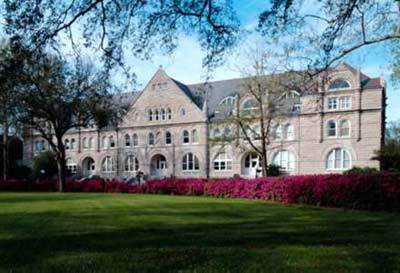
You’ll know why students love Tulane University the moment you step off of the St. Charles streetcar onto the azalea-filled campus in “uptown” New Orleans. Since its founding in 1834, Tulane, aided by the mystique of the Mississippi River city that surrounds it, has been both educating and entertaining students for generations. Tracing its roots back to the Medical College of Louisiana, Tulane owes its name to a wealthy New Jersey merchant, Paul Tulane, who earned his fortune in the crescent city. After more than a century as one of the most prominent features of the city of New Orleans, Tulane is an even more integral part of the city after surviving the challenge of Hurricane Katrina in 2005. Now, students are flocking to Tulane to experience the rebirth of an amazing cultural center, as well as to be educated in a world-class research environment.

The students at Tulane are diverse, intellectual, and very social. Boasting more than 250 campus groups and situated in the heart of one of the most culturally important cities in the country, Tulane offers students more than just a top-tier liberal arts education, it offers an amazing collegiate experience. “Work hard, play hard” doesn’t even begin to describe it. As President Scott Cowen leads the university through the challenges created by Hurricane Katrina, the community of Tulane has come together to embrace what has made city and the school unique and to make sure new students can experience Tulane for years to come. “Only at Tulane. Only in New Orleans” has become the unofficial school motto that is invigorating campus activities, stimulating educational programming, and encouraging the student body to be a part of the rehabilitation of the coastal region.

The culture is just one of the many reasons students love being located in the heart of New Orleans. Public service opportunities, internships with local business and sports teams, full-time employment, and religious communities are all just minutes away. Students can enjoy the history of the French Quarter, the Spanish architecture, the Creole food, and the location of the birth of jazz while surrounded by a university with a renewed focus on educational excellence and a commitment to public service.

At the heart of the campus stands the Lavin-Bernick Center for University Life, the hub of extracurricular activities at Tulane. Under construction until just recently, this brand-new building opened its doors in January of 2007 and puts a fresh face on the forty-year-old University Center (affectionately known as the UC). This hub holds dining and meeting facilities, a large bookstore, and the offices of both student programming faculty and student organizations. This building is the heart of the campus and a popular meeting place for groups and individuals alike. Fanning out from the UC is the 110-acre campus, complete with a new business school building—one of the most advanced in the nation—a new $7.5 million baseball stadium, freshly renovated dorm buildings, and lines of historic oak trees that are almost ever- green in the tropical climate of the Deep South. The university has constructed, on average, one new building a year for the past dozen years, with plans in place for further construction among campus’ oaks, magnolias, and occasional banana tree or bamboo grove.

On campus, students study at one of ten schools and colleges, depending on their major and degree. Undergraduates start their Tulane career at the recently reorganized Newcomb-Tulane College. This undergraduate college was created by joining the H. Sophie Newcomb Memorial College for Women, which was established as part of Tulane in 1886, with the undergraduate men’s arm of Tulane College. As the first coordinate college in a university setting to grant degrees to women in the entire nation, Newcomb and Tulane draw students in with their rich history and innovative programming.

Tulane would not be the institution that it is, however, without the philosophies and customs of the city of New Orleans. The charm, hospitality, and pace of the city are undeniably seen in the culture of the university as well. The traditions of both are woven together, and as the leadership and students of Tulane step up and embrace the tasks of rebuilding the city, the futures of the city and the school are inextricably linked. The strength and passion of the city is carried over into the determination and excitement of the students and their educational and personal goals.

A Tulane education provides more than just a degree. Academically, Tulane’s faculty will prepare you to solve problems, challenge you with new theories, and support your personal research and endeavors. The cultural education you will obtain, however, is like nothing else in the nation. The history of New Orleans, added to the unique cuisine, music, traditions of the city, and the rebuilding process combine to form a truly unmatched collegiate experience. Students who choose to attend Tulane now will not only be studying at a great university, they will be an integral part of rebuilding an American treasure after one of the most devastating natural disasters of our time.

Tulane students all agree that their education is special—architecture students can study Spanish, French, and British influences right in their backyard; English majors can regularly visit places they read about in novels; business students are trusted to invest the school’s own money in one-of-a-kind programs; and students studying music have some powerful acts to follow.

The size and location of Tulane make it the perfect combination of opportunity and individuality. Small enough to offer personal support yet large enough to provide research and internship experiences, it offers Southern hospitality coupled with big-city activities to meet the needs of a very diverse student body that hails from all fifty states, and one hundred countries.

No other school in the country offers as great of an academic experience coupled with just as great of a cultural one. Tulane not only gives you the tools to make your own decisions, it grants you the humor to cope with your mistakes. It rewards you for working hard, while teaching you that work isn’t everything. You would be hard-pressed to find another school in America where you can learn as much about life from the surroundings as you can learn inside the classroom.

Taken from Casey Haugner’s commencement address at the 2006 graduation ceremony

Tulane University of Louisiana Academics

Top students come to Tulane to get a world-class education in a unique setting. Academic opportunities, therefore, are embraced by all students. All undergraduates enter through the Newcomb-Tulane Undergraduate College, where a core curriculum ensures academic breadth as they begin their collegiate career, a TIDES course connects them to students with similar passions, and the public service requirement fulfills the mission of Tulane to produce graduates with cultural knowledge who are “good citizens of the world.”

Schools, Programs, and Libraries

Outside of the core programs, students will choose majors from the five undergraduate schools: School of Liberal Arts, which awards Bachelor of Arts (B.A.), Bachelor of Science (B.S.), or Bachelor of Fine Arts (B.F.A.) degrees, depending on the choice of major; School of Science and Engineering, which awards a B.S.; A.B. Freeman School of Business, which confers the Bachelor of Science in Management (B.S.M.) degree; School of Architecture, in which students receive the Master of Architecture I degree; and the School of Public Health, where students receive a Bachelor of Science in Public Health. Students may also pursue cross-registration with other universities in the area, and are able to use these additional resources and libraries to their advantage.

Tulane also offers many joint degree programs that combine undergraduate and graduate/professional degrees. Cross-registration in different schools and “4+1” programs are also available. Students can also choose from flexible study options, such as student-designed, dual, and interdisciplinary majors. Because Tulane is nationally recognized in many of its academic programs, a large percentage of students take advantage of more than one academic department for their concentrations.

Academic and research resources available to students are second to none. The main library on campus, Howard-Tilton Memorial, is not only home to five floors of “stacks” and study spaces but also the Latin American Library and the Maxwell Music Library, where students have access to some of the greatest music in the world. Special collections of the university include the Hogan Jazz Archive, Southeastern Architectural Archive, and the Louisiana Collection. Other special libraries on campus span the fields of architecture, botany, business, law, mathematics, natural history, primate research, race relations and ethnic history, and women’s studies (home to an impressive collection of historical local cookbooks).

Advisors

Students are assigned to an academic advisor when they arrive at Tulane. These advisors take time to understand a student’s goals and passions, and align those with the opportunities and coursework at the different schools. Advisors assist in planning for special programs such as joint degree, personal research, and study abroad. They also suggest courses based on personal interest and coordinate with professors. Once a major is declared, a major advisor is also chosen to assist with field-specific goals, thesis research, and degree planning.

During my junior year at Tulane, I was struggling to find the perfectclass to fill one of my last elective requirements. My academic advisor suggested that I take a break from my heavy academic workload and sign up for modern dance. At first, I was completely taken aback, but after I attended one class, I was hooked. The opportunity to step outside of my comfort zone and learn something new was amazing. My advisor knew it was exactly what I needed to augment my studies, and I have her to thank for such aperfectsuggestion.

Another advising resource at Tulane is the Career Services Center, which helps students at all levels of their collegiate career. The center advises students on everything from resume writing and interview skills to choosing the right major with resources to help understand not only the curriculum, but also the related career paths. The center offers free workshops, sponsors career fairs, and connects students with internship and job opportunities, as well as offers counselors to critique application essays and cover letters. On-line self-assessments and tools offer advice to students on their schedule.

Tulane’s Education Resources and Counseling Center, another facet of the university’s advising system, offers both academic and personal counseling services. The center teaches academic skills and tutoring sessions free of charge while also providing personal counseling such as support groups, crisis counseling, and individual therapy.

Beyond the Campus

A significant number of Tulane students participate in the study abroad program. Tulane’s Junior Year Abroad (JYA) program is one of the oldest of its kind in the country. Students can choose from full-year or semester programs, Tulane-sponsored programs, or trips coordinated with other schools, or they can develop their own overseas experience with the help of advisors at the Center for International Studies. Tulane has programs in over twenty countries spanning Europe, Latin America, Africa, Asia, and Australia, in addition to a variety of faculty-led summer study-abroad programs for both undergraduates and graduates. Also offered are Washington, DC, semesters for students interested in politics, policy, and public service. All Tulane-sponsored study-abroad programs allow students to keep their specific scholarships and financial aid packages, which removes many barriers often present when studying at another school as a visiting student.

Growing up in a small town in the south, I always knew I wanted to travel abroad at some point during my college education. So, it was imperative when I was conducting my college search that I find a school that not only had great academic programs on its campus, but had great programs with other schools around the world. When I learned of Tulane’s historic study-abroad programs, the number of students who studied in other countries, and the fact that scholarships and aid would transfer seamlessly, Tulane became one of my top choices. Once at Tulane, I worked with my academic advisors and the Center for International Studies to create a program overseas that would fit in with my major. Before I entered Tulane, I had never left the U.S., and now, thanks to the university’s great programs, I’ve not only lived in another country, but traveled through nine countries in all.

To complete the public service graduation requirement, students engage with the Center for Public Service to take a service-learning course, coordinate with faculty-sponsored service programs, design a study-abroad experience with a service component, or complete a public service honors thesis. All students at Tulane get outside the classroom to participate in the revitalization of New Orleans and the Gulf Coast. Building houses, painting elementary schools, volunteering for education and health programs, and raising awareness of the region’s challenges are examples of ways students get involved.

Interesting Historic Facts

  1. Tulane’s Newcomb College, joined to the university in 1886, was the first coordinate college to grant degrees to women.
  2. Tulane’s study abroad program is one of the oldest in the country.
  3. Tulane’s School of Social Work has its roots in the very first training program for social workers in the Deep South.
  4. The Community Action Council of Tulane University Students (CACTUS) is the oldest and largest student-led community service organization in the country.
  5. Tulane’s School of Public Health and Tropical Medicine, founded in 1912, is one of the oldest such schools in the country.
  6. Founded in 1964, the Tulane National Primate Research Center is one of the oldest and largest of the eight federally funded primate research centers in the United States.
  7. The Newcomb College Center for Research on Women is one of the nation’s oldest and most prominent research centers of its kind.

Tulane University of Louisiana Admissions

Immediately after Hurricane Katrina and the cancellation of the 2005 fall semester, Tulane students were spread to over 600 schools in all fifty states. When the campus reopened in January of 2006, eighty-seven percent of these students chose to return to Tulane to continue their education. This enthusiasm to attend Tulane continues to be very strong in new applicants as well.

Tulane has been growing more and more competitive over the past several years. A trend of increasing applications has continued, despite the interruption of Hurricane Katrina. As a testament to this trend, the 2006 application season, the first after the storm, presented the largest number of applications in the school’s history. Now ranked as one of the nation’s most competitive colleges, the last academic year before the hurricane saw 17,572 applications, of which, 7,867 were accepted, leading to a freshman enrollment of just over 1,600. Although the entering class size has become smaller in the past year, the student body has remained a compilation of the nation’s top high school graduates. According to university statistics, approximately fifty-one percent of enrolling freshmen in 2006 were ranked in the top ten percent of their high school classes; nearly seventy-five percent in 2006 ranked in the top twenty-five percent; and ninety-six percent in 2006 were in the top half of their class. In addition to being strong academically, Tulane’s typical freshman class is both geographically and ethnically diverse. A surprising number of students come to Tulane from great distances—over seventy-five percent of the typical entering freshman class hails from more than 500 miles away from the school. This diversity ensures that students are not only learning from their academic programs, but also from each other.

Application Requirements

Scores from either the SAT or the ACT are required to apply. The average SAT score for the 2006–2007 freshman class was 1294 (based on 1600) (ACT equivalent of 29), which was 285 points above the national average. The ACT Optional Writing test is also required and SAT subject tests, such as math, writing, and science, are recommended for placement purposes. The school recommends taking the SAT, which includes a standard writing section. Equally important for placement and honors program consideration are Advanced Placement (AP) credits, which are enthusiastically accepted. Factors that demonstrate to the admissions team your unique qualities are AP and honors courses, recommendations, and extracurricular activities records, along with a personal essay. For architecture applicants, a portfolio is recommended as well. Students are encouraged to have completed four years each of high school English and math, and three years each of foreign language, social studies, and the sciences.

Campus Visits

Tulane Students who visited the campus the spring of their senior year in high school all attest to the power of seeing the campus in bloom and experiencing New Orleans in such beautiful weather. All applicants are encouraged to visit the campus for one of the prospective students activities in the spring, but they will also be accommodated at any point during the year. Daily campus tours are given by passionate Green Wave Ambassadors, often seen on campus walking backwards in flip-flops in front of a crowd of prospective students and parents. Ambassadors also host prospective students on overnight visits where the prospective student can join them in attending classes, meeting friends and professors, and participating in campus activities or sporting events. Efforts are made to make sure that visiting students experience both academic and social life at Tulane before, or after, they make their final decision to attend.

Tides

First-year students participate in the Tulane InterDisciplinary Experience Seminars (TIDES) program, which connects them to other students who share similar interests. These seminar courses include speakers, trips, social events, and special programs that link to one of fifty chosen topics. Possible choices include: “The Music and Culture of New Orleans”; “Hurricanes, Human Rights, and History”; “Philosophy of Public Service”; “The Cultures of Food”; “Reading and Writing Women”; and many more. These programs were developed to introduce students to the city, the school, and each other by linking them up with faculty, activities, and other new students who share similar personal interests.

Tulane University of Louisiana Financial Aid

Increase your salary, get your degree in your spare time - FREE Application to Search Online Universities for a limited time

Tulane is committed to offering a great education to all students, regardless of financial situation. In a recent year, eighty-two percent of all full-time freshmen received some form of financial aid. Financial aid packages include grants, government loans, merit-based scholarships and awards, and student employment opportunities both on and off campus. Tulane has a robust work-study program and about forty-five percent of undergraduates work part-time at some point in their college careers. Athletic and ROTC scholarships are also available to students who qualify.

As a member of the College Scholarship Service (CSS), the CSS PROFILE or Free Application for Federal Student Aid (FAFSA) are required to apply for financial aid. The average award for the 2006–2007 year was $25,224, with an average annual earnings from campus work at $2,500. Upon enrollment, all students are assigned a financial aid counselor, who is committed not only to designing a financial aid award package that is tailored for each student but also to being available on a daily basis for questions about deadlines, forms, procedures, and options.

My freshman year, I was awarded a work-study campus job in my financial aid package. I began doing administrative work for the Levy Rosenblum Institute of Entrepreneurship (LRI) during my free time between classes. After four years at LRI, I had built relationships with local business owners, gotten to know business school faculty personally, and participated in amazing programs. The experience led me into business school at Tulane, where I graduated with an MBA. The experiences I had, consulting for non-profits, improving family-owned regional businesses, and planning events for national figures, could not have been gotten anywhere else.

Merit-Based Aid

The university offers many merit-based scholarships that are awarded based on a student’s proven academic record and commitment to community involvement. A special application must be filled out for students applying for the Deans’ Honor Scholarship. This merit-based full-tuition scholarship is awarded to a few select students each year. The application includes THE BOX—a blank square on the application that you must fill as creatively as you can. Also requiring a separate application is the Community Service Scholarship, which awards up to full tuition to those students who can illustrate how they have dedicated exceptional time and effort to their communities. All students, regardless of application type or deadline, are automatically considered for other merit-based awards that do not require a separate application, with scholarships that range from $14,000 to $22,000 per year. Financial aid counselors will also work one-on-one with students accepted to Tulane who have received merit-based scholarships from outside organizations or government entities.

Tulane University of Louisiana Students

Tulane University is located in the heart of uptown New Orleans. From listening to world-class musicians at renowned jazz clubs to throwing a Frisbee on the grassy park at the levee, New Orleans offers activities that simply can’t be found at other cities. The social life of Tulane, therefore, is inextricably linked with the city that surrounds it. Jazz musicians perform at Tulane events, shuttle bus service takes kids around the city free of charge, students attend professional sporting events, movies shot in the city have their red-carpet premiers on campus, and freshman year officially starts on a paddle boat on the Mississippi River. Throughout a student’s years at Tulane, this continues to be the case. Most of the “social life” of the school is rooted in and around the city’s activities and big events. Some New Orleans festivals and events most popular with Tulane students include Mardi Gras, the weeks of carnival season associated with large parades throughout the city; New Orleans Jazz & Heritage Festival (“Jazz Fest”), a two-weekend blowout of world famous bands and performing artists, arts and crafts, unique cuisine and late-night concerts; Voodoo Music Experience, a large annual music-festival; and the annual Sugar Bowl college football game.

Student Organizations

On campus, there are over 250 student organizations that create the social scene. Except for a select few, groups are open to all students and range from activism to sports. The oldest program on campus is the Community Action Council of Tulane University Students (CACTUS), which organizes community service activities of all kinds and involves almost every Tulane student at one point in his or her college experience. In addition to CACTUS, there are honors and professional societies, club and intramural sports, a healthy student government system, and a multitude of multicultural, political, performance, and religious groups. Campus media includes the Hullabaloo, the student-run newspaper that is published once a week; a student-managed television channel; and the immensely popular WTUL radio station. Student DJs man the airwaves in two-hour shifts at all hours of the day and night and have shows ranging from rock to folk.

Greek Life

Another dimension to campus life is the Greek system. There are fifteen national fraternities and ten national sororities on campus. Of all students, thirty percent of men and thirty-five percent of women belong to one of these chapters. Greek parties are open to all students, however, and the social scene is not dominated by these events. In fact, fraternities and sororities are some of the most active service organizations on campus and provide a great way to get involved in the community. The Greek recruitment, “Rush,” is deferred until a first-year student’s second semester on campus, giving the student the chance to make friends, understand the social scene, and join other organizations before committing to a fraternity or sorority. Most students who pledge do not live in organized housing, opting instead to live among friends not involved in the same Greek chapter.

Living on Campus

All freshman and sophomore students at Tulane are required to live on campus and are guaranteed space in one of the university’s many dormitories or apartment complexes. Many junior, senior, and graduate students also opt to live on campus, as it provides them with a convenient, safe housing situation. Special living arrangements include female single-sex houses; theme living situations, such as honors, special interest, and international student houses; and the “Leadership Village”—a gathering of the university’s top student government and organizational leaders. Campus resources include a plethora of dining alternatives, a barbershop, several bank branches and ATMS, a copy center, post office, bookstore, grocery store, and several laundry facilities.

Campus Programming

Tulane University Campus Programming (TUCP) is a very active group on campus. This student-run club is responsible for bringing chart-topping bands and performers, well-known comedians, and political figures and speakers to Tulane. TUCP also runs a cinema program—which shows new releases on campus for a fraction of the price of movie-theatre admission—and organizes an annual spring carnival.

Mardi Gras

The highlight of every spring semester at Tulane is the arrival of Carnival season. The weeks between Epiphany (January 6) and Ash Wednesday (40 days before Easter) are filled with parades, crawfish boils, parties, and concerts. You will see Tulane students enjoying the parades on St. Charles Avenue, riding on floats with social groups, and marching in parades with the Tulane Marching Band. The university has special programs to maintain the safety of its students during this exciting time of year, including special safety and awareness programs and a registration system to track students visiting campus during Mardi Gras.

Tulane University of Louisiana Athletics

The Tulane Green Wave is a member of Conference USA in athletics and participates with teams in several NCAA Division 1-A sports, including football, basketball, and track, to name a few. Students receive free admission to all home games of all sports, and transportation is provided. The Louisiana Superdome, home to the Saints Football franchise and the Sugar Bowl, also hosts the Green Wave football team, which has recently produced NFL quarterbacks J. P. Losman and Patrick Ramsey. It is not unusual to be seated at a football game next to President Cowen, who is known to spray paint his hair bright green and paint his face for games!

Perhaps Tulane’s most successful sports team is men’s baseball, which earned its second trip to the College World Series in the 2005 season. The recent renovation of Turchin Stadium, one of the largest and most impressive collegiate baseball fields in the country, will be complete in April 2007. Tulane’s student athletes are also recognized as successful scholars, with one of the largest percentages of graduating student athletes in the country.

Hullabaloo Cheer

The Hullabaloo cheer, which is recited, instead of a fight song, everytime the Green Wave scores, is one of the strangest of its kind:

The Hullabaloo 
A One, A Two, A Helluva Hullabaloo 
A Hullabaloo Ray Ray 
Hooray, Hooray 
Vars Vars Tee Ay 
Tee Ay, Tee Ay 
Vars Vars Tee Ay 
Tulane! 

Tulane University of Louisiana Alumni

Graduates of Tulane University are equipped not only with a fantastic liberal arts education but also with a great respect for the world’s cultures and an understanding of the importance of public service. Tulane produces citizens of the world who are bright and energetic about solving problems, but who are also compassionate and hard-working when it comes to their communities. Tulane grads have pioneered heart transplant and knee reconstruction surgeries; they have changed the world of entertainment; and they have invented software and tools, such as Netscape and Yahoo!, that have transformed our digital world.

In a recent year, 1,504 bachelor’s degrees were awarded. Popular majors included business, social sciences, and engineering. In the 2004–2005 school year, 134 companies actively recruited on campus. Since the hurricane, Tulane has revived its commitment to its students to find jobs after graduation. The recent launch of the all-encompassing web site www.hiretulane.com helps connect students, employers, counselors, and alumni in a strong network that supports the career paths of Tulane students. Separate career centers for the A. B. Freeman School of Business, the Tulane University School of Law, and the Tulane School of Public Health focus on recruiting, internship, and full-time job opportunities for their students; however, students in these schools are free to use the university career center as well.

Prominent Grads

  • Lawrence Wright, Staff Writer for The New Yorker,Best-Selling Author of The Looming Tower: A History of al-Qaeda (2006)
  • Patrick Ramsey, NFL Quarterback for the New York Jets
  • Michael DeBakey, Heart Surgeon / Transplant Pioneer
  • David Filo, Cofounder of Yahoo!
  • Neil Bush, Brother of President George Bush
  • Amy Carter, Daughter of President Jimmy Carter
  • Newt Gingrich, Former Speaker of the United States House®
  • Francis Cardinal George, Archbishop of Chicago
  • Lauren Hutton, Actress
  • J. P. Losman, NFL Quarterback for the Buffalo Bills
  • Jerry Springer, Talk-Show Host, Former Mayor of Cincinnati (D)
  • John Kennedy Toole, Author, Pulitzer Prize Winner
  • David C. Treen, Former Governor of Louisiana®
  • Michael White, Jazz Musician/Jazz Historian
  • Bruce Paltrow, Hollywood Director and Father of Gwyneth Paltrow
  • Bob Livingston, Former Congressman from Louisiana®
  • Richie Petitbon, Former Washington Redskins Head Coach

Tulane University of Louisiana Faculty

All courses at Tulane are taught by professors who both teach and conduct research— not teaching assistants. All professors hold open office hours and are more than will- ing to spend time with students individually. The student-to-faculty ratio of nine-to-one ensures that classes are kept small and students are all given individual attention. The academic environment is influenced by the culture of the surroundings and is more friendly and encouraging than competitive.

One of my most memorable times during my freshman year at Tulane was my French 102 class. Taught by the Vice President of Academic Affairs herself, the class was only twelve people, which allowed us to do things I would have never guessed a freshman in college would get to do. Sitting, with my classmates, on a rooftop deck overlooking the Mississippi River, enjoying an authentically made French dinner with one of the university’s top officials, I realized that I would have never gotten such an opportunity at a larger school. This type of experience was repeated many times throughout my Tulane education, with many different professors. Not only were these activities educational, they also led to some of my most cherished college memories.

Information Summary

Increase your salary, get your degree in your spare time - FREE Application to University of Phoenix for a limited time

Demographics – Main Campus and Surrounding Areas

Reported area around or near New Orleans, LA 70118-5698

Surrounding communityMidsize city (inside urban area, pop. between 100,000 to 250,000)
Total Population36,847 (36,847 urban / N/A rural)
Households15,026 (2.3 people per house)
Families7,800 (3.09 people per family)
Pop. — African American19,256
Pop. — Asian645
Pop. — Pacific Islander25
Pop. — American Indian / Alaskan Native222
Pop. — White (incl. Hispanic)16,833
Pop. — Other489
University of Phoenix
University of Maryland University College (UMUC)

Carnegie Foundation Classification

Research Universities (very high research activity)

UndergraduateArts & sciences plus professions, high graduate coexistence
GraduateComprehensive doctoral with medical/veterinary
Undergraduate PopulationMedium full-time four-year, selective, lower transfer-in
EnrollmentMajority undergraduate
Size & SettingLarge four-year, primarily residential

General Characteristics

Highest offeringDoctoral degree
Calendar SystemSemester
Years of college work requiredN/A
Variable TuitionNo

Special Learning Opportunities

Distance LearningYes
ROTC — Army / Navy / Air Force YesYes / Yes / Yes
Study AbroadYes
Weekend CollegeNo
Teacher CertificationYes

Student Tuition Costs and Fees

What are the typical tuition costs and fees for attending Tulane University of Louisiana?

Ranks 90th for total cost of attendance

  In District In State Out of State
FT Undergraduate Tuition $33,500 $33,500 $33,500
FT Undergraduate Required Fees $3,110 $3,110 $3,110
PT Undergraduate per Credit Hour $1,395 $1,395 $1,395
FT Graduate Tuition $35,100 $35,100 $35,100
FT Graduate Required Fees $1,570 $1,570 $1,570
PT Graduate per Credit Hour $1,950 $1,950 $1,950
Total Cost of Attendance — On-Campus $47,100 $47,100 $47,100
Total Cost of Attendance — Off-Campus w/out Family $37,510 $37,510 $37,510
Total Cost of Attendance — Off-Campus with Family $37,510 $37,510 $37,510

Student Tuition Costs for Professional Fields

What are the typical tuition costs and fees for getting a professional degree?

  In State Out of State
Medical Degree — Tuition $42,000 $42,000
Medical Degree — Required Fees $3,080 $3,080
Law Degree — Tuition $33,500 $33,500
Law Degree — Required Fees $3,170 $3,170

Student Tuition Cost History and Trends

Three year history and trends on the cost of attending

  In District In State Out of State
Published Tuition & Fees $33,346 trend  $36,610 $33,346 trend  $36,610 $33,346 trend  $36,610
  Cost (regardless of residency)
Books & Supplies $800 trend  $900
On-Campus – Room & Board $8,414 trend  $8,690
On-Campus – Other Expenses $800 trend  $900
Off-Campus w/out Family – Room & Board N/A trend  N/A
Off-Campus w/out Family – Other Expenses N/A trend  N/A
Off-Campus with Family – Room & Board N/A trend  N/A

Admission Details

Application Fee RequiredN/A
Undergraduate Application Fee$55
Graduate Application Fee$45
First Professional Application Fee$60
Applicants 16,967 (7,687 male / 9,280 female)
Admitted 7,526 (3,476 male / 4,050 female)
Admission rate 44%
First-time Enrollment 1,328 (609 male / 719 female)
FT Enrollment 1,328 (609 male / 719 female)
PT Enrollment N/A (N/A male / N/A female)
Total Enrollment10,237

Admission Criteria

What criteria does Tulane University of Louisiana use for admissions?

Required = Required, Recommended = Recommended, Neither required nor recommended = Neither required nor recommended
Open AdmissionsNo
Secondary School GPA / Rank / RecordRequired / Recommended / Required
College Prep. CompletionRecommended
RecommendationsRequired
Formal competency demoRecommended
Admission test scoresRequired
TOEFLRequired
Other testsN/A

Admission Credits Accepted

What types of credits does Tulane University of Louisiana accept?

Dual CreditNo
Life ExperienceNo
Advanced Placement (AP)Yes

Athletics - Association Memberships

Sports / Athletic Conference Memberships NCAA
NCAA Football Conference Conference USA
NCAA Basketball Conference Conference USA
NCAA Baseball Conference Conference USA
NCAA Track & Field Conference Conference USA

ACT Test Admission

Ranks 81st for 75pctl scores

Applicants submitting ACT results 46%
Verbal scores (25/75 %ile) 27 / 32
Math scores (25/75 %ile) 25 / 30
Cumulative scores (25/75 %ile) 27 / 31

SAT Test Admission

Ranks 108th for 75pctl scores

Applicants submitting SAT results 54%
Verbal scores (25/75 %ile) 600 / 690
Math scores (25/75 %ile) 590 / 680
Cumulative scores (25/75 %ile) 1190 / 1370

Student Services

Remedial ServicesNo
Academic / Career CounselingYes
PT Cost-defraying EmploymentYes
Career PlacementYes
On-Campus Day CareYes
Library FacilityYes

Student Living

First-time Room / Board RequiredYes
Dorm Capacity3,400
Meals per Week19
Room Fee$5,140
Board Fee$3,800

Student Financial Aid Details

How many students use Financial Aid, and how much do they use?

Tulane University of Louisiana Ranks 2473rd for the average student loan amount.

  Average Users % of Attendees
Federal Grant Aid $4,120 151 pie   9%
State & Local Grant Aid $2,913 207 pie   13%
Institutional Grant Aid $18,928 1,121 pie   70%
Student Loan Aid $4,187 623 pie   39%
Any financial aid type   1,271 pie   80%

Student Enrollment Demographics

How many students are enrolled at Tulane University of Louisiana?

  Men Women Total
Non Resident Alien
404299703
Black Non-Hispanic
285527812
Hispanic
194228422
Asian / Pacific Islander
244258502
American Indian / Alaskan Native
283159
White Non-Hispanic
3,5513,4847,035
Race Unknown
315389704
Total 5,021 5,216 10,237

Student Graduation Demographics

How many students graduated at Tulane University of Louisiana?

  Men Women Total
Non Resident Alien
271138
Black Non-Hispanic
254267
Hispanic
312859
Asian / Pacific Islander
522880
American Indian / Alaskan Native
257
White Non-Hispanic
6286671,295
Race Unknown
212344
Total 786 804 1,590

Most Popular Fields of Study

The top 5 fields of study completed at Tulane University of Louisiana.

  Men Women Total
301 90 391
134 137 271
40 115 155
77 67 144
69 59 128

Student Completion / Graduation Demographics

How many students are successful graduates?

  Non Resident Alien Black Non-Hispanic Hispanic Asian / Pacific Islander American Indian / Alaskan Native White Non-Hispanic Race Unknown Total
Accounting 7 2 2 5 71 2 89
Advanced Legal Research/Studies, General (LL 23 3 5 31
African Studies
American/United States Studies/Civilization 5 5
Anatomy 2 2
Ancient/Classical Greek Language and Literature 1 1
Animal Genetics 3 1 1 1 13 1 20
Animal Physiology 2 2
Anthropology 5 2 39 7 53
Applied Mathematics
Architecture (BArch, BA/BS, MArch, MA/MS, PhD) 5 4 6 9 1 77 7 109
Architecture and Related Services, Other 10 1 11
Art History, Criticism and Conservation 1 36 4 41
Asian Studies/Civilization
Biochemistry 2 1 7 10
Biology/Biological Sciences, General 2 1 29 4 36
Biomedical/Medical Engineering 4 2 5 55 2 68
Biostatistics 2 1 4 7
Business Administration and Management, General 2 1 4 59 4 70
Business Administration, Management and Operations, Other 1 3 1 5
Business/Commerce, General 34 5 6 1 22 3 71
Cell/Cellular Biology and Anatomical Sciences, Other 2 8 5 13 1 92 7 128
Chemical Engineering 7 1 3 16 27
Chemistry, General 1 1 1 7 2 12
Civil Engineering, General 8 2 1 24 35
Classics and Classical Languages, Literatures, and Linguistics, General 4 3 7
Communication Studies/Speech Communication and Rhetoric 1 2 2 50 2 57
Communication, Journalism, and Related Programs, Other 1 1 1 1 4
Computer Engineering, General 1 1 2 15 19
Computer Science 12 4 21 2 39
Computer and Information Sciences, General 11 2 4 1 24 7 49
Dance, General 1 1 4 6
Drama and Dramatics/Theatre Arts, General 13 13
Economics, General 4 2 38 3 47
Electrical, Electronics and Communications Engineering 3 9 12
Engineering Science
Engineering, General 1 1
Engineering, Other 1 1
English Language and Literature, General 1 3 2 4 83 5 98
Environmental Health 4 5 4 1 2 26 2 44
Environmental Studies
Environmental/Environmental Health Engineering 3 3
Epidemiology 10 3 1 2 1 11 4 32
Film/Cinema Studies
Finance, General 27 13 19 21 3 287 21 391
Fine/Studio Arts, General 1 2 21 3 27
French Language and Literature 1 2 30 33
General Studies 2 7 9
Geology/Earth Science, General 2 1 14 1 18
German Language and Literature 6 6
Health Professions and Related Clinical Sciences, Other 8 1 12 1 22
Health/Health Care Administration/Management 6 3 1 1 38 10 59
History, General 1 4 1 1 99 8 114
Human Resources Management/Personnel Administration, General 8 2 1 10 2 23
Immunology 1 4 5
International Business/Trade/Commerce 1 6 3 33 43
International Relations and Affairs 2 4 1 1 41 5 54
Italian Language and Literature 1 1
Jewish/Judaic Studies 2 2
Kindergarten/Preschool Education and Teaching 1 7 8
Kinesiology and Exercise Science 1 3 2 18 24
Latin American Studies 3 5 1 30 1 40
Latin Language and Literature 2 2
Law (LL 7 17 13 15 199 20 271
Legal Assistant/Paralegal 6 4 1 15 4 30
Liberal Arts and Sciences, General Studies and Humanities, Other 1 1 1 1 9 2 15
Linguistics 8 1 9
Management Information Systems and Services, Other 2 2 1 5
Management Information Systems, General 1 1
Management Science, General 7 1 3 5 1 32 11 60
Marketing, Other 4 4 1 6 1 16
Marketing/Marketing Management, General 1 1 7 2 96 3 110
Mass Communication/Media Studies 2 8 1 1 17 2 31
Mathematics and Statistics, Other 1 1
Mathematics, General 4 1 1 19 1 26
Mechanical Engineering 8 5 4 40 57
Medicine (MD) 8 6 1 21 2 104 2 144
Medieval and Renaissance Studies 1 1
Multi-/Interdisciplinary Studies, Other 10 2 1 1 15 29
Music, General 1 6 1 8
Music, Other
Neuroscience 1 4 7 7 72 1 92
Nutrition Sciences 1 1 1 3
Organizational Behavior Studies
Parasitology 2 2
Pharmacology 1 5 21 1 28
Philosophy 2 1 1 39 4 47
Physics, General 3 10 13
Political Science and Government, General 4 4 3 58 4 73
Portuguese Language and Literature 1 1
Psychology, General 1 4 4 6 1 133 6 155
Public Health, General (MPH, DPH) 10 12 1 10 28 12 73
Public Health, Other 20 5 3 56 2 86
Religion/Religious Studies 1 5 1 7
Russian Language and Literature 3 3
Russian Studies
Social Sciences, General 7 1 16 1 25
Social Sciences, Other 1 1 21 1 24
Social Work 18 3 49 6 76
Sociology 1 2 2 2 44 4 55
Spanish Language and Literature 8 2 1 4 1 24 2 42
Statistics, General 1 1 2
Web Page, Digital/Multimedia and Information Resources Design 1 4 1 6
Total 287 214 146 185 22 2,697 222 3,773

Faculty Compensation / Salaries

Tulane University of Louisiana Ranks 521st for the average full-time faculty salary.

Tenure system Yes
Average FT Salary $70,452 ($75,798 male / $59,646 female)
Number of FT Faculty 562 (376 male / 186 female)
Number of PT Faculty 514
FT Faculty Ratio 1 : 1
Total Benefits $9,599,556
Add an image …

Tulane University of Louisiana School Images

Administration building :: Tulane University of Louisiana Newcomb Art Gallery :: Tulane University of Louisiana Campus Building :: Tulane University of Louisiana
Free Admissions Info
Get free info from: Tulane University of Louisiana

Comment and Corrections Make a comment …

Familiar with this University? We would love to hear about your experience. Feel free to add comments or additional information regarding Tulane University of Louisiana.