StateUniversity.com – U.S. University Directory [ Home :: University List :: Ohio ]
70 N Professor St
Oberlin, OH 44074
p. 440-775-8411
w. www.oberlin.edu
Oberlin College
General Information, Alumni, History, Campus, Students, Faculty, Address, Tuition, and Football
- NEW - College and University Blog with many tips like acing the ACTs, SATs, college admissions, and preparing for college.
- University Forum and Discussion - Brand New Message Board For All Your Questions
- Information on Thousands of Careers - One-stop resource for very comprehensive, and up-to-date career information. Contains more than several thousand job profiles each with a job description, education and training requirements, salary information, working conditions, employment outlook and much more!
- Student Encyclopedia - Encyclopedia for reference and research from the Cambridge Collection.
Local News About Oberlin College
Feed updated live and continuously
Information Summary
Ranks 33rd overall
| Overall Score
On StateUniversity.com (about) |
95 |
|---|---|
| Total Cost
On-Campus Attendance |
$48,070 |
| Admission
Success rate |
31% |
| ACT / SAT
75 %ile scores |
32 / 1460 |
| Student Ratio
Ratio of students to faculty |
10 : 1 |
| Retention
(Full-Time / Part-Time) |
93% / 68% |
| Enrollment
Total (all students) |
2,841 |
Demographics – Main Campus and Surrounding Areas
Reported area around or near Oberlin, OH
| Total Population | 11,916 (8,242 urban / 3,674 rural) |
|---|---|
| Households | 4,062 (2.43 people per house) |
| Families | 2,484 (2.95 people per family) |
| Surrounding community | Midsize suburb (inside urban area but outside city, pop. between 100,000 to 250,000) |
| Pop. — African American | 1,978 |
| Pop. — Asian | 399 |
| Pop. — Pacific Islander | 36 |
| Pop. — American Indian / Alaskan Native | 194 |
| Pop. — White (incl. Hispanic) | 9,607 |
| Pop. — Other | 182 |
Carnegie Foundation Classification
Baccalaureate Colleges — Arts & Sciences
| Undergraduate | Arts & sciences focus, some graduate coexistence |
|---|---|
| Graduate | Single postbaccalaureate (other field) |
| Undergraduate Population | Full-time four-year, more selective, lower transfer-in |
| Enrollment | Very high undergraduate |
| Size & Setting | Small four-year, highly residential |
General Characteristics
| Highest offering | Master's degree |
|---|---|
| Calendar System | Four-one-four plan |
| Years of college work required | N/A |
| Variable Tuition |
Student Tuition Costs and Fees
What are the typical tuition costs and fees for attending Oberlin College?
Ranks 58th for total cost of attendance
| In District | In State | Out of State | |
|---|---|---|---|
| FT Undergraduate Tuition | $36,064 | $36,064 | $36,064 |
| FT Undergraduate Required Fees | $218 | $218 | $218 |
| PT Undergraduate per Credit Hour | $1,500 | $1,500 | $1,500 |
| FT Graduate Tuition | $36,064 | $36,064 | $36,064 |
| FT Graduate Required Fees | $218 | $218 | $218 |
| PT Graduate per Credit Hour | N/A | N/A | N/A |
| Total Cost of attendance — On-Campus | $48,070 | $48,070 | $48,070 |
| Total Cost of attendance — Off-Campus w/out Family | $38,090 | $38,090 | $38,090 |
| Total Cost of attendance — Off-Campus with Family | $38,090 | $38,090 | $38,090 |
Student Tuition Cost History and Trends
Three year history and trends on the cost of attending
| In District | In State | Out of State | |
|---|---|---|---|
| Published Tuition & Fees | $32,724 |
$32,724 |
$32,724 |
| Cost (regardless of residency) | |||
|---|---|---|---|
| Books & Supplies | $1,678 |
||
| On-Campus – Room & Board | $8,180 |
||
| On-Campus – Other Expenses | $595 |
||
| Off-Campus w/out Family – Room & Board | N/A |
||
| Off-Campus w/out Family – Other Expenses | N/A |
||
| Off-Campus with Family – Room & Board | N/A |
||
Admission Details
| Application Fee Required | N/A |
|---|---|
| Undergraduate Application Fee | $35 |
| Graduate Application Fee | $100 |
| First Professional Application Fee | N/A |
| Applicants | 7,014 (3,107 male / 3,907 female) |
| Admitted | 2,193 (958 male / 1,235 female) |
| Admission rate | 31% |
| First-time Enrollment | 745 (331 male / 414 female) |
| FT Enrollment | 745 (331 male / 414 female) |
| PT Enrollment | N/A (N/A male / N/A female) |
| Total Enrollment | 2,841 |
Admission Criteria
What criteria does Oberlin College use for admissions?
| Open Admissions | |
|---|---|
| Secondary School GPA / Rank / Record | |
| College Prep. Completion | |
| Recommendations | |
| Formal competency demo | N/A |
| Admission test scores | |
| TOEFL | |
| Other tests | N/A |
Special Learning Opportunities
| Distance Learning | |
|---|---|
| ROTC — Army / Navy / Airforce | |
| Study Abroad | |
| Weekend College | |
| Teacher Certification |
Athletics - Association Memberships
| Sports / Athletic Conference Memberships | NCAA |
|---|---|
| NCAA Football Conference | North Coast Athletic Conference |
| NCAA Basketball Conference | North Coast Athletic Conference |
| NCAA Baseball Conference | North Coast Athletic Conference |
| NCAA Track & Field Conference | North Coast Athletic Conference |
Admission Credits Accepted
What types of credits does Oberlin College accept?
| Dual Credit | |
|---|---|
| Life Experience | |
| Advanced Placement (AP) |
ACT Test Admission
Ranks 40th for 75pctl scores
| Applicants submitting ACT results | 34% |
|---|---|
| Verbal scores (25/75 %ile) | / |
| Math scores (25/75 %ile) | / |
| Cumulative scores (25/75 %ile) | 26 / 32 |
SAT Test Admission
Ranks 41st for 75pctl scores
| Applicants submitting SAT results | 84% |
|---|---|
| Verbal scores (25/75 %ile) | 640 / 750 |
| Math scores (25/75 %ile) | 610 / 710 |
| Cumulative scores (25/75 %ile) | 1250 / 1460 |
Student Services
| Remedial Services | |
|---|---|
| Academic / Career Counseling | |
| PT Cost-defraying Employment | |
| Career Placement | |
| On-Campus Day Care | |
| Library Facility |
Student Living
| First-time Room / Board Required | |
|---|---|
| Dorm Capacity | 2,350 |
| Meals per Week | 14 |
| Room Fee | $4,850 |
| Board Fee | $4,430 |
Student Financial Aid Details
How many students use Financial Aid, and how much do they use?
Oberlin College Ranks 2831st for the average student loan amount.
| Average | Users | % of Attendees | |
|---|---|---|---|
| Federal Grant Aid | $3,952 | 54 | |
| State & Local Grant Aid | $1,811 | 15 | |
| Institutional Grant Aid | $19,720 | 376 | |
| Student Loan Aid | $3,864 | 280 | |
| Any financial aid type | 403 |
Student Enrollment Demographics
How many students are enrolled at Oberlin College?
| Men | Women | Total | |
|---|---|---|---|
Non Resident Alien | 71 | 95 | 166 |
Black Non-Hispanic | 75 | 79 | 154 |
Hispanic | 51 | 77 | 128 |
Asian / Pacific Islander | 92 | 129 | 221 |
American Indian / Alaskan Native | 9 | 12 | 21 |
White Non-Hispanic | 969 | 1,180 | 2,149 |
Race Unknown | 1 | 1 | 2 |
| Total | 1,268 | 1,573 | 2,841 |
Student Graduation Demographics
How many students graduated at Oberlin College?
| Men | Women | Total | |
|---|---|---|---|
Non Resident Alien | 19 | 24 | 43 |
Black Non-Hispanic | 17 | 40 | 57 |
Hispanic | 11 | 12 | 23 |
Asian / Pacific Islander | 19 | 34 | 53 |
American Indian / Alaskan Native | 4 | 5 | 9 |
White Non-Hispanic | 268 | 304 | 572 |
Race Unknown | 2 | 10 | 12 |
| Total | 340 | 429 | 769 |
Most Popular Fields of Study
The top 5 fields of study completed at Oberlin College.
| Men | Women | Total | |
|---|---|---|---|
| 47 | 55 | 102 | |
| 16 | 36 | 52 | |
| 13 | 32 | 45 | |
| 23 | 22 | 45 | |
| 19 | 14 | 33 |
Student Completion / Graduation Demographics
How many students are successful graduates?
Faculty Compensation / Salaries
Oberlin College Ranks 204th for the average full-time faculty salary.
| Tenure system | |
|---|---|
| Average FT Salary | $83,109 ($86,627 male / $77,359 female) |
| Number of FT Faculty | 274 (170 male / 104 female) |
| Number of PT Faculty | 69 |
| FT Faculty Ratio | 4 : 1 |
| Total Benefits | $7,086,624 |
Oberlin College Introduction
The most impressive aspect of an Oberlin College education is the genuine rapport that exists between the diverse student communities. Obies come from every corner of the globe to share an intellectually stimulating atmosphere, where they are encouraged to be socially and civically engaged through a myriad of extracurricular activities.
Oberlin gave me the chance to intern at a high-ranking senator’s office my freshman year. It also gave me the opportunity to develop close relationships by way of easy access to my professors, many of whom are very highly respected in their fields.
Think one person can change the world? So do we.
When a pair of Yankee missionaries founded Oberlin College in 1833, they envisioned an institution built on high intellectual standards, a liberal education for all, excellence in teaching, and a commitment to the social and moral issues of the day. For the past 171 years, Oberlin has honored this mission, encouraging students to use their liberal arts education and change the world, one Obie at a time.
Today, Oberlin College’s 440-acre campus sits next to, and has inexorably meshed with, the city of Oberlin, Ohio. A small town by definition, Oberlin (with a population of 8,600) is thirty-five miles west of Cleveland, Ohio. At first glance, the town’s tree-lined square and old-fashioned business district may evoke memories of a sleepy Mayberry, but the annual fall migration of college students revitalizes the town with their youthful energy.
The small-town atmosphere is an attractive draw for many students, who (because of the town’s proximity to the college) often forge lasting bonds with local residents. Whether it’s over a cup of coffee at the Java Zone, participating in annual events such as the Big Parade, or during a city- and campus-wide effort to register voters, students and “townies” band together to form an experience that is uniquely Oberlin.
Oberlin College’s commitment to the surrounding community has introduced countless students to the idea of service and learning. In fact, the college’s addition of academically based community service courses to the curriculum encourages students to take what they have learned in the classroom and apply it to real-world service situations. Students in these classes work with local community partners to strengthen the programs that are vital to Oberlin’s diverse population.
With its emphasis on academics and social justice, it’s no surprise that countless Oberlin grads have gone on to make a significant impact in the fights against poverty, racism, gender inequality, and other important social and political issues. Whether as doctors, lawyers, business executives, educators, politicians, or volunteers, Obies have left their mark on society by holding themselves to a higher standard and living Oberlin’s ideals long after they’ve graduated.
Oberlin’s founding fathers would be proud.
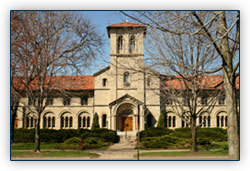
Oberlin is a small community. On or off campus, it’s easy to get to know your classmates and professors, and to form lasting ties with local residents. While some people might find a small-town atmosphere confining, a visit to Oberlin and the surrounding campus would most probably change their minds.
With a world-class Conservatory and some of the most forward-thinking members of their fields teaching in the College of Arts and Sciences, life at Oberlin is anything but dull. The constant stream of concerts, operas, theater productions, dance recitals, poetry readings, distinguished speakers, and other campus visitors creates a cosmopolitan climate that rivals that of a university in a big city. Not to mention all the impromptu gatherings and groups that evolve as students come and go, creating a vibrant, intellectually charged environment that is uniquely Oberlin.
An Obie’s connection to campus doesn’t stop after graduation. Oberlin alumni are a fiercely loyal crew, returning year after year to celebrate Commencement/Reunion Weekend and staying in touch with classmates through regional alumni groups. It’s an old joke that an Obie can spot a fellow Obie a mile away, but there is some truth to that statement. Oberlin graduates can be found in all walks of life and at all corners of the globe, and they are always happy to share their memories about their alma mater with prospective students, or to reminisce about sunny afternoons in Wilder Bowl.
For me, Oberlin has always felt like home. From the moment I set foot on campus, I knew that I had found a place where I could belong—even with my quirky ideas and esoteric interests. My professors nurtured me, yet pushed me to do the work they knew I was capable of doing. Oberlin was tough, but the experience was necessary. I can’t even begin to imagine what I would be like today without the wealth of ideas and knowledge I accumulated as an undergraduate at Oberlin.
Oberlin College Academics
Oberlin’s many departments and programs offer a mind-boggling number of courses, allowing each student to design a personalized educational program. Students can choose from more than forty disciplines (majors), or create a specialized course of study through the Individual Majors Program.
Selecting a major encourages students to study a particular discipline in depth. At Oberlin, students are not required to declare a major until the end of their sophomore year, which gives them time to explore new areas of study and discuss their interests with faculty advisors. The most popular majors at Oberlin are English, politics, and biology.
Students in the College of Arts and Sciences are required to take and pass 112 credit hours before receiving their B.A. Approximately half of these credits must be earned in the student’s major field of study, while the remaining half are divided between the Divisions of Arts and Humanities, Social and Behavioral Sciences, and Natural Sciences and Mathematics. In addition, students must earn writing and quantitative proficiency certification, take a minimum of three courses dealing with cultural diversity, and complete three winter term projects.
The Honor System
Every student at Oberlin is familiar with the college’s Honor Pledge, which reads: “I affirm that I have adhered to the Honor Code in this assignment.” This pledge, formal and archaic as the phrasing may sound, is a very real part of campus life.
Oberlin’s Honor Code is part of its student-administered Honor System and is based on the assumption that academic honesty lies at the heart of academic enterprise. The system applies to all work submitted for academic credit, including quizzes, exams, papers, and laboratory assignments. Each assignment must include the Honor Pledge and the student’s signature in order to affirm the integrity of their work.
First-Year Seminar Program
Oberlin’s first-year seminar program (FYSP) gives students the opportunity to experience liberal arts learning at the onset of their college careers. Each seminar brings together faculty members with a small group of students to investigate specialized topics. This format encourages students to test new ideas, learn from their peers, and get to know professors well in a small classroom setting, while at the same time honing their critical thinking, writing, and discussion skills.
Winter Term
Oberlin students spend the month of January pursuing projects of their own design. Individual or group-oriented, on or off campus, career-related or just for fun, winter term projects provide an opportunity to fully explore a unique educational goal. Winter term encourages students to discover the value of self-education by emphasizing creativity, intellectual independence, and personal responsibility. Many of the concerts, theatrical productions, films, lectures, forums, and discussion groups that take place during January are part of on-campus winter term projects.
The Experimental College (ExCo)
Oberlin’s Experimental College, or ExCo, began in 1968 as an experiment in alternative education. Four decades later, ExCo is still an integral part of campus life, with more than sixty courses offered each semester.
ExCo is a student-run organization, headed by a volunteer committee that is responsible for choosing the curriculum and maintaining the integrity of the program.
ExCo is open to everyone in the Oberlin community, including students, faculty and staff members, and townspeople. Likewise, anyone who proves to be an expert in a particular subject can teach a class, as long as it is judged to have educational merit and a reasonably serious purpose.
ExCo reflects the current academic, intellectual, social, ideological, philosophical, political, emotional, sexual, and fashion trends of the Oberlin community. The most recent ExCo curriculum has included courses on grassroots organizing, environmental justice, Cantonese language, Indian film, Hip-Hop dance, sketch comedy, vegetarian cooking, knitting, and rock climbing.
Students may receive up to five credits toward graduation through the Experimental College, or they may take as many courses as they’d like for no credit. ExCo instructors receive credit for teaching ExCo courses.
Recent Winter Term Projects
- Listening in Silence: Exploring Modern Day Monasticism
- “I’m a Stranger Here Myself”: Writing Across Cultures
- Oberlin Shorts: An Original One-Act Play Festival
- Winter Term Opera: La Cambiale Di Matrimonio
- Practicum in Museum Education: Docent Training
- Urban Sustainable Design Studio
- Land Use in Japan
- Introduction to Youth and High School Coaching
- Intensive Greek
- Spanish Poetry Workshop
- Internship with Charles Barron’s New York City Mayoral Campaign
- Multiculturalism in the Global Arena
Oberlin College Admissions
Oberlin’s competitive admissions process attracts a cross section of intelligent, forward-thinking students, including the 5,824 who applied for one of the 742 coveted spots in the class of 2008. With sixty-seven percent of first-year applicants in the top tenth and eighty-five percent in the top quarter of their senior classes, prospective Obies have all their academic bases covered.
Oberlin’s application process is fairly standard, calling for transcripts, recommendations, and a personal essay. The average test scores among successful applicants are 690/660 for the SAT I and 29 for the ACT. Oberlin requires the writing sections of both the SAT and the ACT. (Note: Oberlin requires either the SAT or the ACT, but recommends the SAT Subject Tests.) International students who apply to Oberlin must submit their TOEFL scores. Oberlin’s admissions counselors (who are often Oberlin alumni) also consider a student’s advanced placement and honors courses, leadership record, and extracurricular and volunteer accomplishments.
Although Oberlin does not require its prospective students (“prospies,” as they are affectionately nicknamed) to schedule an on-campus interview, one is strongly recommended. Oberlin’s admissions counselors are more likely to recognize the intangible qualities that define an Obie during a face-to-face interview. All prospies are encouraged to visit Oberlin during the academic year, to meet current students, and attend the classes that interest them. This candid look at campus life offers prospective students a clear picture of the Oberlin experience.
Students unable to schedule a campus interview can arrange one with Oberlin alumni in their hometown. Simply call Oberlin’s Office of Admissions (1-800-622-OBIE) to request an off-campus interview or visit the office’s web site (http://www.oberlin.edu/coladm) for further information. All alumni interviews must be scheduled by January 2.
Oberlin’s Application
When applying to Oberlin, all prospective students must submit a two-part application. The easiest way to complete the first part of the application is to submit it online. But you can also submit an online request for information, e-mail an admissions counselor, or telephone the office directly to ask for an application packet.
The second part of Oberlin’s application includes the Common Application and its personal essay, as well as the “Why Oberlin” essay and some supplemental forms. Prospies may submit the Common Application and the “Why Oberlin?” essay online.
Admissions Deadlines for First-Year Students
If Oberlin is your top college choice, consider applying as an Early Decision candidate. The admissions committee considers the enthusiasm of Early Decision candidates a plus during the selection process, giving these applicants a slightly better statistical chance of gaining admission to Oberlin than a Regular Decision candidate.
Oberlin offers two Early Decision options. Early Decision I candidates must submit their applications by November 15, while the applications for Early Decision II must be postmarked by January 2. Students applying under the first program will receive their notification (admission, deferral, or denial) by mid-December. Early Decision II applicants will receive their notification by February 1.
All first-year, Regular Decision candidates must apply to Oberlin by January 15. They will receive notification of their status from the Office of Admissions by April 1.
Admissions Deadlines for Transfer Students
Oberlin enrolls first-year students during the fall semester only; however, transfer students may enroll during either the fall or spring semesters. Oberlin College defines a transfer student, for admissions purposes, as a student who has been enrolled in a degree program at another college or university or who has earned more than thirty semester hours of college course credit.
Transfer applicants must apply to Oberlin by March 15 for enrollment the following fall and by November 15 for enrollment the following spring. Notifications for these applicants are mailed in mid-December and at the beginning of April.
What do Oberlin’s Admissions Counselors Look For in a Prospective Student?
- Secondary School Record: Very Important
- Class Rank: Very Important
- Recommendation(s): Important
- Standardized Test Scores: Very Important
- Essay: Important
- Interview: Considered
- Extracurricular Activities: Important
- Talent/Ability: Important
- Character/Personal Qualities: Important
- Alumni/ae Relation: Considered
- Geographical Residence: Considered
- State Residency: Considered
- Religious Affiliation/Commitment: Not Considered
- Minority Status: Considered
- Volunteer Work: Considered
- Work Experience: Considered
Deferred Enrollment
Oberlin also offers a deferred enrollment plan. Students admitted to the Division of Arts and Sciences can request deferred enrollment for up to one year. A written request for this status should be submitted to the Dean of Admissions, detailing the student’s plan for the coming year. Approved deferral requires the student’s commitment to enroll, as well as a deposit to secure a place in the following year’s class.
The Oberlin Conservatory of Music
In addition to the College of Arts and Sciences, the campus is home to the Oberlin Conservatory of Music. Founded in 1865, the Conservatory is known throughout the world as a professional music school of the highest caliber. It is the oldest continuously operating conservatory in the United States, and is the only major music school in the country linked with a preeminent liberal arts college.
The Conservatory provides preprofessional training in music performance, composition, music education, electronic and computer music, jazz studies, music theory, and music history to approximately 595 students. The Conservatory offers the following degrees: Bachelor of Music, Performance Diploma, Artist Diploma, Master of Music in performance on historical instruments, and unified five-year programs leading to the BMus and MM in conducting, teaching, education, and opera theater.
Oberlin also offers a double-degree program for students admitted to both the Conservatory and the College of Arts and Sciences. Students in the five-year program earn a BMus in the Conservatory and a BA in the College.
The Conservatory is housed in a complex of three soundproof and air-conditioned buildings designed by Minoru Yamasaki that includes Bibbins Hall (the teaching building), the central unit (the rehearsal and concert hall building), and Robertson Hall (the practice building). The central unit also houses the Conservatory Library—one of the largest academic music libraries in the country. It includes a collection of more than 121,000 books and scores, 47,000 sound recordings, forty-two listening stations, and six audiovisual listening rooms.
Admission to the Oberlin Conservatory of Music
Like students applying to the College of Arts and Sciences, those seeking admission to the Conservatory of Music must submit their scores from either the SAT or ACT exams. Applicants whose first language is not English should submit the results of the TOEFL exam. Unlike the College of Arts & Sciences, however, the deadlines for the Conservatory application, as well as all supplemental material are November 1 for Early Review and December 1 for Regular Review.
Prospective “Connies” must also audition as part of the application process. Students audition in their principal medium (instrument or voice) unless applying for admission as a composition or electronic and computer music major (in which case they must submit their original compositions). All applicants are encouraged to audition in person, but may, if necessary, attend any one of the regional auditions that are held throughout the country during the months of January and February. Prerecorded auditions are allowed if travel to Oberlin or a regional audition is cost-prohibitive.
Oberlin College Financial Aid
With a price tag of $43,146 a year, many applicants may think that an Oberlin education is out of reach. But that’s not true. Oberlin’s historic dedication to an economically diverse student body means that nearly all funding from the Office of Financial Aid has been committed to students and families in financial need. Financial aid at Oberlin is need-based. It includes a combination of grants, loans, and student employment.
In 2004–2005, approximately sixty percent of Oberlin’s students received a total of nearly $40 million in need-based financial aid. The average first-year award for that year was $22,500, which included an average of $17,500 in grants and $5,000 in loans and work-study earnings. A student’s financial aid eligibility extends for eight semesters (ten for double-degree students) or until graduation, whichever comes first.
Financial aid applications are mailed to all prospective students with Oberlin’s admissions material. Oberlin uses the College Scholarship Service’s (CSS) PROFILE form, as well as the Free Application for Federal Student Aid (FAFSA) to calculate family contributions and financial aid awards for all first-time applicants. The College also considers parental income and assets, benefits, noncustodial parent information (if appropriate), awards from outside agencies, and a student’s expected savings from summer employment when awarding aid to each student.
Approximately fifty-seven percent of all Oberlin students work part-time jobs on campus or in the surrounding town. Many opportunities exist for students to fulfill their work-study contracts, such as shelving books in the library, doing clerical work in an academic department, or earning money by working in one of Oberlin’s cafeterias.
The deadline for financial aid applications is February 15.
Oberlin College Students
Residence Halls
Oberlin is a residential campus; all first-year students and the majority of other students live in the residence halls on campus. Housing options include single-sex and coed dorms, on-campus apartments, language houses (i.e., French House), special-interest houses (i.e., Afrikan Heritage House), and co-ops (Tank Hall). On-campus housing is guaranteed for four years and is assigned by lottery.
Student Cooperative Housing (Co-ops)
The Oberlin Student Cooperative Association (OSCA) provides students with an alternative to traditional college housing and dining options. Student-owned and operated, Oberlin’s co-ops cultivate community by encouraging members to take responsibility for their own living environments. Coop members share cooking, housekeeping, and maintenance tasks, and use a participatory, democratic approach to settling co-op policy and resolving disputes. All co-op duties involve flexible hours and take into account students’ class schedules, interests, and skills.
Student Organizations
With more than eighty student organizations to choose from, Oberlin has something for everyone. Students can write for The Oberlin Review, sing a cappellatunes with the Obertones, toss a Frisbee on Tappan Square with members of the Flying Horsecows, or get active in politics with the OC Democrats.
Many student groups celebrate the diversity of cultures, ethnicities, and identities that can be found on campus. At Oberlin, student groups exist for those of African, Caribbean, Chinese, Korean, Latino, and Philippine descent, as well as for those who are Muslim or Jewish. Other groups exist for those who identify themselves as lesbian, gay, bisexual, or transgendered.
Music at Oberlin
Music and Oberlin are practically synonymous. Each year, the Conservatory hosts more than 400 concerts, including performances by faculty members and students, as well as guest appearances by visiting artists. Oberlin’s annual Artist Recital Series brings premier, internationally renowned performers to campus, while alumni musicians frequently return to perform or teach master classes.
But the Conservatory isn’t the only musical game in town. The Student Union brings big-name acts such as Bela Fleck and Rufus Wainwright to Finney Chapel’s stage, while the Cat in the Cream Coffeehouse opens its doors to popular folk artists such as Sujan Stevens as well as to local and campus bands. And don’t forget the ’Sco, where Oberlin’s Djs spin everything from rap to rock, and where ’80s night has achieved near-cult status.
Films, Theater, and Dance
An average year at Oberlin includes more than 200 film showings, two operas, and more than 60 theater and dance productions. Aside from the performances sponsored by the Theater and Dance program, many student organizations stage their own productions, and student filmmakers regularly hold screenings of their original works.
Volunteer Activities
Oberlin’s long history of social engagement lives on in today’s students, fifty-five percent of whom participate annually in volunteer activities. The Center for Service and Learning (CSL) organizes many of these service opportunities by pairing student volunteers with local community partners. The CSL also develops programs that combine community involvement with students’ intellectual and artistic pursuits, and sponsors conferences and other events to nurture the relationship between the college and community.
Oberlin College Athletics
Whether they’re playing varsity sports or intra-murals, Obies find the camaraderie, competition, and physical challenge of athletics the perfect complement to their academic pursuits. The College sponsors twenty-two varsity sports (eleven for women and eleven for men), fourteen club sports (including Ultimate Frisbee, scuba diving, martial arts, and cheerleading), and an ever-changing roster of intramural for both students and college employees.
Oberlin College Alumni
Oberlin College graduates have gone on to make lasting impressions in the sciences and humanities, often receiving praise and recognition along the way. Oberlin can claim three Nobel Prize winners and seven MacArthur Fellows as alumni, as well as numerous Javits, Mellon, and Watson Fellows, Marshall and Goldwater Scholars, and Fulbright Grant recipients.
Many Obies have gone on to earn Ph.D.s at the nation’s most esteemed graduate and professional schools. In the last two decades, more Oberlin students received Ph.D.s than did students from any other predominantly undergraduate liberal arts college in the country. Not only do Obies attend the nation’s top graduate schools, they teach there, too. Oberlin graduates can be found teaching at almost every one of the nation’s top sixty colleges and universities.
Prominent Grads
❍ George Walker, ’41 (Composer) ❍ Carl Rowan, ’47 (Journalist) ❍ D.A. Henderson, ‘50 (Director of The Nation’s Center for Public Health Preparedness) ❍ Johnnetta Betsch Cole, ‘57 (President of Bennett College) ❍ James Burrows, ’62 (Television Director, Cheers and Will and Grace) ❍ Richard Baron, ’64 (President of McCormack Baron & Associates, Inc. and Champion of Innovative, Affordable Housing in Urban Neighborhoods) ❍ William Schulz, ’71 (Executive Director of Amnesty International) ❍ Jerry Greenfield, ’73 (Ice Cream Mogul) ❍ Bill Irwin, ’73 (Actor) ❍ Julie Taymor, ’74 (Director and Writer, Best Known for Directing and Designing The Theatrical Production of Disney’s The Lion King) ❍ David Zinman, ’58 (Music Director, Zurich Tonhalle Orchestra) ❍ Robert Spano, ’83 (Grammy Award-winning Conductor of The Atlanta Symphony) ❍ Stephen Issevlis, ’80 (Internationally Renowned Cellist) ❍ Richard Lenski, ’77 (Biologist and MacArthur “Genuis” Award Recipient) ❍ James McBride, ’79 (Musician, Composer, and Author of The Color of Water: A Black Man’s Tribute to His White Mother) ❍ Billy Cohn, ’82 (Heart Surgeon and Inventor of the Cohn Cardiac Stabilizer) ❍ Tracy Chevalier, ’84 (Best-selling Author of Girl with a Pearl Earring and The Lady and The Unicorn) ❍ Denyce Graves, ’85 (Opera Singer) ❍ George Smith, ’87 (ESPN Sportscaster) ❍ Bi-khim Hsiao, ’93 (Legislator with The Republic of China/Former Advisor and Interpreter to China’s President Chen Shui-Bian) ❍ Mike Heithaus, ’95 (Marine Biologist and Host of The National Geographic Television Series “Crittercam”) ❍ Jennifer Koh, ’97 (Violinist) ❍ Sadhu Johnston, ’98 (Assistant to the Mayor for Green Initiatives, City of Chicago.) ❍ Josh Ritter, ’99 (Folk Musician, Golden Age of Radio and Hello Starling)
Oberlin College Faculty
Oberlin’s professors are both scholars and teachers. Like professors at major research universities, they contribute to their discipline through writing and research. But unlike the faculty of major research institutions, Oberlin professors teach everything from first-year courses to advanced seminars, without the aid of TAs. All professors keep regular and frequent office hours, coordinate and supervise independent study projects, and view the education of undergraduates as the most important role of their careers.
Faculty members also act as mentors to their students, especially when guiding their academic development. Since the college’s founding, countless professors have collaborated on important research projects with their students. Some of the more recent collaborations include the study of smog pollution, the use of three-dimensional imaging technology to reconstruct archeological finds, and the publication of a dictionary that traced slang usage on campus through a decade’s worth of students.
In a liberal arts setting, research is a pedagogical tool—not always just an end product in itself. That research produces results is a good thing, but—more importantly—it offers me an opportunity to teach students the substance of the discipline, as well as its techniques.


Comment and Corrections Make a comment …
Familiar with this University? We would love to hear about your experience. Feel free to add comments or additional information regarding Oberlin College.