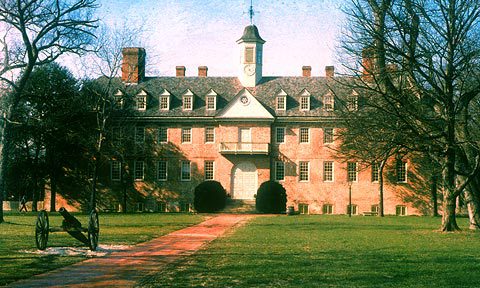
Visitors and tourists alike wander through William and Mary’s campus on a daily basis.
They amble around old campus walking under a canopy of trees and on top of hundred-yearold
bricks. Everyone stops to admire the Crim Dell, W&M’s supremely photogenic lake in the
middle of campus. Surely, anyone who visits Williamsburg and has a look at William and Mary’s
campus leaves knowing that it is a gorgeous and pleasant place; that it’s the home of one of
America’s oldest and finest universities.
And these visitors are correct. W&M is the second oldest college in America, founded in
1693. It is known as the “Alma Mater of a Nation” as the Tribe credits four American presidents
and sixteen members of the Continental Congress in the ranks of alumni. These visitors will
also certainly notice that W&M is not stuck in the past. Anyone who walks around campus will
hear tales of our thirty-nine Fulbright Scholars since the year 2000. A tourist might stroll past
a club meeting, ranging from Belly Dancing to the Harry Potter appreciation club. They’ll even
see evidence of the Tribe athletic teams truly defining the term “student athlete,” winning
championships and scholarships at the same time.
Yet, these visitors, like most people who come to look at William and Mary, are missing
the best part of campus! Actually, it’s hard to blame them, since the best part of William and
Mary can’t be experienced just by a casual stroll through the grounds. In fact, the best part
about William and Mary isn’t even visible at all. What defines the William and Mary experience,
what will make your next four years outstanding beyond imagination, is the community spirit
that reaches from every person to every corner of campus.
This family spirit lies in the interactions between students and professors. The relationships
formed extend far beyond the classroom, reaching into real collaborative research
and lasting friendships. W&M students aren’t confined to doing menial research; they regularly
publish professional articles side-by-side with their professors.
The W&M life-blood pulses and thrives in our residence halls, governed by a policy of
self-determination. Self-determination allows your hall, the people you live with, to determine
the rules that you will live by. I’m sure Thomas Jefferson, Class of 1762, is smiling at this adaptation
of democracy to the policies governing your new home.
The community shows its strength in our students helping friends and strangers, on
campus and off. One doesn’t have to look far to find students volunteering and helping others;
the majority of W&M students volunteer on a regular basis. But the students’ volunteering
interests aren’t confined to typical pursuits; it reaches even to the incoming freshman
each year. Hundreds of upperclassmen move down to Williamsburg a week early for the sole
purpose of helping incoming freshmen carry their things into their rooms, and settle in their
new homes!
But, what if a student isn’t interested in participating in sports at a varsity level, just for
recreation? No problem. The campus recreation center has just finished a renovation project
that doubled its size. Recently, Men’s Health & Fitness Magazine ranked W&M as the seventeenth
fittest college in the country, highlighting our healthy options available at all dining
halls. Our spirit certainly runs strong through many different kinds of athletic endeavors.
W&M’s community spirit whips through campus like a winter wind. It moves, it morphs,
it pervades. It runs from every dorm to classroom to concerts to coffeehouses. The spirit burns
inside every member of the Tribe, bursting through in the form of smiles, laughs, and friendships
formed. This community spirit shows in our acceptance and tolerance of others. There is
no other university in the country like William and Mary. It is singularly unique in the combination
of personal attention, extraordinary academic opportunities, research capability, and
on-campus student community.
The community spirit, the fire inside William and Mary students’ hearts, can be yours.
But just touring the college, just visiting and admiring the pretty buildings, won’t reveal to you
the true extent of our community. This spirit, this fire, is best experienced from within, as a
member of the Tribe.
Our community shows off its muscle in our athletic teams. Our varsity athletes truly
define the phrase “student athlete.” The Tribe is the Colonial Athletic Association (CAA) powerhouse
among all sports, having won more than eighty conference championships. But this
athletic prowess does not come at the expense of academic success, no not at all. The Tribe
athletic teams can claim a 95 percent graduation rate, fifth best among all universities in the
country. “Student-Athlete” indeed.
A former President of William and Mary loved to end all of his speeches, e-mails, and
official communication with the phrase “Hark Upon the Gale.” The phrase comes from the
refrain of William and Mary’s Alma Mater:
William and Mary loved of old, Hark Upon the Gale!
Hear the thunder of our chorus, Alma Mater Hail!
The word hark can be interpreted two ways, as “to listen” and “to think back on something.”
The word gale is usually defined as a “very strong wind” but can also mean “a noisy outburst.”
So one can interpret this in two ways, both seem quite appropriate to the college. Hark
Upon the Gale! Listen to the strong wind! Remember our actions! Put in more direct terms:
Feel our impact!
William and Mary is a university that has a very strong impact: an impact on the nation
and local community, the alumnae, the current students, and you, the future students.
College of William and Mary
Academics
A university’s charge is not just to teach facts, formulas, and procedures. The true mark
of a university is how well it can help to mold and meld the nubile minds of freshmen into
cogent, prepared, and mature adults ready to start the path towards leading the future. Many
universities accomplish this, but to varying degrees. William and Mary meets this charge to the
highest degree.
Here, in our school’s academic setting, you will, without a doubt, be challenged on a
daily basis. However, do not confuse the word “challenged” with “unbelievably difficult.”
Believe me, if you are admitted, we know you can do the work that lies ahead of you. But at
William and Mary, challenging means more than this. It means you will have extremely dedicated
faculty members seeking to draw out your best. It means you will have peers who are just
as excited as you are about classes and studies. It means you will have the opportunity to, and
many times be expected to, develop original and innovative research that is graduate level at
many other schools. In short, the academics at William and Mary will challenge every inch of
what you can do.
Faculty
William and Mary encourages students to develop a very well-rounded educational base
while at the college. It requires that students take classes in all of the different types
of disciplines, but leaves the students a lot of flexibility when it comes to choosing which specific
courses to take. For example, the requirements don’t say students must take one course
in the English department; one of the requirements is for students to take one course in literature
and history of the arts, of which many English department courses qualify.
My freshman seminar was in the music department and was called
“Sound and Image.” The course explored the relation between the two, specifically
sound and music used in movies. We watched plenty of films for the
course and spent time training our brains to listen to movies rather than watch
movies. It was a fascinating process, and I can credit that course with advancing
my writing and critical thinking skills more than any other course I took
at W&M.”
Because of William and Mary’s smaller size, most classes are small enough for students to
interact regularly with the professor and with fellow classmates. The student-to-faculty ratio is
eleven-to-one, one of the lowest of any public school in the country! Here are some more stats
to further set your mind at ease: Introductory courses are taught by professors, not graduate
students, and your professors are really committed to teaching you, not just to completing their
research. These are all things that might not be true at larger universities. See, you really won’t
be just a number at William and Mary!
Special mention must go to our professors. The dedication of the William and Mary faculty
to teaching was recently ranked third in the country, and first among public schools in a
national poll. For W&M professors, research and publication are important, but teaching
always comes first. William and Mary undergraduates do the kind of research and work with
their professors that is rarely seen at other universities until work begins for the Ph.D.
Another special facet of the William and Mary education is the freshman seminar,
guaranteed and required for all first-year students. The classes, taught by full-time professors,
are all topical in nature and work to greatly advance students’ writing and critical
thinking skills while also providing an in-depth examination of the subject. One of the best
facets of these seminars is that the maximum number of students allowed in them is fifteen.
Past years have seen seminars like “Reading the Romance Novels,” “The Literature of
Baseball,” and “J.R.R. Tolkien’s World.” Many graduates have fond memories of their freshman
seminar, and many credit it with introducing them to their major, research interest, or
faculty advisor.
Majors
William and Mary offers about forty undergraduate majors, as well as an opportunity
for students to create their own major combining various disciplines. There are also
many opportunities to explore personal interests in one’s major through independent study,
senior honors projects, and even collaboration on scholarly publishing with professors.
Recently, the most popular majors have been in the School of Business Administration,
psychology, government, English, history, and biology.
Also, in William and Mary’s academic system, students are encouraged to explore all
facets of our academic offerings. This also makes it very easy for students to double major or
have a minor and still graduate in four years. Double majoring is very popular at W&M and
allows many students to gain a more specific skill-set that might take a graduate degree at
other colleges.
Most Popular Fields of Study
The top 5 fields of study completed at College of William and Mary.
Admission procedures at William and Mary take into account many different factors from
your high school years. But simply put, William and Mary is looking for the best students in the
world who are looking to challenge themselves and grow in all facets of their life. The classes
you took and the grades you earned are important, but so are the characteristics that tell us
more about the kind of person you will grow to be, like leadership, creativity, and character.
Many students ask, “What classes should I be taking?” William and Mary does not have
a magic formula of the specific classes you need to be taking to gain admission. However, the
typical admitted William and Mary students challenge themselves in every opportunity during
their high school years. Most admitted students take the strongest and most rigorous course of
study their high school offers. This usually includes four years of English, four years of math,
four years of a foreign language, three to four years of history, three to four years of science,
and other elective courses. Honors, Advanced Placement, and International Baccalaureate
courses all entail rigorous study and are therefore recommended whenever possible. The
Admissions Office recognizes that course offerings are not consistent between schools so
exceptions to this rule of thumb always exist.
All applicants must take the SAT or ACT as part of a complete application. SAT subject
tests are fully optional. All testing must be completed by January of the senior year so that
scores will be reported to William and Mary in time. Students who enter William and Mary
must also meet proficiency requirements in foreign language and writing by time of graduation.
However, you can exempt yourself from these ordinarily required courses if you have
already satisfied the requirements in high school! You can satisfy the foreign language requirement
by successfully completing four years of one foreign language or a minimum score of 600
on the SAT Foreign Language subject test (650 on the Latin test). A student can gain exemption
from the writing requirement by scoring well on the AP or 1B English Exam.
But these aren’t absolutely the most important parts of the application. William and
Mary knows that you are more, so much more than just classes, grades, and test scores. You
have a whole life outside of classes where you have done some amazing things. To William and
Mary, the intangibles that make you you are just as important as grades and scores. The
admissions committee certainly takes this into account when considering each student’s
admission. But the committee needs your help. In the application, you should present your
activities, accomplishments, interests, and values. Try to really convey who you actually are
and what you will add to William and Mary’s community of scholars. A large opportunity for
this is the essay section. The Common Application (of which William and Mary is an exclusive
user) essay section is also a large opportunity to creatively and appropriately enlighten us
about your intangibles.
For the simple fact that William and Mary is included in this book, you know that we are
labeled “Most Competitive.” Each undergraduate class is comprised of between 1,200 and
1,500 students, of which 65 percent are Virginians. In recent years, the Admissions Office has
received over 10,000 applications for each class. While those numbers might be intimidating,
don’t be discouraged. The Admissions Office encourages everyone to apply!
If you have decided that William and Mary is the only place for you, that it is your
absolute first choice, and that you want to become a new member of the Tribe more than anything
else, then you might want to consider our Early Decision plan. Early Decision at William
and Mary is binding, which means that if you are accepted, you agree to attend. The application
deadline for Early Decision is November 1, and notifications will be sent one month later,
on December 1.
Regular Decision applicants must postmark their applications by January 1 for freshman,
February 15 for fall-term transfer applicants, and November 1 for spring-term transfer
applicants.
Financial Aid
One of the things that makes a William and Mary education so special is not only the
benefits outlined above, but also its comparatively low price tag in relation to schools of the
same caliber. As an example, Kiplinger recently ranked William and Mary third on the 50 Best
Nonetheless, the cost of a college education today is a difficult burden to bear for many
families. Many students rely on financial aid for assistance in their quest for higher education.
At William and Mary, financial assistance can come in different forms, but most aid is
distributed in the form of grants, loans, and work-study opportunity packages. William and
Mary uses the Free Application for Federal Student Aid (FAFSA) to determine each student’s
unique need. Each student’s financial need is not just based on family income. It also takes
into account family size, number in college, assets, and many other variables. Early Decision
applicants should turn in their forms by November 1; Regular Decision applicants should turn
in the FAFSA between January 1 and February 15.
An additional financial aid package includes the Gateway William and Mary initiative.
Gateway William and Mary is a financial aid packaging tool serving students from the State of
Virginia who come from low-and middle-class families with a less than $40,000 annual income.
Undergraduate students within the Gateway program are eligible for financial aid that uses
grant monies to meet 100% of their demonstrated financial need – so they are able to graduate
from college with little to no debt! This shows that William and Mary is committed to giving
every admitted student, regardless of their socioeconomic background, the opportunity to
achieve an education from one of the top rated institutions in the country. In some cases, families
that come from exceptionally low income households may not have to contribute any
money to cover the cost of attending William and Mary. The FAFSA form would determine if
the family is eligible for this type of financial aid packaging.
William and Mary has three main merit scholarships. The William and Mary Scholars
Award is available to twenty to twenty-five entering students who will greatly enhance the
diversity of the student body. Awards are equal to the value of Virginia tuition and fees for four
years. The second main award is the Monroe Scholars program. Between 8 and 10 percent of
the entering freshman class is designated as a Monroe Scholar. Beyond academic benefits,
recipients are provided a $3,000 research grant to pursue a specific academic interest. Both of
these programs require no separate application.
The third main award is the Murray Scholars Program. Endowed by a multimillion dollar
alumni gift, the Murray Scholars Program will provide four students per year with extensive
benefits, including in-state tuition, fees, room and board annually, two separate $2,500
research grants towards their academic research interests, and the kind of academic attention
reserved at most universities exclusively for graduate students. Finalists for the Murray
Scholars Program are selected from the application review process and would be asked to
come to campus for scholarship competition.
Federally funded grants such as the Pell Grant
and the Supplemental Educational Opportunity Grant
are available at William and Mary, as are federally
sponsored loans such as the Perkins Loan and the
Stafford Loan. The State Council of Higher Education
for Virginia (SCHEV) awards the Virginia Transfer
Grant for minority transfer students. Some academic
departments give scholarships to students who
demonstrate outstanding scholarship in that field.
There are several other unique opportunities for assistance
such as $1,500 scholarships offered by the Order
of the White Jacket for students who are working in
food service to help put themselves through school.
Student Financial Aid Details
How many students use Financial Aid, and how much do they use?
College of William and Mary 2174th for the average student loan amount.
Secrets to getting the best Virginia scholarships and financial aid
Obviously, the focus of transforming and molding young minds into educated adults is
not contained within the classroom walls. A large part of learning in college comes outside
of the classroom. What you do outside of those fifteen to twenty hours a week you spend in
class really matters and can truly have an impact on the kind of person you develop into.
Simply put, ordering pizza, watching movies, and playing video games is not the best way to
spend all of your extracurricular time as an undergraduate. Thankfully, William and Mary recognizes
this and has more than you could possibly ask for to make your life at college more fun
than you can even imagine.
One of the most popular ways to enrich your life outside of classes is by getting involved
with any of our more than 400 student organizations, most of which are organized and run
solely by students. William and Mary has a wide and varied selection of groups to capture the
interests of most students. Walking across campus, you might run into the Club cross-country
team out for a run, an a capella team staging an impromptu concert, the geology club digging
up some treasures, or even the Harry Potter fan club staging a mock-quidditch game! W&M
also has several service-oriented clubs, cultural groups, social fraternities and sororities, literary
magazines and newspapers, yearbook, student government, and many performing groups.
The point is William and Mary has a club for every kind of interest you could have. If by some
chance we don’t, then you have the opportunity to create the club with some friends.
“In your freshman year you’ll have a roommate that is usually matched
up with you by the Office of Residence Life. It’s a scary thought to live with somebody
you haven’t met yet, but they have a great track record and do an amazing
job of matching up roommates.”
Something else that must be mentioned: William and Mary is not a commuter school;
that is to say, on the weekend, our students do not vacate the grounds to go back home. People
live here, stay here, and have their friends here on campus. The residence hall is the basic
organizing unit of W&M dormitories, and coincidentally, it is where most students meet their
best friends. Many students spend the weekend hanging out and relaxing with their friends all
over campus and off campus too.
The largest source of weekend events is the
campus events programming group, UCAB. They are
responsible for bringing hundreds of events to the campus
with something going on every weekend and most
weeknights. Every year, UCAB brings comedians, hypnotists,
prominent speakers, entertainers, new movies,
debates, and lots of concerts to campus. Recent years
have seen bands like Wilco and The Roots, comedians
like Jon Stewart and Dave Attell, and speakers like
Former UN Secretary General Kofi Annan and
Archbishop Desmond Tutu come to Williamsburg!
William and Mary performing arts also doesn’t disappoint when it comes to social life
fun. The theatre department puts on several high-quality productions each year, including
many that are student-directed. The campus also has a wildly popular improvisational theatre
group (think Whose Line Is It Anyway?) that perform all over campus, much to the delight
of students, faculty, and staff. William and Mary is also fortunate enough to have so many student-
run a capella student groups that you might think there is a concert going on every night
of the week!
For students interested in Greek organizations, William and Mary does not disappoint.
About one quarter of the William and Mary student body is in one of fifteen social fraternities
or twelve social sororities. Think you know all there is to know about Greek organizations after
watching some Hollywood movies? Think again! William and Mary Greek organizations not only
serve a social purpose but also commit large amounts of time to philanthropic endeavors.
Every Greek organization puts on philanthropy events all through the year. These events are
hugely popular and regularly raise thousands of dollars for the organizations’ charities.
Athletics at William and Mary are also a big draw for students. Students at W&M say
they all have Tribe Pride running through their veins and bleed William and Mary’s colors,
green and gold! At the varsity level, the Tribe is, statistically and historically, the best overall
team among all sports in our conference, the Colonial Athletic Association. In the past
years, you might have seen many of our teams streaking up the Division I Top 25 in men’s
and women’s cross country, men’s gymnastics, women’s field hockey, men’s and women’s soccer, and women’s tennis. Not interested in varsity
sports? No problem. There are opportunities for you
to compete against other colleges in our club sport
program, or just relax and have some fun with intramurals. Overall, 85 percent of W&M undergrads participate
in intercollegiate sports, club sports, and/or
intramural programs. Also, Men’s Health recently
named William and Mary students some of the fittest
in the country.
For off-campus entertainment, there is more than
you might think. True, Williamsburg is no New York
City. But there is much more to the town than just
touristy Colonial Williamsburg. Some of the more popular and student-friendly places in town
are the delis. These three bars/restaurants are right off campus and, according to the students,
have the best submarine sandwiches and cheese fries for miles around! They are great places
to hang out with friends and watch a game, listen to live music, or just talk and unwind from
the school week. Williamsburg also has numerous coffee shops, movie theatres, and restaurants,
all right off campus. And how many colleges can claim to have Busch Gardens right in
their backyard! You want a night out in the big city? No problem: Norfolk, Virginia Beach, and
Richmond are all less than an hour’s drive away.
Finally, one of the biggest extracurricular pursuits for W&M students is community
service. More than 70 percent of William and Mary students participate in public service
activities during their time on campus, contributing over 150,000 volunteer hours every
year. W&M students’ character really shows through when you see that our largest fraternity
on campus is actually a coed service fraternity that is dedicated to service projects on
campus and off.
Freshman Move In-Day
Without doubt, one of the most exciting
days of the whole school year at
William and Mary is freshman move-in
day. All 1,350 or so freshmen, in the
peak of Virginia’s summer heat, move
into their campus dorms at the same
time; sounds stressful and hectic right?
To make the process easier for you and
your family, hundreds of William and
Mary upperclassmen move back down
to campus early just to come and help
incoming freshmen move in.
Student Enrollment Demographics
How many students are enrolled at College of William and Mary?
Of all of W&M’s many service organizations,
one stands out from the crowd. Each
year, the William and Mary campus unites
behind The Annual Alan Bukzin Memorial
Bone Marrow Drive. William and Mary’s
bone marrow drive is the largest on-campus
bone marrow drive in the country and
the second largest overall in the country!
Since its inception at the college, almost
10,000 people have been added to the
national registry, which has led to roughly
sixty life-saving matches and donations.
Alumni
It is quite understandable that your immediate
focus is on getting in to William and Mary, and not particularly
on what you will do after you graduate.
However, the opportunities available to you post-W&M,
and how we help prepare you for that time, is an
important facet to consider in any school. William and
Mary, in fact, does not disappoint in this respect.
To be competitive after graduation these days,
more is required than just a diploma and good
grades. Nobody will hand you a job just for that. Sorry.
You must develop and demonstrate skills that do not
come easily: leadership as well as humility, selfreliance
and also the ability to work in a team, self-awareness while also being internationally
knowledgeable. William and Mary is the place where you can learn and develop these
skills. Memorizing some formulas won’t cut it, in the real world or at William and Mary. Here,
students are given the well-rounded background they need to live life to the fullest once they
graduate.
As for what our graduates do after graduation, William and Mary students are known for
their passion in learning and education. Towards this end, between one third and one half
choose to go directly to graduate school. Acceptance rates for graduate schools (including
medical schools and law schools) hover in the 75 to 80 percent range, well above any national
average. Students with a B or B+ average have a 75 to 85 percent acceptance rate for medical
school, far above the national average.
Interested in a job after graduation? The college will give you more help than you can
imagine in finding one. The Career Center brings approximately 750 employers to recruit on
campus each year. They also host over a hundred sessions each year to help students with
resume and cover letter writing as well as job searching. Not ready for graduation you say?
They also coordinate internships on campus and will help you prepare for and land that connection-
making summer internship you can only now dream about. Also, many of the companies
who recruit at William and Mary have a large body of W&M grads already employed. They
know the caliber of our students and come looking for more!
Prominent Grads
Carter Braxton, Signer of the Declaration of Independence
Glenn Close, Actress
Benjamin Harrison, Signer of the Declaration of Independence
Thomas Jefferson, Third President of the United States
Linda Lavin, Actress James Monroe, Fifth President of the United States
Darren Sharper, NFL Football Player for the Minnesota Vikings
Jon Stewart, Comedian, host of The Daily Show with Jon Stewart
John Tyler, Tenth President of the United States
George Wythe, Signer of the Declaration of Independence
John Marshall, Supreme Court Justice
Robert Gates, Former Director of CIA,
Current U.S. Secretary of Defense
Perry Ellis, Fashion Designer
Mark McCormack, Founder of IMG, World’s Largest Sports Marketing Agency
Faculty
William and Mary encourages students to develop a very well-rounded educational base
while at the college. It requires that students take classes in all of the different types
of disciplines, but leaves the students a lot of flexibility when it comes to choosing which specific courses to take. For example, the requirements don’t say students must take one course
in the English department; one of the requirements is for students to take one course in literature and history of the arts, of which many English department courses qualify.
Because of William and Mary’s smaller size, most classes are small enough for students
to interact regularly with the professor and with fellow classmates. The student-to-faculty ratio
is eleven-to-one, one of the lowest of any public school in the country! Here are some more
stats to further set your mind at ease: Introductory courses are taught by professors, not graduate students, the majority of classes have between ten and thirty students, and your professors are really committed to teaching you, not just to completing their research. These are all
things that might not be true at larger universities. See, you really won’t be just a number at
William and Mary!
Special mention must go to our professors. The dedication of the William and Mary faculty to teaching was recently ranked third in the country, and first among public schools in a
national poll. For W&M professors, research and publication are important, but teaching
always comes first. William and Mary undergraduates do the kind of research and work with
their professors that is rarely seen at other universities until work begins for the Ph.D.
Another special facet of the William and Mary education is the freshman seminar,
guaranteed and required for all first-year students. The classes, taught by full-time professors, are all topical in nature and work to greatly advance students’ writing and critical
thinking skills while also providing an in-depth examination of the subject. One of the best
facets of these seminars is that the maximum number of students allowed in them is fifteen.
Past years have seen seminars like “Reading the Romance Novels,” “The Literature of
Baseball,” and “J.R.R. Tolkien’s World.” Many graduates have fond memories of their freshman seminar, and many credit it with introducing them to their major, research interest, or
faculty advisor.
My freshman seminar was in the music department and was called “Sound
and Image.” The course explored the relation between the two, specifically sound
and music used in movies. We watched plenty of films for the course and spent
time training our brains to listento movies rather than watch movies. It was a
fascinating process, and I can credit that course with advancing my writing and
critical thinking skills more than any other course I took at W&M.
Majors
William and Mary offers about forty undergraduate majors, as well as an opportunity
for students to create their own major combining various disciplines. There are also
many opportunities to explore personal interests in one’s major through independent study,
senior honors projects, and even collaboration on scholarly publishing with professors.
Recently, the most popular majors have been in the School of Business Administration,
psychology, government, English, history, and biology.
Also, in William and Mary’s academic system, students are encouraged to explore all
facets of our academic offerings. This also makes it very easy for students to double major or
have a minor and still graduate in four years. Double majoring is very popular at W&M and
allows many students to gain a more specific skill-set that might take a graduate degree at
other colleges.
This website and associated pages are not associated with, endorsed by, or sponsored by College of William and Mary. StateUniversity.com has no official or unofficial affiliation with College of William and Mary.
bruce ((at)) kittyhawk dot com
Men's Club, Women's Club Rugby