About This Data

StateUniversity.com – U.S. University Directory   [ Home :: University List :: California ]

Free Admissions Info
See also:

California Institute of Technology Introduction

Increase your salary, get your degree in your spare time - FREE Application to Search Online Universities for a limited time

Caltech’s scientific reputation ranks it among the world’s elite research universities, but with only 300 professorial faculty and 913 undergraduates, Caltech’s small size sets it apart from its peers. Caltech is the place where Linus Pauling determined the nature of the chemical bond, where Theodore Von Kármán developed the principles that made jet flight possible, where Charles Richter created a logarithmic scale for the magnitude of earthquakes, where Nobel Laureate in physics Richard Feynman—one of the most original thinkers of the twentieth century— spent the better part of his preeminent career, and where physicists and engineers are currently working toward the first detection of gravitational waves. However, Caltech is also a place where more than half of students participate in on-campus research before they graduate, where eighty-five percent of students participate in intramural or intercollegiate athletics, and where students have lived under a student-run honor system since the 1920s. The Caltech undergraduate experience is a fusion of two seemingly incompatible institutions: a multibillion-dollar research university and an intimate small school community.

As a high-powered research institution, Caltech has produced some of the greatest scientific achievements of the past century. Caltech’s undergraduate program trains scientists and engineers for the great discoveries of the next. In class, you don’t just learn the answers to questions in your textbook; you learn to ask your own questions and are challenged to find the answers. Professors often treat students as intellectual peers and while this creates a very demanding curriculum, it also gives students the opportunity to actively participate in cutting-edge research. Many undergraduates work as research assistants on campus, and more than 300 participate in the Summer Undergraduate Research Fellowships program each summer. Many of these students will be named as authors or coauthors of articles in major scientific journals, a rare honor for undergraduates. This unadulterated exposure to the real world of science means that Caltech graduates are well prepared for a career in research. A higher percentage of Caltech graduates go on to receive Ph.D.s than do graduates of any other university.
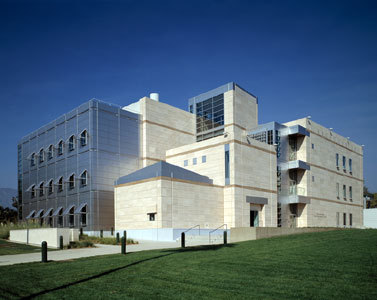
Although the science at Caltech is very serious, student life at Caltech is laid back and a little quirky. Almost all students at Caltech are members of one of the seven houses on campus. The house, the modern-day remnants of long-lost fraternities, perpetuate a long list of offbeat traditions and are the center of year-round intramural sports competitions. The beautifully landscaped campus of open lawns, cool ponds, and winding pathways fosters a relaxed Southern California lifestyle. On an average day, you might find professors and students sharing coffee at an outdoor table or students teaching each other to juggle. At night, you might find a game of Ultimate Frisbee on the athletic fields or students grabbing a midnight snack at the student-run coffeehouse. There are more than eighty student clubs on campus, eighteen varsity sports, two jazz bands, a symphony orchestra, a concert band, numerous choral groups, and an active theater arts program. Caltech students work very hard on academics, but they’re also very good at finding diversions and, fortunately, there’s no shortage of activities from which to choose.

Most things at Caltech are not truly unique; there are many small schools where undergraduates live in an intimate environment, and there are many world-class research institutions where undergraduates have the opportunity to learn science and do research. However, Caltech is the only place where these two ideas coexist on a single campus. They come together with great success, as Caltech consistently ranks among the top schools in the world. This makes the California Institute of Technology truly special and very difficult to describe on paper.

One big thing that nobody realizes until they step onto campus is how beautiful the landscape is. The student houses are flanked by brick pathways lined with orange trees on one side and olive trees on the other. Palm trees dot the campus and quiet ponds are home to lily pads, turtles, and bullfrogs. Every few weeks, a couple takes advantage of this scenery and gets married on campus; many more use Caltech as a backdrop for their wedding photos. This may have inspired the producers of The Wedding Plannerto bring Jennifer Lopez on campus recently. Caltech students also recognize their campus in Legally Blonde, Orange County, and many other movies, as well as a host of TV shows. Located a few miles from Hollywood, Caltech is a prime site for filming on location. The northern and western sides of campus are decorated with roses, which reveal another often forgotten aspect of Caltech: It is located in Pasadena, California, home of the Tournament of Roses. Each year, the Rose Parade marches within a few blocks of campus and all Caltech women are eligible to enter tryouts for Rose Queen. This tiny school is filled with surprises, and four years isn’t nearly enough time to uncover them all. Caltech is a small school where there is big science. Its students are high achievers, but forego competition for an Honor System. Its beautifully landscaped campus shares space with cutting-edge scientific facilities. It is a place where Nobel Prize winners are spotted wearing shorts and T-shirts. It has innumerable extracurricular activities. It employs more Ph.D.s than there are undergraduates. It requires its literature and economics majors to learn quantum physics. It provides a top-notch education and charges less tuition than most peers. Can all of that exist at one place? At Caltech, it has existed for more than 100 years.

Coming to Caltech is certainly not for everyone, but for those who truly love science, there is no better place. The Caltech undergraduate experience is a wild and amazing ride, and there is never a shortage of things to do. Four years at Caltech forever changes the way every student looks at himself or herself, and most graduates agree that it is one of the most exciting periods of their lives. The shared journey bonds students together, and many make friends that last a lifetime. For all graduates, it is an experience they will never forget—once a Techer, always a Techer.

California Institute of Technology Academics

The academic experience at Caltech is unlike that of any other university in the world. Every student has to learn the fundamentals of each major aspect of science while staying well rounded with a required number of humanities courses. Homework is done in collaborative groups and tests are almost all take-home. Participation in scientific research is easily accessible to every undergraduate and world-renowned faculty members interact with students on a daily basis. With big-time scientific research happening in an intimate small-school environment, the academic environment at Caltech is like no other.

When freshmen arrive at Caltech, they are all enrolled in math, physics, and chemistry courses. This is the beginning of the core curriculum, which is the heart of a Caltech education. Every undergraduate, whether majoring in biology, economics, literature, or chemical engineering, has to take five terms of physics, two terms of chemistry, one term of biology, one term of chemistry laboratory, one term of another introductory laboratory, one term of science communication, twelve terms of humanities and social sciences, three terms of physical education, and one term of astronomy, geology, or number theory.

Options

At the end of the freshman year, students must declare an option, Caltech’s version of the major. There are options in every aspect of science and engineering, with the most popular being physics, engineering and applied science (which includes computer science), biology, chemistry, mechanical engineering, mathematics, and electrical engineering. A few students each year graduate with degrees in history, economics, or literature, but they are very different from their peers at other universities—through the core curriculum, all humanities and social science majors will have taken differential equations and quantum mechanics. Changing options is generally very easy, and double options are pursued by a few students each year. Every few years, a student designs his or her own curriculum and graduates under the Independent Studies Program.

Classes

The major distinguishing characteristic of academics at Caltech is that it’s very hard. Often unnoticed is the fact that Caltech students tend to take more classes than their peers at other universities. Caltech operates on a trimester system, with three terms a year that are each eleven weeks long. In addition, Caltech students take an average of five classes each term, while students at other universities generally take only four classes. After four years at Caltech, students almost always find themselves well ahead of their peers in the first year of graduate school.

I’ve heard rumors that at other colleges, students are very competitive. They are protective of their class notes, homework, and lab books and only care about how well they do. I’ve heard horror stories of students stealing each other’s notes and sabotaging lab experiments. That doesn’t happen here—we all want to help each other do well in our classes. It’s comforting to know that your fellow students, even those you don’t even know, are looking out for you. — Janet Zhou, ’04, Electrical Engineering and Business Economics and Management

The Honor System

T he fast pace of Caltech is more than almost any student can handle on his or her own, but fortunately, nobody is expected to study without help. Collaboration with peers is strongly encouraged under Caltech’s eighty-year-old Honor System. Instead of strict rules handed down from the administration, Caltech students are held responsible for their own actions and are on their honor not to cheat, plagiarize, or steal.

The greatest benefit of the Honor System is the fact that no tests are proctored. In fact, almost all quizzes, tests, and exams are take-home. The professor will set some ground rules for each test, and each student is responsible for respecting the given time limit and whether the test is open- or closed-book. Students are allowed to take tests wherever and whenever they want; some students sit in the privacy of their own rooms with their favorite CD or album playing, some prefer the quiet desks in the library, and some even take their tests out on the lawn or at the beach. Rather than having to wake up at 9:00 A.M., students can take their tests after dinner or even late at night; the professor won’t care as long as it is turned in by the stated deadline.

The Honor System also applies to homework, where students are generally free to share their answers with each other. As long as each student understands everything written on his or her own paper, the professor will give full credit. This atmosphere of collaboration virtually eliminates competition between students for grades. Every Caltech student is happy to help a friend with a lab or homework assignment because some day, he or she may need the favor returned.

Scientific Research

This training in the Honor System is part of Caltech’s strong focus toward scientific research. In the scientific community, researchers share their results openly and are held on their honor to conduct experiments with integrity. Undergraduates can experience this firsthand in numerous research opportunities on campus. The most popular way to do research at Caltech is through the SURF (Summer Undergraduate Research Fellowships) program. SURF provides grants of $5,000 to students who want to do research with a faculty member over the summer. Each “SURFer” must write his or her own proposal, submit progress reports through the summer, write a final paper, and present his or her research on SURF Seminar Day. Over the years, SURF has become an integral part of the Caltech experience. Last summer, more than twenty-five percent of the student body stayed on campus as part of the ten-week SURF program. In the most recent graduating class, more than fifty-nine percent of students had spent at least one summer in the SURF program.

Staying on campus over the summer is not the only way Caltech students can do research. The SURF program also pays for students to go to other universities over the summer—every year a few take this opportunity to travel to Europe. Caltech has recently instituted exchange programs with Cambridge University and the University of Copenhagen, which allow students to spend a term studying abroad. Students can stay on campus and receive hourly pay as research assistants during the school year or over the summer, and many labs are happy to hire undergraduates. Students can also earn academic credit by doing research as a senior thesis or to displace another requirement in their major. With so many laboratories at Caltech doing high-level research every day, the opportunities for undergraduates are seemingly limitless.

Laboratories

Some of the most advanced laboratories in the world are run by Caltech. The Jet Propulsion Laboratory (JPL) is the largest of these facilities. Located about fifteen minutes northwest of campus, JPL is NASA’s center for robotic exploration of the solar system. It has been run by Caltech since the 1930s and is the place where Voyager Iand II, now leaving the solar system, were designed and built. JPL also produced Galileo, currently orbiting Jupiter, and the highly successful Cassini, which is now orbiting the rings and moons of Saturn. JPL was also in the news for the multiple probes it has sent to Mars: Global Surveyor, thePathfinder, Odyssey, and rovers Spirit and Opportunity. A van runs daily between Caltech campus and JPL, and many undergraduates make the trip throughout the summer.

Telescope Facilities

Caltech also operates several telescope facilities, including the Palomar Observatory north of San Diego housing the 200-inch Hale Telescope, and the Keck observatory on the summit of Hawaii’s dormant Mauna Kea volcano, home of the world’s largest optical and infrared telescopes. Caltech also operates the Owens Valley Radio Observatory, a collection of radio telescopes 250 miles north of campus. On the Caltech campus, there are 0.35-meter and 0.25-meter telescopes atop the Caltech astrophysics buildings that are used for undergraduate classes. Also, plans are underway at Caltech, in collaboration with the University of California, to design and build the Thirty-Meter Telescope, the worl’s most powerful telescope.

Laser Interferometer Gravitational Wave Observatory (LIGO)

In conjunction with MIT, Caltech operates the Laser Interferometer Gravitational Wave Observatory (LIGO), a facility dedicated to the detection of cosmic gravitational waves. LIGO is the largest project ever funded by the National Science Foundation, and consists of two widely separated installations within the United States—one in Hanford, Washington, and the other in Livingston, Louisiana. They are each massive L-shaped structures with four-kilometer-long arms held in a vacuum, the largest high vacuum ever constructed. A one percent-scale prototype sits on Caltech campus, and a few undergraduates work there every summer, experiencing the cutting edge of experimental physics.

Other Facilities

Caltech is also home to Nobel Laureate Ahmed Zewail’s Laboratory for Molecular Sciences, the headquarters of the Southern California Seismic Network, and a new initiative to improve voting technology. A new nanotechnology center and a state-of-the-art MRI facility are two more projects that are keeping Caltech at the forefront of scientific research.

Caltech students have the unique privilege of learning in the midst of advanced scientific research. Many other universities perform high-level research, but nowhere else can students so easily walk into the laboratories. On a campus where the Ph.D.s outnumber the undergraduates, anyone who wants to participate in research needs only to ask. Research experience is the best possible training for those going to graduate school, and Caltech students have an easy time gaining that edge.

California Institute of Technology Admissions

Caltech is not for everyone, and getting in is not easy. By campus tradition, the target size of the freshman class is always 215—the number of seats in the physics lecture hall. Compare that to the fact that 2,760 applications were received and the 551 letters of admission that were sent in 2005; do the math and you’ll see that it is a highly selective process. Although there are no strict requirements for test scores, the academic achievements of the freshman class are always very high. The middle SAT I scores range from 700–770 Verbal and 780–800 Math; eighty-eight percent graduated in the top tenth of their high school class.

As a Caltech alum, I often speak to high school students about admission to Caltech, and they always ask, “How can I be sure that I will get in?” My answer, of course, is that there is no sure way, but there are definitely things that you can do to increase your chances. Take the most challenging courses offered at your high school. Look for ways that you can express your love of science outside of school. Ask for recommendations from teachers who really know you and what makes you tick, and who are willing to write about you in depth. And finally, spend time on your application essays! Your essays speak for you to the admis- sions committee, and they want to hear what you have to say, not what you think they want to hear. — Debra Tuttle, B.S. ’93, Literature

Although those numbers look daunting, there is no blueprint for getting in to Caltech. The admissions process at Caltech is not formulaic. The Undergraduate Admissions Office has only six admissions officers, but they get help from faculty and students in reading applications. The Freshman Admissions Committee includes sixteen faculty and sixteen undergraduate students. Each member of the Admissions Committee brings his or her own personal experiences of Caltech, and they work together to find and admit those students who fit best with Caltech. There are a few qualities that Caltech always looks for in its applicants: a strong interest in mathematics, science, or engineering, high academic ability, and demonstrated initiativein their approach to learning.

Caltech admissions has a knack for evaluating applicants for the intangible quality of being a good scientist, and in such cases can overlook blemishes in grades or test scores. — David Moore, ’03, Electrical & Computer Engineering

The goal of the Admissions Committee is to admit students who will become the “creative type of scientist” that Caltech seeks to produce. Members of the committee find these students by carefully reviewing the more subjective parts of the application—essays, choice of high school curriculum, extracurricular activities, and teacher evaluations. Caltech also encourages prospective students to attach a research paper to their application, which is one of the best ways to evaluate how well an applicant will do in a research-oriented environment. Caltech loves to find students who take an active role in their own education, and who pursue opportunities to learn both in and out of the classroom.

The only absolute requirement for coming to Caltech is a passion for science. Through Caltech’s core curriculum, students who enroll don’t get to choose whether or not they take science classes. This does not mean that applicants need to be one-dimensional; Caltech students are actually required to take more humanities courses than science majors at most other schools. A strong love of science is a must, though; those with just a casual interest need not apply.

The key to admission to Caltech is passion. An applicant must demonstrate a passion for learning, for life, and for science through activities outside the classroom. We focus more on how you spend your free time than on your test scores and class rank, because being successful at Caltech takes more than brains and more than diligence; it takes a love for what you are doing. — Jialan Wang, ’04, Mathematics and Economics

California Institute of Technology Financial Aid

Increase your salary, get your degree in your spare time - FREE Application to University of Phoenix for a limited time

Caltech financial aid has long held to a simple policy: “If you are an admitted student whose family has insufficient financial resources to pay for all or part of your educational expenses, Caltech will provide you a financial aid award that will meet Caltech’s calculation of your financial need and so make it possible for you to attend.” This has created a tradition of Caltech providing unparalleled opportunities to excellent students, regardless of their families’ economic circumstances.

I knew that Caltech would be expensive, but the good thing is that Caltech’s price tag includes everything: tuition, room and board, student fees, health insurance, money for books, extra meals, and personal expenses, even travel money if you live far away. There aren’t any hidden costs. — Debra Tuttle, B.S. ’93, Literature

Applying for first-time financial aid is a simple process that mirrors that of other universities. Every applicant must fill out the Free Application for Federal Student Aid (FASFA) and the College Scholarship Service (CSS) Financial Aid PROFILE Application. These documents enable the Financial Aid Office to determine the amount that the student and his or her family can reasonably be expected to contribute toward a Caltech education. Any difference between that amount and the cost of attending Caltech is considered the student’s financial need, and the Financial Aid Office will prepare a student aid package consisting of a combination of scholarships, grants, loans, and work study that will fully meet that need. The sum of a student’s contribution along with the financial aid award covers the entire cost of attending Caltech: tuition, room and board, student fees, health insurance, money for books, extra meals, and personal expenses, even travel money if you live far away. There aren’t any hidden costs.

Caltech tuition is already well below the cost for its peers, but the Financial Aid Office makes the additional effort to make it affordable for everyone. Most students are very satisfied with their financial aid package.

Caltech strives to be fair and generous with its financial aid. A student’s financial standing never factors into the admissions decision. The admissions process is completely “need blind” for domestic students and applications are evaluated separately from financial aid applications. Caltech also never uses financial aid as a bartering tool to attract students. All awards are based on need alone, and no award will ever be increased to match an offer from another school. If a student receives an outside scholarship, it will go toward reducing a student’s loan or work study, rather than reducing scholarship or grant awards. If a student’s financial circumstances change, Caltech is very willing to reevaluate the family’s current, revised financial status.

Work-Study

Many students receive federal work-study as part of their financial award, and it is very easy to find opportunities to work on campus. The number of job opportunities far outnumbers the number of students on campus. The Financial Aid Office is very flexible with switching between loans and work-study, and many student work off a significant portion of their costs before they graduate. Some of the best-paying jobs are research assistant and teaching assistant. Students can also earn work-study by performing community service such as tutoring, reading to kids, or feeding the homeless. Other students work as office assistants, tour guides, ushers, or waiters. Many of these jobs have very flexible hours and pay reasonably well.

Scholarships

Caltech gives many scholarships that are need-based, but in recent years, several donations have allowed Caltech to give a limited number of merit-based scholarships to incoming freshmen. These merit awards come in a range of values. There is no separate application for the merit awards; all admitted students are automatically considered. There are also a number of upperclass merit awards given to sophomores, juniors, and seniors on the basis of academic excellence. These awards cover up to the full cost of tuition, and the Scholarships and Financial Aid Committee awards them to many outstanding continuing students each year.

California Institute of Technology Students

Tech is not full of people who lock themselves in their rooms and study. There is something for everyone here. Plenty of people go out clubbing on the weekends, and yet these are the same people who do interesting summer research in cutting-edge fields like quantum computing. — Kutta Srinivasan, ’04, Computer Science and Economics

Houses

Social life is generally not one of the reasons a high school student chooses Caltech, but every year, freshmen are surprised to find an active social scene centered around the seven undergraduate houses. Blacker, Fleming, Lloyd, Page, Ricketts, Dabney, and Ruddock House are descendants of fraternities that dominated the campus in the 1920s. This fraternity lineage is most obvious at family-style house dinners each night. Student waiters set the tables, serve food, and refill drinks; everyone must ask permission to get up from the table, and dinner ends with announcements from the house officers. Dinner is certainly not a formal affair though; each house adds its own quirky rules; for example: no “nerd talk,” and no freshmen sitting at corners. Breaking the rules results in a variety of interesting punishments and the nightly ritual serves as an entertaining diversion that makes each house seem more like a family.

During the first week of classes each year, freshmen are assigned to houses in a process known as rotation. A toned-down version of a fraternity rush, each freshman visits each of the seven houses and submits a list of preferences at the end of the week. Upperclassmen from each of the houses then get together and assign each freshman to a house in an all-night meeting. The end of rotation marks the beginning of a week of initiations, when freshmen can be found trading water balloons, and moving furniture across campus at the request of upperclassmen. This gives freshmen their first taste of Caltech pranking, and after this shared experience, each house is drawn together as a tight community.

The houses are microcosms within Caltech. There are enough different personalities within the houses that almost everyone can find someplace to fit in. I have found that the house system is a wonderful way to establish a family-like support network. Even from the beginning, I have felt like I was a part of what was going on and that people cared about what was going on in my life. — Aimee Eddins,’04, Biology

Getting into a house gives each freshman an instant circle of friends and a constant source of social activity. Each house hosts one large “interhouse” party during the year, as well as many smaller parties. Every house elects a social team that plans other events such as ski trips, concerts, and trips to various L.A. tourist locations, but most social activity isn’t incredibly organized. Nightly, students can be found relaxing and socializing in the common areas of the house, getting to know the group of people who will be their neighbors for four years.

Other Activities

Many Caltech students happen to be talented musicians, so the school sponsors a variety of music and arts programs. There is a concert band, two jazz bands, chamber music, a symphony orchestra, men’s and women’s glee clubs, and a theater program that performs three shows every year. A growing number of arts programs at Caltech are now being organized by students. There are several a capellagroups, multiple rock bands, dance troupes, and a literary magazine, all run entirely by students.

Just because we’re a small school doesn’t mean we don’t have talented musicians or poets or athletes or actors. It just means people came here to do science. Academics are rightly going to come first, but when people make time for extracurriculars, they typically put their souls into them. I’ve been singing in choirs since elementary school, so when I had some time in my schedule I signed up for the women’s glee club. It’s great! Where else on campus do you see 45 women, ranging from undergrads to faculty and staff to members of the community, all together? We’re not just talking about singing here—the women’s glee club is a force, a sisterhood, a philosophy lesson on living. People tend to stick with the club for all four years, so you make many friends. Not only is it a time to socialize; it challenges you in other ways. You learn with a different part of the brain, and it revitalizes that creative side. — Martha-Helene Stapleton, ’03, Physics

These groups are just a sampling of the more than ninety student clubs on campus— that’s one club for every ten students! Caltech students run a cheerleading squad, chess team, entrepreneur club, student investment fund, amateur radio club, science fiction club, ethnic organizations, religious groups, and many more. Recently, a group of Caltech students started an undergraduate research journal that is now distributed at numerous universities across the country.

Whatever you want to do, Caltech will always be very understanding and supportive. If you’re interested in extracurricular activities, it’s simple to get involved in clubs or student government. If you’re interested in sports, you can participate on a team or just play recreationally in interhouse sports. If you have a hobby that isn’t already at Caltech, you can easily start a new club. Since there are so few students, one person can make a big difference. While I’ve been here, I’ve seen students start an undergraduate research journal, a cheerleading squad, and a community service group that didn’t even exist when I was applying. — Janet Zhou, ’04, Electrical Engineering and Business Economics and Management

Student Government

All these clubs operate with little or no oversight from the faculty or administration and are an example of Caltech’s long tradition of student self-governance. Many aspects of this self-governance have been alluded to elsewhere in this essay, and it is an integral part of student life at Caltech. Student government bodies decide who lives in the dorms, discipline students in cases of cheating, fund the majority of student activities, and choose representatives that help read admissions applications.

Student government is centered around a non-profit organization known as the Associated Students of Caltech (ASCIT), Inc. Completely independent of the Institute, ASCIT publishes the student newspaper, yearbook, student handbook, and literary magazine. ASCIT is also in charge of administering the Honor System: suspected cases of cheating are investigated and adjudicated by the Board of Control, a committee of twelve students. Student representatives, along with faculty members, also sit on the Conduct Review Committee, which rules on disciplinary matters for undergraduates. Those students are just a few of the more than sixty student representatives on various Caltech committees that review academic poli- cies, set the dinner menu, make admissions decisions, award merit scholarships, and deter- mine academic ineligibility, to name a few examples. Caltech students are allowed to partici- pate in almost every administrative decision that affects student life, which is a rare privilege in the present-day big business of higher education.

California Institute of Technology Athletics

While academic competition is almost nonexistent, the seven houses engage in constant competition through a year-round schedule of interhouse sports. The houses play softball, soccer, swimming, track, basketball, tennis, Ultimate Frisbee, and football, earning points for compiling the best record in each sport. The house with the most points at the end of the year wins the interhouse trophy. The games are competitive, but everyone gets a chance to play—eighty-five percent of students play in interhouse sports before they graduate.

Intercollegiate sports are open to almost any student who can commit to daily practices, and almost thirty percent of the student body plays on Caltech’s eighteen NCAA, Division III teams. There is cross-country, soccer, basketball, baseball, fencing, and more, but for over a decade now, no football team. There are also a wide variety of physical education classes for students to fulfill their PE requirement, ranging from traditional sports to yoga, scuba diving, and rock climbing.

California Institute of Technology Traditions

This level of influence allows students a high degree of independence from Caltech administration. Over the years, students have been able to shape their own unique way of life without much administrative interference. This has created many quirky traditions, one of the wackiest being senior Ditch Day, which was featured on the Tonight Show’s “Jaywalking” in the summer of 2002. One day every May, all the seniors ditch their classes and leave campus. Many years ago, underclassmen began to prank seniors’ rooms while they were gone. The seniors countered by “stacking” their rooms, creating barriers to keep students from getting in on Ditch Day. Over the years, these stacks have become more elaborate, and now most take the form of an all-day scavenger hunt, where students run around campus collecting clues that will unlock the seniors’ rooms. The Institute has relented to the students, and now cancels classes every year for Ditch Day. Every year, this creates some unexpected sights, which can really be understood only by those going through it. Ditch Day is somewhat representative of the entire student experience at Caltech; it is quirky and unpredictable, and is exactly what Caltech students enjoy.

History of Caltech Pranks

  • 1961: The Rose Bowl crowd is surprised when the cards under their seats are raised to spell, “Caltech.”
  • 1977: The Voyager Iand IIspacecraft are launched with the letters “DEI/FEIF,” mottos of two Caltech student houses, inscribed on a package plate
  • 1980: Residents of Fleming House borrow a 1.3-ton cannon from Southwestern Military Academy.
  • 1984: The final score on the Rose Bowl scoreboard reads “Caltech 38, MIT 9”
  • 1987: In Hollywood’s centennial year, the famous Hollywood sign is modified to read “CALTECH.”

California Institute of Technology Alumni

Thirty-two Nobel Prizes have been awarded to Caltech alumni and faculty. A Caltech education primes students for a career in scientific research, and a majority of graduates follow that path. On average, about half of Caltech graduates go on to earn a Ph.D., which is a significantly higher percentage than any other university. These are the students that Caltech is designed for—those who will dedicate their lives to the study and teaching of scientific knowledge. Caltech graduates are very successful in competing for fellowships and more than twenty each year win national and international awards.

Most freshmen enter Caltech dreaming of a professorship or a career in scientific research, but by the time graduation comes around, many find their interests are elsewhere. These students go into a variety of fields they never considered when they were in high school.

About twenty-five percent of graduates each year go straight into the workforce. Even when the economy is down, Caltech students don’t have much trouble finding excellent jobs. More than one hundred companies recruit on campus each year; in a recent year graduates received offers that averaged about $61,000 and several graduates received offers in excess of $80,000. Most job offers come from the engineering and computer science industries, but an increasing number of recruiters come from the financial sector, insurance industry, and management consulting firms. More and more companies have found that the problem-solving skills, technical background, and mathematical ability of Caltech graduates apply to a wide range of activities.

This still leaves a group of graduates that doesn’t fit into a particular mold. Although Caltech does not have a premedical program, each year graduates get into the top medical schools and go on to earn M.D.s. A growing number of graduates are applying to law school even though there are no prelaw majors. A few students each year join the Peace Corps, travel around the world, go into teaching, or start their own businesses. The rigorous education that Caltech provides does more than train students for scientific research; it teaches skills that are valuable in almost any field.

To graduate from Caltech is to be part of an elite club of a little more than 20,000 living alumni. As an extension of the intimate culture of Caltech, the alumni network is very close-knit and supportive. Many Caltech alumni look to hire other alumni, and all are happy to help in job searches or provide business contacts. Many graduates find their way back into the Caltech community; twenty-five current faculty members earned their undergraduate degrees at Caltech.

Prominent Grads

  • Frank Capra, Film Director
  • Linus Pauling, Chemist, Political Activist, two Unshared Nobel Prizes: Chemistry and Peace
  • Arnold Beckman, Chemist, founder of Beckman Instruments, Inc.
  • Vernon Smith, Economist, Nobel Prize for Economics
  • Ben Rosen, Cofounder of Compaq Computer Corporation
  • Gordon Moore, Cofounder of Intel Corporation
  • David Ho, Biologist and Physician

Information Summary

Ranks 5th overall and 2nd in California

Increase your salary, get your degree in your spare time - FREE Application to Search Online Universities for a limited time
University of Phoenix
University of Maryland University College (UMUC)

Carnegie Foundation Classification

Research Universities (very high research activity)

UndergraduateArts & sciences plus professions, high graduate coexistence
GraduateSTEM dominant
Undergraduate PopulationFull-time four-year, more selective, lower transfer-in
EnrollmentMajority graduate/professional
Size & SettingSmall four-year, highly residential

General Characteristics

Highest offeringDoctoral degree
Calendar SystemQuarter
Years of college work requiredN/A
Variable TuitionNo

Special Learning Opportunities

Distance LearningNo
ROTC — Army / Navy / Air Force YesYes / No / Yes
Study AbroadYes
Weekend CollegeNo
Teacher CertificationNo

Student Tuition Costs and Fees

What are the typical tuition costs and fees for attending California Institute of Technology?

Ranks 102nd for total cost of attendance

  In District In State Out of State
FT Undergraduate Tuition $29,940 $29,940 $29,940
FT Undergraduate Required Fees $2,895 $2,895 $2,895
PT Undergraduate per Credit Hour N/A N/A N/A
FT Graduate Tuition $29,940 $29,940 $29,940
FT Graduate Required Fees $1,230 $1,230 $1,230
PT Graduate per Credit Hour N/A N/A N/A
Total Cost of Attendance — On-Campus $46,560 $46,560 $46,560
Total Cost of Attendance — Off-Campus w/out Family $34,000 $34,000 $34,000
Total Cost of Attendance — Off-Campus with Family $34,000 $34,000 $34,000

Student Tuition Cost History and Trends

Three year history and trends on the cost of attending

  In District In State Out of State
Published Tuition & Fees $27,309 trend  $32,835 $27,309 trend  $32,835 $27,309 trend  $32,835
  Cost (regardless of residency)
Books & Supplies $1,047 trend  $1,165
On-Campus – Room & Board $8,814 trend  $9,540
On-Campus – Other Expenses $3,849 trend  $3,020
Off-Campus w/out Family – Room & Board N/A trend  N/A
Off-Campus w/out Family – Other Expenses N/A trend  N/A
Off-Campus with Family – Room & Board N/A trend  N/A

Admission Details

Application Fee RequiredN/A
Undergraduate Application Fee$60
Graduate Application Fee$80
First Professional Application FeeN/A
Applicants 3,597 (2,791 male / 806 female)
Admitted 607 (370 male / 237 female)
Admission rate 17%
First-time Enrollment 231 (145 male / 86 female)
FT Enrollment 231 (145 male / 86 female)
PT Enrollment N/A (N/A male / N/A female)
Total Enrollment2,086

Admission Criteria

What criteria does California Institute of Technology use for admissions?

Required = Required, Recommended = Recommended, Neither required nor recommended = Neither required nor recommended
Open AdmissionsNo
Secondary School GPA / Rank / RecordN/A / Recommended / Required
College Prep. CompletionRequired
RecommendationsRequired
Formal competency demoN/A
Admission test scoresRequired
TOEFLRecommended
Other testsN/A

Admission Credits Accepted

What types of credits does California Institute of Technology accept?

Dual CreditNo
Life ExperienceNo
Advanced Placement (AP)No

Athletics - Association Memberships

Sports / Athletic Conference Memberships NCAA
NCAA Basketball Conference Southern California Intercoll Ath Conf
NCAA Baseball Conference Southern California Intercoll Ath Conf
NCAA Track & Field Conference Southern California Intercoll Ath Conf

ACT Test Admission

Ranks 2nd for 75pctl scores

Applicants submitting ACT results 29%
Verbal scores (25/75 %ile) 31 / 35
Math scores (25/75 %ile) 34 / 36
Cumulative scores (25/75 %ile) 32 / 35

SAT Test Admission

Ranks 4th for 75pctl scores

Applicants submitting SAT results 99%
Verbal scores (25/75 %ile) 700 / 780
Math scores (25/75 %ile) 770 / 800
Cumulative scores (25/75 %ile) 1470 / 1580

Student Services

Remedial ServicesNo
Academic / Career CounselingYes
PT Cost-defraying EmploymentYes
Career PlacementYes
On-Campus Day CareYes
Library FacilityYes

Student Living

First-time Room / Board RequiredYes
Dorm Capacity869
Meals per WeekN/A
Room Fee$5,370
Board Fee$4,170

Student Financial Aid Details

How many students use Financial Aid, and how much do they use?

California Institute of Technology Ranks 5063rd for the average student loan amount.

  Average Users % of Attendees
Federal Grant Aid $5,525 24 pie   10%
State & Local Grant Aid $3,310 56 pie   24%
Institutional Grant Aid $23,367 121 pie   52%
Student Loan Aid $1,591 47 pie   20%
Any financial aid type   124 pie   53%

Student Enrollment Demographics

How many students are enrolled at California Institute of Technology?

  Men Women Total
Non Resident Alien
376138514
Black Non-Hispanic
18725
Hispanic
652994
Asian / Pacific Islander
292146438
American Indian / Alaskan Native
235
White Non-Hispanic
688274962
Race Unknown
321648
Total 1,473 613 2,086

Student Graduation Demographics

How many students graduated at California Institute of Technology?

  Men Women Total
Non Resident Alien
8715
Black Non-Hispanic
314
Hispanic
10313
Asian / Pacific Islander
382563
American Indian / Alaskan Native
N/AN/AN/A
White Non-Hispanic
7238110
Race Unknown
N/AN/AN/A
Total 131 74 205

Most Popular Fields of Study

The top 5 fields of study completed at California Institute of Technology.

  Men Women Total
52 11 63
41 15 56
25 17 42
25 14 39
18 18 36

Student Completion / Graduation Demographics

How many students are successful graduates?

  Non Resident Alien Black Non-Hispanic Hispanic Asian / Pacific Islander American Indian / Alaskan Native White Non-Hispanic Race Unknown Total
Aerospace, Aeronautical and Astronautical Engineering 9 1 1 10 1 22
Agricultural/Biological Engineering and Bioengineering
Applied Mathematics 2 4 3 1 10
Astrophysics 3 2 4 9
Biochemistry/Biophysics and Molecular Biology 1 1 7 9
Biology/Biological Sciences, General 3 21 12 36
Chemical Engineering 5 4 11 19 39
Chemistry, General 8 3 10 21 42
Civil Engineering, General 1 2 1 4
Computer and Information Sciences, General 3 3 15 1 22
Economics, General 3 4 7
Economics, Other 1 1 2
Electrical, Electronics and Communications Engineering 36 4 9 14 63
Engineering Mechanics 4 1 5
Engineering, General 4 5 9
Engineering, Other 8 2 1 11
Environmental/Environmental Health Engineering 3 1 5 9
Genetics, General 1 1
Geochemistry 1 3 4
Geology/Earth Science, General 1 1 6 8
Geophysics and Seismology 3 1 4
History, General 1 1
Humanities/Humanistic Studies 1 1
Materials Science 4 1 1 4 1 11
Mathematics, General 3 2 4 12 21
Mechanical Engineering 10 1 8 1 14 2 36
Neuroscience 4 1 8 13
Physics, General 15 6 34 1 56
Physics, Other 7 1 1 7 16
Planetary Astronomy and Science 1 2 3
Social Sciences, General 4 1 2 5 12
Total 140 2 23 92 1 221 7 486

Faculty Compensation / Salaries

California Institute of Technology Ranks 5th for the average full-time faculty salary.

Tenure system Yes
Average FT Salary $132,203 ($137,234 male / $105,275 female)
Number of FT Faculty 324 (273 male / 51 female)
Number of PT Faculty 63
FT Faculty Ratio 5 : 1
Total Benefits $9,638,726
Add an image …

California Institute of Technology School Images

college :: California Institute of Technology Building :: California Institute of Technology
Free Admissions Info

Comment and Corrections Make a comment …

Familiar with this University? We would love to hear about your experience. Feel free to add comments or additional information regarding California Institute of Technology.