Welcome to Webb Institute, one of the most unusual colleges in the world, but also one
of the best. Let’s set some things straight from the start:
Webb Institute was founded in 1889 by millionaire William H. Webb, one of the preeminent
shipbuilders of the mid-nineteenth century, the era of the clipper ships.
The purpose of the school is to advance the art and science of shipbuilding in the United
States by training promising young people for careers in that field; thus, Webb confers only one undergraduate degree: a Bachelor of Science in Naval Architecture and Marine
Engineering.
The Webb program is a full, four-year, intense engineering education.
All students receive a full-tuition scholarship for all four years. (Yes, it’s an almost-free
education; the only costs are room, board, and books.)
The Webb campus is a mansion on Long Island Sound.
Only about eighty students attend in total, with a maximum of twenty-six in a class.
All Webb students have two months of practical work experience every winter, for a total of
at least eight months experience upon graduation.
All Webb sophomores sail on ships for their winter work term, most overseas to the
Caribbean, Europe, and Asia.
Webb graduates are highly regarded in the maritime industry and eagerly recruited.
Webb’s placement rate is one hundred percent.
Graduates are regularly accepted into master’s programs at schools with prestigious
graduate programs such as MIT and Stanford.
Webb is not a military school; it is a completely private institution, focusing primarily on
the needs of the commercial shipbuilding market; therefore, students have no obligations
to the school on goverment upon graduation.
The Webb degree is readily transferable to a wide range of other engineering disciplines,
not only shipbuilding.
Webb is fully accredited.
To sum up, Webb Institute is one of the best (if not the best) engineering schools in the
country, it’s basically free, and it happens to focus on ships. If you have never heard of Webb,
don’t worry—many of the students presently attending didn’t know about it either until their
senior year in high school, when they received an introductory brochure in the mail! But don’t
let Webb’s small size and apparent obscurity fool you: Webb may be one of the best-kept secrets
in academia, but certainly not in the maritime industry. If you are interested in getting a great
job right out of college, with little debt, and you are smart and willing to work hard to learn
about engineering in shipbuilding, then read on.
Webb Institute is a rare school; and like many rare things, it is invaluable, if you can recognize
and appreciate it. Admittedly, Webb is not for everybody. It is a hard, taxing, and focused
school. It’s like being in the Marine Corps for the mind. But the status and opportunity that
come with a degree from Webb certainly make it all worthwhile. A Webb education is a topnotch
education, certainly better for engineering than any Ivy League or technical school—
and the price just can’t be beat. So, if you have the interest in ships, the smarts, and the
stamina necessary to make it through Webb, by all means, DO IT! It may very well be the most
accelerating four years your career will ever see.
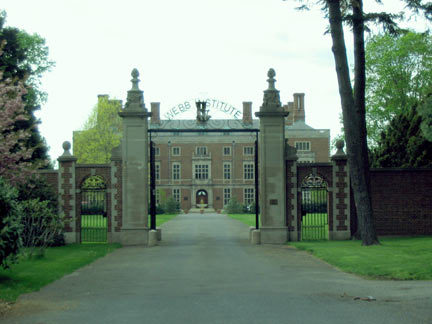
Webb Institute
Academics
Webb is a hard school. There is no doubt about it. Nobody flies through Webb; everybody
suffers alike. But that’s what makes it good, and the 146 credits required to graduate (that’s
more than eighteen credits per semester) is only the tip of the iceberg. Add multiple field trips,
highly respected faculty both in engineering and humanities classes, two months of practical
work experience each year, and projects that few other schools dare to attempt—such as the
senior thesis and the preliminary design of a large ship—and you begin to get the bigger picture.
The incredible amount of learning and work that Webb crams into four years is what
makes the school dear to alumni, and the alumni dear to employers.
Webb doesn’t teach you how to be smart. You’re already smart when you
come here. Webb teaches you how to work.
Courses
Webb Institute confers only one undergraduate degree—the Bachelor of Science in
Naval Architecture and Marine Engineering. Everyone takes the same technical
classes over the course of four years. There are about six classes per semester, on average, with one being a humanities class. Freshman year, the courses are mostly basic scientific
courses, such as calculus, physics, and chemistry, as found in any good engineering school.
Sophomore year, more fundamental engineering courses are presented, such as fluid
dynamics, strength of materials, and thermodynamics. Then in the junior year, study tends
toward more field-related work, beginning with ship resistance and propulsion and including
ship structural analysis, ship auxiliary and steam systems, electrical engineering, and
ship maneuverability. Finally, in the senior year, the courses are almost all marine-related
and involve huge projects such as ship design, ship’s lines, machinery arrangement, propeller
design, and a senior thesis of the student’s choosing. Despite the above trends, one of
the many unique aspects of Webb is that naval architecture and marine engineering
courses are presented throughout the four-year program, as early as first-semester freshman
year. This tactic helps to keep students interested and to prepare them (especially
freshmen and sophomores) for their winter work jobs.
There tend to be two kinds of students at Webb: those who are interested in small
pleasure and utility craft and those who prefer to deal with large ocean-going commercial and
military vessels. The Webb curriculum distinctly favors the latter; however, the engineering
and marine fundamentals learned often can be transferred to the design of smaller boats. The
small craft design course in the junior year helps this transition, and discussion of small craft
technologies, such as fiberglass hulls, is included in other classes.
Disciplines
Another good point about the Webb curriculum is that it is quite streamlined, yet still
broadbased. This apparent dichotomy is possible because of the nature of naval architecture
and marine engineering. Consider all the disciplines involved in designing a ship.
First, there is the hull moving through the water; the study of this action involves knowledge
of hydrodynamics (and even aerodynamics—a modern rudder is a type of wing). Next,
there is the hull itself; the design of adequate structural integrity requires a good understanding
of the principles of civil engineering. Then there are the guts of the ship—all the
machinery and electrical equipment. The design of these systems requires, for example,
knowledge of combustion and heat transfer (chemical engineering), engines and other
auxiliary machinery (mechanical engineering), and ship electrical power distribution and
electronic control systems (electrical engineering). Elements of all these various disciplines
must be learned, but in only one, four-year degree program. Therefore, to accelerate
the learning process, only the highlights of each discipline are discussed. The fundamental engineering principles are taught first, followed by those aspects pertaining to shipbuilding
(for example, the use of steel and fiberglass). Irrelevant aspects (such as concrete) are
reserved for independent study. This somewhat narrow approach can be maddening to people
with purely scientific interests, but is great for those with an engineering inclination
who “just want to use it.”
Humanities
There is one humanities class each semester. Standard topics range from technical communications
to U.S. foreign policy to ethics. Occasionally, students are able to have
some choice in what humanities courses they take, such as during the first semester of
junior year, when the class, interacting with the faculty, decides on topics for three to four
electives. Professor Richard Harris, the sole full-time humanities professor currently at
Webb, teaches several of the Webb courses, and the rest are taught by adjuncts, many of
whom are fairly well-known in their fields. Through all these classes, Webb students can
broaden their horizons and hone their communication skills, as much as is possible from a
highly technical program. As alumni attest, many employers are impressed with the excellent
writing and speaking abilities of Webb graduates.
When students grow sick of ships, they can take a break and work on
their humanities classes.
Classrooms and Faculty
One of the big benefits of Webb is how conducive the environment is to learning. Each
class (such as the sophomores) has its own classroom, with a workstation in it for each
student. Almost all the classes are held in these four classrooms; the students stay put and
the professors are the ones who have to run to their next class! Classes begin at 9:00 A.M.
and go to noon; after an hour of lunch, they continue until three. On Monday mornings,
there is a special one-hour lecture by a guest speaker from industry. Although these
arrangements may be reminiscent of third grade with Mrs. Hoag, there is nothing
elementary about the faculty or the lectures. The student-to-faculty ratio is around seven
to one. All the Webb professors have earned master’s degrees, and several have earned
doctorates. The small class size and common coursework enable the professors to gauge
how much the students know and how much remains to be covered. Students often interrupt the lectures with questions, which the professors welcome, as this promotes understanding
and allows the professors to move swiftly over the simple stuff and dwell more on the difficult
material. After classes, the professors are readily available to answer further questions
and to help students with problems.
Library, Computers, and Labs
After classes are done for the day, many students work together in the classroom, or in
the Livingston Library, which is open twenty-four hours a day (like the rest of the
campus) and contains one of the best collections on naval architecture and marine engineering
in the country. All students are given laptops when they enter Webb and the
campus facilities are completely covered by a wireless network with full Internet access.
High-quality printers and a high-speed plotter are available, as well as a photocopier—all for
free. The student-run bookstore provides everything else necessary, from notebook paper to
rulers to coffee mugs. Laboratory equipment is not always state-of-the-art, but it is adequate.
There are chemistry, materials science, and physics laboratories in the basement of the main
building, and marine engineering, fluids, and electrical engineering laboratories in the
Haeberle Laboratory building. Special equipment in the Haeberle Laboratory includes a
complete boiler/turbine steam system, two diesel engines with dynamometer, and a flow
channel.
The Towing Tank
The pride of Webb is the Robinson Model Basin. This basin is a long tank of water in
which scale models of ships’ hulls are towed and their performance variables are measured.
Significant recent research in the basin includes testing of commercial and military
hull form, yachts, and systematic study of high-speed multi hulls.
Workload
It is appropriate at this point to emphasize the intense workload at Webb. Four hours per
night tends to be the typical amount of time spent on homework, but it can often be
much higher than that. Pulling all-nighters for major projects and even regular homework
assignments is all too common. Most of the work is not overly difficult; it’s just that there’s
so much of it that it takes forever to do. How to handle all that pressure is one of the major
lessons that students learn at Webb. The other one is how to work together to have a shot
at getting all the work done.
What do you call the guy who graduates last in the class? A naval
architect!
Winter Work Program
Last but certainly not least is the winter work program. To understand this program, you
must first understand Webb’s unusual calendar year, which runs as follows: Fall semester
starts at the end of August and goes until winter break; spring semester starts at the beginning
of March and goes until late June. This arrangement leaves two two-month breaks in
the year: January through February and July through August. The summer break is just
that—time off that’s free of scholastic obligations. For the winter break, however, all students
are required to work at jobs that are related to the maritime industry, sort of like coop
jobs or internships. The school finds jobs with shipyards for freshmen who work
hands-on as apprentices doing welding, fitting, etc. For sophomores, the school arranges
berths on merchant ships, where the students work as cadet observers in the engine rooms
and on decks, doing routine maintenance. Of course, one of the perks is that students get
to travel, sometimes even overseas to the Caribbean, Europe, or Asia, depending on the particular
ship. Junior and senior year, however, students are on their own and must find maritime,
engineering-related jobs. Most students get jobs in shipyard engineering
departments or separate design or consulting offices, though a wide range of opportunities
exists because Webb is fairly broad on what it considers marine-related work. Increasingly,
students are going international, finding jobs all over the world. Thus, by the time a student
graduates from Webb, he or she has first-hand experience of how a ship is designed and
engineered, how it is physically constructed, and how it is operated at sea. This knowledge
is invaluable to employers, especially when some competing graduates from other naval
architecture schools have never even set foot on a deck!
Most Popular Fields of Study
The top 5 fields of study completed at Webb Institute.
The admissions form asks basic questions, such as, “Who are you? Where do you live?
What do you like to do?” Other paperwork includes teacher evaluations, high school transcript, college transcript, if you have taken any courses at the college level, and proof of citizenship
or green card. That’s about it. Many students say the Webb application was the easiest one they
filled out.
What kind of student does Webb want? The school was founded to entice the brightest
and best young people in the United States to pursue careers in shipbuilding, mainly by offering
them a great education at no cost; therefore, Webb has set very high standards for
prospective freshmen. Applicants must be in the top ten percent of their high school class
and have a minimum GPA of 3.5. They must also take both the SAT and the SAT Subject Tests
in Mathematics Level I or II, and Physics or Chemistry. A minimum score of 600 Verbal and
660 Math on the SAT is required. Applicants must either be United States citizens, nativeborn
or naturalized, or hold a green card showing permanent residency and have attended a
secondary school in the United States or its possessions or territories.
Webb also wants people who will do well in the Webb environment, with particular
regard to the smallness of the school and the academic emphasis on ships and engineering.
This means that people who are well-rounded and have at least some social skills are preferable
to those who just sit in a corner and stare at the wall. Also, prospective freshmen must
show dedication at least to engineering, if not to shipbuilding specifically. These qualities
show through in the extracurricular activities that an applicant lists on the form and through
the required personal interview with the president of the school.
A couple of side notes are in order here. First, Webb accepts incoming students only as
freshmen; in other words, there is no transferring from another school into the upper classes
of Webb. Second, Webb does not give any Advanced Placement credit. So, in short, everyone
starts out equally at Webb. However, this fact should not discourage Webb wannabees from
taking AP classes in high school, particularly calculus, because it may give them a slight edge
in admissions (as well as make the first-semester race through integrals a little easier).
So what are an applicant’s chances of acceptance? They are better than they might first
appear, considering that only twenty-five freshmen are admitted each year. Stephen
Ostendorff, the Director of Student Services and Admissions, describes the admissions process
from his perspective in this way: First, the qualified students are separated from the unqualified
students, based upon their application forms and SAT scores. This first cut typically narrows
down the applicant pool to about seventy. Next, Steve starts inviting the top prospects to the
school for interviews; as they accept, the marginally qualified students are dropped from the
bottom of the list. Over thirty of the seventy are invited for interviews, because sometimes after
the interview, the school realizes that the prospective student is not right for it or the
prospective student realizes Webb is not right for him or her. Steve said the really tough decisions are about the students in the “forty-to-fifty” range. These students are qualified, but ultimately
some are not pursued because of the high yield among the top thirty applicants. In summary,
then, if an applicant meets Webb’s academic standards, he or she stands greater than a
fifty/fifty chance of acceptance. Then if that applicant is invited to interview and really wants
to go to Webb, he or she stands a very good chance of getting in.
There’s one last item about admissions: It is Webb’s policy not to discriminate on the
basis of race, creed, gender, or physical handicap, but does have physical and mental requirements
due to the strenuous nature of the winter work and curricular program. This fact is
important to keep in mind, especially when visiting the campus, because one quickly realizes
that the vast majority of students are white males. However, female and minority students historically
have not had any major problems with the students or the school. Webb’s mission is to
educate the best people, period. Basically, if you’re a minority and you don’t mind being in the
minority, Webb is still a fine school for you to consider attending.
Financial Aid
Financial aid can be very simple at Webb. First of all, Webb provides a full-tuition scholarship
to all students; this is possible because of a huge endowment created by the beneficence
of William Webb and the generous contributions of others. Thus, the only major expenses are
about $7,000 a year for room and board (living in a mansion is not cheap!) and about $300 to $700
per semester for books (though for the first semester of freshman year it’s more like $900 for
books). However, Webb Institute is dedicated to providing whatever financial aid is necessary to
allow all students to attend, because that was one of William Webb’s original stipulations when
he founded the school and donated his millions to it. First of all, Webb participates in the Pell
Grant program and the Family Federal Educational Loan program, which includes Plus and Stafford loans. Any further needs are met with Webb’s various own scholarships. The bottom line
is that graduates from Webb don’t have the tens of thousands of dollars worth of debt to pay off
that many graduates from other top-notch schools do, and any debt that Webbies do incur is small
and easily paid off with the high starting salaries that Webb graduates procure.
Student Financial Aid Details
How many students use Financial Aid, and how much do they use?
Webb Institute 4990th for the average student loan amount.
Secrets to getting the best New York scholarships and financial aid
It is most unfortunate: a stellar social life is one of those things that students generally
have to give up when they come to Webb for their college education. There is just no way that
a school averaging around eighty undergraduates can offer the same amount of social diversity
and opportunity that, say, a state school with 20,000 students can offer. This hard fact, coupled
with the intense technical workload that Webb requires and (for many male students, at least) the realization that, in some years, you can count the female students on two hands and a foot,
tends to make life at Webb seem almost monastic at times.
Most Webbies laugh sarcastically when someone mentions social life
at Webb.
The above view is overly pessimistic, however. On those rare moments when you’re
through with your work and you finally have time to look around you, Webb is actually a great
place to live. There is an active choral group and a theatrical troupe for students’ artistic
outlets. From the campus, to sports, to the student organization, to being directly on Long
Island Sound, to the City of Glen Cove, to nearby New York City, Webb has many positive attractions
to enjoy.
The Campus
For starters, life at Webb is about as comfortable as a middle-class undergrad could hope
for. The Webb campus is the former estate of Herbert L. Pratt, who is irrelevant to our
story here except for the fact that he owned a really nice house on a really nice piece of
property in a really nice area, and now it’s Webb’s. More specifically, Webb’s mansion is
located on twenty-six acres of prime waterfront property on beautiful Long Island Sound,
in an area nicknamed the “Gold Coast” because of all the rich people who built their lavish
estates here back in the Roaring Twenties.
Think The Great Gatsby, and you’ll have a pretty good idea of the look of
the place. Or, if you haven’t read that book, you can watch the movie Batman
Forever and look for Webb as the exterior of Wayne Manor; the outdoor shots were
filmed here in 1994!
The main building is the mansion, of course. It houses all the important things on
its three floors, including all four classrooms in the wings, undergraduate male residence,
dining room, library, the academic laboratories, lecture hall, laundry room, computer
room, faculty offices, and administrative offices. What this means is that a male student can stay completely indoors for whole weeks at a time (though this is not recommended).
The female undergraduate students, on the other hand, have their dorm rooms on the second
floor of the nearby Robinson Model Basin, so they are forced to get fresh air every day
as they stroll a few yards over to the main building for classes and meals. Both male and
female rooms are relatively spacious and are adequately furnished, with two students per
room being typical. Phone jacks and TV hookups are in each room. All in all, it’s a nice
place to live.
Conveniences
What are really nice are all the conveniences that Webb offers. The food service provides
three meals a day during the week and brunch and dinner on weekends, and
the chefs do an excellent job (honestly, this is the best college food in the universe). Little
things like free soap, a linen service, fifty-cent washers and dryers, free laundry detergent
and bleach, and ample parking for all students (including freshmen) make life just that
much easier. Also, the Student Organization (S.O.) services are particularly helpful. The
S.O. treasury allows students to cash checks and make deposits and withdrawals. The S.O.
kitchen allows students to refrigerate and microwave their own food. The S.O. bookstore
has just about every academic tool necessary for classes. Other facilities include the S.O.
garage, wood shop, and machine shop. All these services are accessible twenty-four hours
a day. Almost anything a person needs to live and work comfortably can be found on
campus, which is a big plus for students without cars.
The S.O.
The Student Organization merits further explanation. Basically, students govern themselves,
and to a degree not found at most other schools. All students are members of the
S.O. and agree to abide by the S.O. Handbook and the Honor Code. The handbook lays out
all the chairmanships and rules, and the Honor Code forbids stealing, cheating, etc. Such
documents are not peculiar to Webb; many schools have them. What is different about Webb
is that students actually govern themselves by these rules, for the most part. Thus, a tour of
Webb will reveal unusual practices, such as dorm rooms with locks operated only from the
inside, attic storage of students’ belongings, books and calculators left on classroom desks
and library tables, and the aforementioned twenty-four-hour-a-day access to almost every
public room and building on campus. This freedom does not mean that Webb is unsafe, however.
During the day, everyone is everywhere on campus, and with only eighty-some students,
everybody knows everybody who should be there. A student Officer of the Day is also on duty to greet guests. At night, hired security patrols the campus. In short, Webb has not had any
serious crimes in a long, long while, and any minor offenses are usually dealt with by the S.O.
Honor Council and the school administration. Thus, students at Webb don’t have to worry
like students at other schools do about the safety of themselves and their belongings.
Social Events
Webb has several social events throughout the year, both large and small, formal and
informal. A small event may be an evening of eating, drinking, and shooting pool and
the breeze in the student pub while a local guy plucks out some songs on his guitar. Big
events include Homecoming, Parents Weekend, the Beach, Halloween and Christmas parties,
and the biggest one of all—Webbstock. Webbstock is held on a Saturday in June, just
before the school year is out, and entails six or seven bands (some of them famous), free
drinks and food, and all sorts of sports, games, and activities out on the terraces under the
hot sun in front of the blue Sound. It’s quite an experience.
There are many sports and activities at Webb to help students eat up all their free time.
For athletics, Webb belongs to the Hudson Valley Men’s Athletic Conference, a sports
league of small schools in the area. (Although it says Men’s Athletic Conference, women are
welcome to and often do play on the teams—it’s really more like coed sports.) Many students
play sports which include basketball and volleyball (played in the gymnasium), soccer (on
Thorpe Field), tennis (on the two courts on campus), sailing, and cross-country. For sailing,
Webb owns several 420s for competition on the Sound, in addition to Lasers and two motorboats—
all for qualified students to use. For personal fitness, Webb has some weight equipment
in the gym; also, students can use the Glen Cove YMCA at no cost, with its complete
weight room, pool, and gym. Actually, since Webb athletics are run pri marily by the students,
if students want to start a sport not currently offered, they can form a team, call up other
schools in the area that have the sport, and, Presto! there’s competition.
Look, Ma, I’m playing college basketball!
The above description may make talented athletes and sports enthusiasts cringe when
they read it. Admittedly, you’ll never see Webb in the NCAA basketball final four or in the Rose
Bowl. However, the general informality of Webb athletics does not mean that athletes do not
play hard or that competition is not fierce and fun. All of the Webb teams have won several
games in their recent seasons. The sailing team is particularly good and regularly places
highly in regattas, occasionally beating schools like Cornell and the U.S. Naval Academy. And
this success is all achieved with ordinary students, not elite athletes. Many students who would
not otherwise ever play intercollegiate sports can show up for practices and then proceed to
beat the tar out of teams from schools ten times larger. Or, if that’s not your style, you can play
on an intramural team and just beat the tar out of your roommate.
Local Community
Finally, some reports indicate that there is life outside of Webb. Glen Cove is a quiet
suburban town, with a movie theater, various stores, several different churches and
houses of worship, public beaches and parks, and the all-important Taco Bell (it stays open
the latest). Students with musical talent are welcome to join the North Shore Symphony
Orchestra. In addition, students can hop on the Long Island Rail Road and be at
Pennsylvania Station in midtown Manhattan in under an hour and a half. Of course, if you
have a car, all of Long Island and New York City is within a couple of hours driving time, at
most. Students also participate in the Solar Splash Competition. The students work all year
on a solar electric boat and then travel to the competition, which has recently been in
Buffalo and Arkansas. So, in summary, there are a lot of fun things to do at Webb, both on
and off campus, if you have the time…if you have the time.
Alumni
After four excruciating years, it’s nice to know that you can get into just about any
graduate school in the country or go straight into industry with a high-paying job and a promising
future. Webb’s record is one-hundred-percent placement, even in an industry that has been
shrinking in the United States for the past couple of decades. And, by the way, ships aren’t in
any danger of extinction! That kind of security is really hard to beat in an era of corporate
downsizing.
First of all, let’s reiterate: Webb is NOT a military school. There are no obligations whatsoever
upon graduation, not even to stay in the maritime industry. You’re free to do as you
please with your life.
The next question, of course, is, “What do you do with a degree in naval architecture and
marine engineering?” It’s a good question, with a multitude of answers. Webbies always seem
to be in demand at shipyards across the country, where they do engineering work as they
design the ships of the future. Independent design and consulting offices offer attractive jobs
with many different kinds of technical work. The offshore industry needs (and pays well for)
Webb graduates. Just about any shore-based maritime work is open for graduates, since the
Webb degree covers many different areas of learning. Outside of the maritime industry, there
are many engineering jobs for which Webb graduates are qualified, especially if they obtain a
master’s degree in the particular field. Actually, Webb graduates are not even limited to engineering;
business, managerial, and finance positions seem to be popular destinations among the
alumni. Basically, the rule of thumb seems to be that as long as there is a maritime industry,
Webb graduates will always have jobs.
To be completely honest, the demand for Webb grads does not rest solely on the quality
of the Webb education, no matter how good it is. In reality, the way many Webb students get
jobs for winter work and after graduation is by calling up Webb alumni who work at the
particular companies of interest. Many of the key people in the maritime industry are Webb
alumni, and they are usually more than willing to help a fellow Webbie get a job. This reality After four excruciating years, it’s nice to know that you can get into just about any
graduate school in the country or go straight into industry with a high-paying job and a promising
future. Webb’s record is one-hundred-percent placement, even in an industry that has been
shrinking in the United States for the past couple of decades. And, by the way, ships aren’t in
any danger of extinction! That kind of security is really hard to beat in an era of corporate
downsizing.
First of all, let’s reiterate: Webb is NOT a military school. There are no obligations whatsoever
upon graduation, not even to stay in the maritime industry. You’re free to do as you
please with your life.
The next question, of course, is, “What do you do with a degree in naval architecture and
marine engineering?” It’s a good question, with a multitude of answers. Webbies always seem
to be in demand at shipyards across the country, where they do engineering work as they
design the ships of the future. Independent design and consulting offices offer attractive jobs
with many different kinds of technical work. The offshore industry needs (and pays well for)
Webb graduates. Just about any shore-based maritime work is open for graduates, since the
Webb degree covers many different areas of learning. Outside of the maritime industry, there
are many engineering jobs for which Webb graduates are qualified, especially if they obtain a
master’s degree in the particular field. Actually, Webb graduates are not even limited to engineering;
business, managerial, and finance positions seem to be popular destinations among the
alumni. Basically, the rule of thumb seems to be that as long as there is a maritime industry,
Webb graduates will always have jobs.
To be completely honest, the demand for Webb grads does not rest solely on the quality
of the Webb education, no matter how good it is. In reality, the way many Webb students get
jobs for winter work and after graduation is by calling up Webb alumni who work at the
particular companies of interest. Many of the key people in the maritime industry are Webb
alumni, and they are usually more than willing to help a fellow Webbie get a job. This reality
Demographics – Main Campus and Surrounding Areas
Reported area around or near Glen Cove, NY 11542-1398
Surrounding community
Large suburb (inside urban area but outside city, pop. over 250,000)
This website and associated pages are not associated with, endorsed by, or sponsored by Webb Institute. StateUniversity.com has no official or unofficial affiliation with Webb Institute.
Glen Cove, NY 11542-1398
p. 516-671-2213
w. www.webb-institute.edu