StateUniversity.com – U.S. University Directory [ Home :: University List :: Virginia ]
George Mason University
General Information, Alumni, History, Campus, Students, Faculty, Address, Tuition, and Football
- NEW - College and University Blog with many tips like acing the ACTs, SATs, college admissions, and preparing for college (if you're still in high school).
- University Forum and Discussion - Brand New Message Board For All Your Questions
- Information on Thousands of Careers - One-stop resource for very comprehensive, and up-to-date career information. Contains more than several thousand job profiles each with a job description, education and training requirements, salary information, working conditions, employment outlook and much more!
- Student Encyclopedia - Encyclopedia for reference and research from the Cambridge Collection.
Local News About George Mason University
Feed updated live and continuously
Information Summary
Ranks 60th for total enrollment
| Surrounding community | Large suburb (inside urban area but outside city, pop. over 250,000) |
|---|---|
| Highest offering | Doctoral degree |
| Full-time Enrollment | 15,833 |
| Total Enrollment | 29,728 |
| Calendar System | Semester |
| Years of college work required | N/A |
| Variable Tuition | |
| Application Fee Required | |
| Undergraduate Application Fee | $40 |
| Graduate Application Fee | $60 |
| First Professional Application Fee | $40 |
Demographics Main Campus and Surrounding Areas
Reported area around or near Fairfax, VA
| Total Population | 39,431 (39,431 urban / N/A rural) |
|---|---|
| Households | 13,160 (2.67 people per house) |
| Families | 9,158 (3.12 people per family) |
| Pop. — African American | 3,207 |
| Pop. — Asian | 5,870 |
| Pop. — Pacific Islander | 75 |
| Pop. — American Indian / Alaskan Native | 287 |
| Pop. — White (incl. Hispanic) | 29,061 |
| Pop. — Other | 2,149 |
Carnegie Foundation Classification
Research Universities (high research activity)
| Undergraduate | Arts & sciences plus professions, high graduate coexistence |
|---|---|
| Graduate | Comprehensive doctoral (no medical/veterinary) |
| Undergraduate Population | Medium full-time four-year, selective, higher transfer-in |
| Enrollment | Majority undergraduate |
| Size & Setting | Large four-year, primarily nonresidential |
Student Tuition Costs and Fees
What are the typical tuition costs and fees for attending George Mason University?
Ranks 777th for total cost of attendance
| In District | In State | Out of State | |
|---|---|---|---|
| FT Undergraduate Tuition | $4,752 | $4,752 | $16,896 |
| FT Undergraduate Required Fees | $1,656 | $1,656 | $1,656 |
| PT Undergraduate per Credit Hour | $267 | $267 | $773 |
| FT Graduate Tuition | $5,724 | $5,724 | $16,896 |
| FT Graduate Required Fees | $1,656 | $1,656 | $1,656 |
| PT Graduate per Credit Hour | $308 | $308 | $773 |
| Total Cost of attendance — On-Campus | $15,665 | $15,665 | $27,809 |
| Total Cost of attendance — Off-Campus w/out Family | $20,509 | $20,509 | $32,653 |
| Total Cost of attendance — Off-Campus with Family | $9,099 | $9,099 | $21,243 |
Student Tuition Costs for Professional Fields
What are the typical tuition costs and fees for getting a professional degree?
| In State | Out of State | |
|---|---|---|
| Law Degree — Tuition | $13,636 | $24,864 |
| Law Degree — Required Fees | $1,638 | $1,638 |
Student Tuition Cost History and Trends
Three year history and trends on the cost of attending
| In District | In State | Out of State | |
|---|---|---|---|
| Published Tuition & Fees | $5,448 |
$5,448 |
$15,816 |
| Cost (regardless of residency) | |||
|---|---|---|---|
| Books & Supplies | $940 |
||
| On-Campus – Room & Board | $6,020 |
||
| On-Campus – Other Expenses | $1,415 |
||
| Off-Campus w/out Family – Room & Board | $8,448 |
||
| Off-Campus w/out Family – Other Expenses | $3,465 |
||
| Off-Campus with Family – Room & Board | $1,574 |
||
Admission Details
| Applicants | 11,023 (5,036 male / 5,987 female) |
|---|---|
| Admitted | 6,720 (2,873 male / 3,847 female) |
| Admission rate | 61% |
| First-time Enrollment | 2,435 (1,079 male / 1,356 female) |
| FT Enrollment | 2,396 (1,055 male / 1,341 female) |
| PT Enrollment | 39 (24 male / 15 female) |
Admission Criteria
What criteria does George Mason University use for admissions?
| Open Admissions | |
|---|---|
| Secondary School GPA / Rank / Record | |
| College Prep. Completion | |
| Recommendations | |
| Formal competency demo | N/A |
| Admission test scores | |
| TOEFL | |
| Other tests | N/A |
Special Learning Opportunities
| Distance Learning | |
|---|---|
| ROTC — Army / Navy / Airforce | |
| Study Abroad | |
| Weekend College | |
| Teacher Certification |
Athletics - Association Memberships
| Sports / Athletic Conference Memberships | NCAA |
|---|---|
| NCAA / NAIA Basketball Conference | Colonial Athletic Association |
| NCAA / NAIA Baseball Conference | Colonial Athletic Association |
| NCAA / NAIA Track & Field Conference | Colonial Athletic Association |
Admission Credits Accepted
What types of credits does George Mason University accept?
| Dual Credit | |
|---|---|
| Life Experience | |
| Advanced Placement (AP) |
ACT Test Admission
Rank 528th for 75pctl scores
| Applicants submitting ACT results | 12% |
|---|---|
| Verbal scores (25/75 %ile) | 19 / 25 |
| Math scores (25/75 %ile) | 20 / 25 |
| Cumulative scores (25/75 %ile) | 20 / 25 |
SAT Test Admission
Rank 469th for 75pctl scores
| Applicants submitting SAT results | 88% |
|---|---|
| Verbal scores (25/75 %ile) | 500 / 600 |
| Math scores (25/75 %ile) | 510 / 610 |
| Cumulative scores (25/75 %ile) | 1010 / 1210 |
Student Services
| Remedial Services | |
|---|---|
| Academic / Career Counseling | |
| PT Cost-defraying Employment | |
| Career Placement | |
| On-Campus Day Care | |
| Library Facility |
Student Living
| First-time Room / Board Required | |
|---|---|
| Dorm Capacity | 4,133 |
| Meals per Week | N/A |
| Room Fee | $3,850 |
| Board Fee | $2,900 |
Student Financial Aid Details
How many students use Financial Aid, and how much do they use?
| Average | Users | % of Attendees | |
|---|---|---|---|
| Federal Grant Aid | $3,056 | 410 | |
| State & Local Grant Aid | $3,148 | 606 | |
| Institutional Grant Aid | $6,264 | 207 | |
| Student Loan Aid | $3,834 | 876 | |
| Any financial aid type | 1,156 |
Student Enrollment Demographics
How many students are enrolled at George Mason University?
| Men | Women | Total | |
|---|---|---|---|
Non Resident Alien | 878 | 732 | 1,610 |
Black Non-Hispanic | 874 | 1,412 | 2,286 |
Hispanic | 846 | 1,036 | 1,882 |
Asian / Pacific Islander | 1,980 | 1,892 | 3,872 |
American Indian / Alaskan Native | 53 | 48 | 101 |
White Non-Hispanic | 7,448 | 9,296 | 16,744 |
Race Unknown | 1,580 | 1,653 | 3,233 |
| Total | 13,659 | 16,069 | 29,728 |
Student Completion / Graduation Demographics
How many students complete George Mason University?
Faculty Compensation / Salaries
| Tenure system | |
|---|---|
| Average FT Salary | $79,499 ($87,307 male / $67,296 female) |
| Number of FT Faculty | 997 (608 male / 389 female) |
| Total Benefits | $15,275,704 |
George Mason University Summary
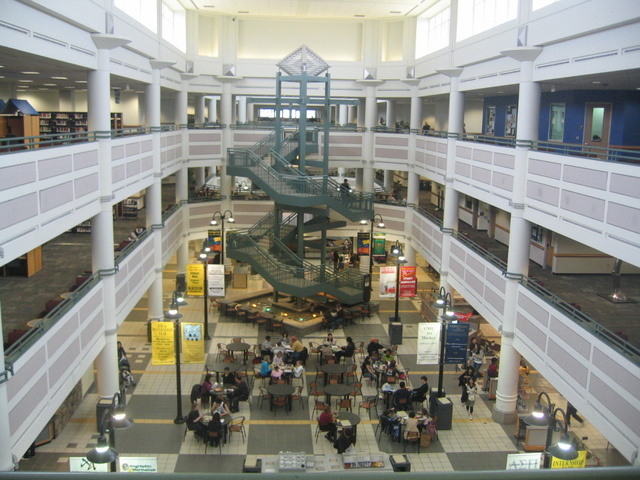
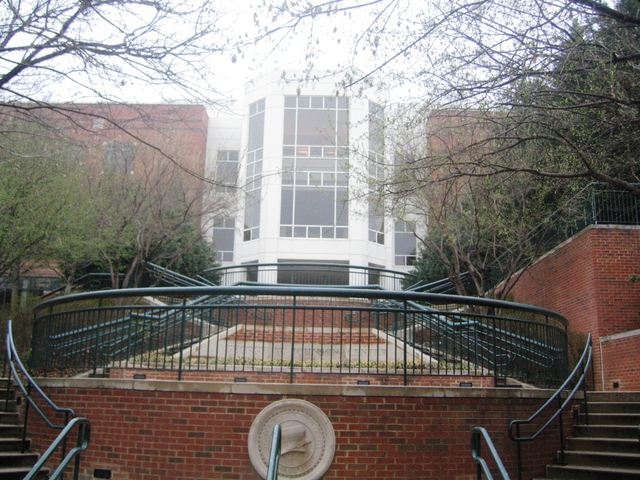
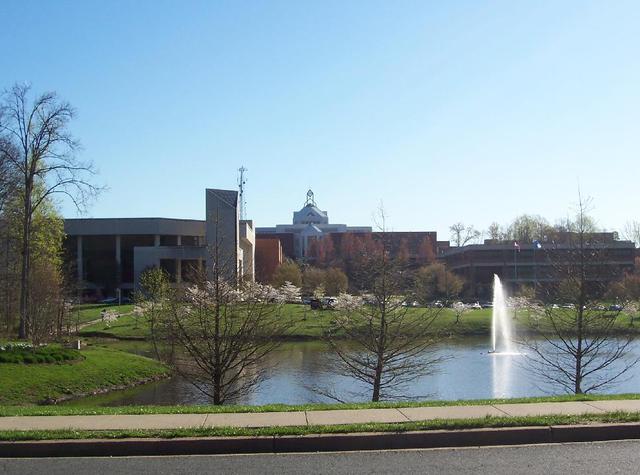
George Mason University, also known as GMU or simply Mason, is a large public university in the United States. Named after American revolutionary, patriot and founding father George Mason, the university was founded as a branch of the University of Virginia in 1957 and became an independent institution in 1972. George Mason University is named after American revolutionary, patriot, and founding father George Mason. The University traces its roots back to the 1950s when the legislature of the Commonwealth of Virginia passed a resolution, in January of 1956, to establish a branch college of the University of Virginia in Northern Virginia. The City of Fairfax, Virginia, then the Town of Fairfax, purchased and donated 150 acres of land to the University of Virginia for the college’s new location, which was referred to as the Fairfax Campus. In 1959 the Board of Visitors of UVA selected a permanent name for the college: George Mason College of the University of Virginia. Local jurisdictions of Fairfax County, Arlington County, and the cities of Alexandria and Falls Church agreed to appropriate $3 million to purchase land adjacent to GMC to provide for a 600 acre Fairfax Campus in 1966 with the intention that the institution would expand into a regional university of major proportions, including the granting of graduate degrees. On April 7, 1972 the Virginia General Assembly enacted legislation which separated George Mason College from its parent institution, the University of Virginia. Renamed that day by the legislation, GMC became George Mason University. By 1981 the law school, now known as the George Mason University School of Law (GMUSL), gained full ABA accreditation. The university opened its Arlington campus in 1982, two blocks from the Virginia Square-GMU station in Arlington. In 1986 the university’s governing body, the Board of Visitors, approved a new master plan for the year based on an enrollment of 20,000 full-time students with housing for 5,000 students by 1995. That same year university housing opened to bring the total number of residential students to 700. The university graduated more than 5,000 students that following spring. While George Mason University is relatively young, particularly compared to established research universities in Virginia, it has grown rapidly, reaching an enrollment of 29,889 students in 2006, and is the second largest university in the state of Virginia, exceeded only by Virginia Commonwealth University. According to a 2005 report issued by the university, enrollment is expected to reach 35,000 students by 2011 with more than 7,000 resident students. In 2002 Mason celebrated its 30th anniversary of independence from the University of Virginia and launched its first capital campaign with a goal to raise $110 million. The George Mason University logo, originally designed in 1982, was updated in 2004. Over the last decade George Mason University has gained national distinction in a range of academic fields, including public policy, information technology, economics, the fine and performing arts, law, conflict resolution, and, most recently, the biosciences. The George Mason University School of Law is ranked 37th in the United States, and the Industrial/Organizational Psychology graduate program is consistently ranked in the top ten in the nation. Mason’s Center for Global Education’s Study Abroad program has been rated as one of the top twenty programs in the United States, offering dozens of programs ranging from one-week spring break programs to full year programs. As of 2006, the following research centers are part of various GMU colleges, or in some cases, span multiple colleges: In addition, GMU’s Office of the Provost includes the following research centers: The Fairfax Campus is the largest campus with approximately eighty buildings spread over 677 acres in Fairfax, Virginia. A 15 minute shuttle in addition to the CUE bus, free for students with a Mason ID card, serves the students through routes from the Metro station to the University. The university unveiled an ambitious plan in 2005 for the largest development to date on campus; Johnson Learning Center, more commonly known as the Johnson Center or JC, is the central hub on campus, completed in 1995 and named after University President of 18-years, George W. Located in the center of campus, the $30 million, 320,000 square-foot building was built as the first of its kind building on any American campus, acting both as a main library and a student union. The Johnson Center serves as the center for student life with many activities and productions sponsored by Program Board and Student Government. In 2004 during the Democratic Primaries, Senator John Kerry, the eventual Democratic Nominee for President, visited George Mason University and gave a speech on the floor of the Johnson Center. George Mason University is also served by two additional student unions, the oldest “Student Union I” or “SUB I” is home to the offices of several activities and groups including the Broadside, as well as the Health Department, the university game room, a Damon’s Grill and a Chick-fil-A. Student Union II is home to the School of Management, the main buffet-style restaurant, the university mail room, group meeting rooms and ballrooms. To help foster a small college atmosphere on George Mason’s large and diverse Fairfax campus, the University has created several living/learning community programs, each of which offers undergraduates special opportunities to enrich their academic and social experience. Fairfax is the only campus of George Mason University with on-campus student housing. There are nine housing areas housing approximately 4,000 students: President’s Park, DUCC (Dominion Hall, University Commons and Commonwealth Hall), TAP (Townhouses, Student Apartments, Patriots Village) and YRC (Liberty Square and Potomac Heights). About 5,000 more students live off campus in housing adjacent to the University. Dominion Hall, University Commons and Commonwealth Hall, or DUCC, houses approximately one-thousand students, including some freshmen, sophomores and primarily upper-class students. Other buildings on the Prince William campus include: The Occoquan Building, which houses various academic, research, and administrative resources, Bull Run Hall, a 100,000 square foot building which opened in the fall of 2004, and Discovery Hall, which was completed in 1998 at a cost of $20.4 million. Planning for the new campus is moving along briskly: in January of 2006, the university received preliminary approval of its plans from Virginia’s State Council for Higher Education. As Mason’s presence in Loudoun grows from a small branch of the university into a major satellite campus, it will increasingly offer the same services available to students attending George Mason University’s Fairfax, Arlington, and Prince William campuses. George Mason has recently opened a new campus in the Ras Al Khaimah emirate of the United Arab Emirates. All credits earned at the campus will be fully transferable to George Mason University in the United States. George Mason University was catapulted into the national spotlight in March 2006, when its men’s basketball team qualified for the Final Four of the NCAA Men’s Basketball Tournament by defeating the Michigan State Spartans, the defending champion North Carolina Tar Heels, the Wichita State University Shockers, and the top-seeded Connecticut Huskies (UConn). George Mason offers more than 200 clubs and organizations, including 16 fraternities, 15 sororities, 24 International-student organizations, 25 religious organizations, a student programming board, student government, club sports, and student media. Mason’s club sports include: Mason offers two official print publications, the Broadside, its student newspaper, and the Mason Gazette, the University-published newspaper.
Summary content courtesy of Wikipedia.
George Mason University Academics
There’s never a reason to feel alone in your studies either, since there are academic support services like Learning Center, Pre-Admission Summer Program, Study Skills Assistance, Tutoring and Writing Center. In particular, the university has a Accelerated Program, Cross-Registration, Distance Learning, Double Major, Dual Enrollment of High School Students, ESL, External Degree Program, Honors Program, Independent Study, Internships, Liberal Arts/Career Combination, ROTC, Air Force, ROTC, Army, Student-Designed Major, Study Abroad, Teacher Certification and Visiting/Exchange Student Program. George Mason University is unique in its study options. The university has disability services as well, so be sure to inquire about them if needed. Furthermore, when any student is looking for some counseling or other types of support, Alcohol/Substance Abuse Counseling, Campus Ministries/Chaplain, Career Counseling, Employment Service, Financial Aid Counseling, Freshman Orientation Program, Health Services, Minority Student Services, On-Campus Daycare, Personal Counseling, Placement Service, Veterans Counselor and Women’s Services can help.
The following are the types of degrees and majors offered at George Mason University.
- History:
- History – General
- Philosphy and Religion:
- Philosophy
- School of Visual and Performing Arts:
- Art – General, Art History/Criticism/Conservation, Dance, Drama/Theater Arts, Fine/Studio Arts, Music – General Performance
- Public Administration and Service:
- Public Administration, Social Work
- Social Sciences:
- Anthropology, Economics, Geography, International Relations, Political Science/Government, Sociology
- Foreign Language and Literature:
- Foreign Language & Literature – General
- English Language and Literature:
- English, Speech/Rhetorical Studies
- Business, Management, & Marketing:
- Accounting, Business – General, Business Administration/Management, Finance/Banking, Marketing Management
- Security and Protective Services:
- Police Science
- Education:
- Health Teacher Education, Physical Education
- Psychology:
- Psychology – General
- Biological and Biomedical Sciences:
- Biology
- Popular majors:
- twenty-one percent business per marketing, ten percent health professions, ten percent social sciences, nine percent communications per journalism, eight percent psychology, seven percent computer and information sciences, seven percent interdisciplinary studies, seven percent visual and performing arts
- Computer Science:
- Computer/Information Sciences – General
- Physical Sciences:
- Chemistry, Geology, Physics, Planetary Sciences
- Mathematics:
- Mathematics – General
- Health and Clinical Sciences:
- Clinical Laboratory Science, Nursing (RN)
- Parks, Recreation, and Fitness:
- Health/Physical Fitness, recreation & fitness – general
Are you an international student? The Fall application deadline for international students is the 1st of January. Besides, for international students, the application fee is 60.
George Mason University Admissions
Admission policy is currently Percent applicants admitted: 69% and Percent of students who return for sophomore year: 84%. Remember that this can change at any time. Transfer student are not ignored. For instance, there were five thousand, five hundred and sixty-four total number of transfer students who applied and three thousand, four hundred and sixteen total number of transfer students who were admitted. This school requires an application fee consisting of sixty dollars regular application fee, sixty dollars out-of-state application fee, Reduced fee (not specified) online application fee and point zero .
For priority students, financial aid applications are due no later than the 1st of March. SAT and ACT score reports are due the 1st of April and Likewise, if you wish to apply with priority status make sure you application is in by the 1st of December. If you are a transfer student, you will be notified of your acceptance by the 1st of April. It is also very important to submit financial aid applications as quickly as possible, make sure to check with the university about the specific date for this year. the SAT subject section score due date was not reported. Will you make it in time? Make sure to know when all the due dates and deadlines take place. The regular application is due the 15th of January. For all student applicants, the Fall application deadline is the 1st of January. Regardless of which application you submit, this school will notify you by the 1st of April.
George Mason University Athletics
The Patriots are a member of NCAA. The following sports can be found here:
- Men’s NCAA Division I, Men’s Intercollegiate and Men’s Scholarship Baseball
- Men’s NCAA Division I, Women’s NCAA Division I, Men’s Intercollegiate, Women’s Intercollegiate, Men’s Intramural, Women’s Intramural, Men’s Scholarship and Women’s Scholarship Basketball
- Men’s NCAA Division I, Women’s NCAA Division I, Men’s Intercollegiate, Women’s Intercollegiate, Men’s Scholarship and Women’s Scholarship Cross_country
- Men’s Club and Women’s Club Football
- Men’s NCAA Division I, Men’s Intercollegiate and Men’s Scholarship Golf
- Men’s Intramural and Women’s Intramural Racquetball
- Men’s NCAA Division I, Women’s NCAA Division I, Men’s Intercollegiate, Women’s Intercollegiate, Men’s Intramural, Women’s Intramural, Men’s Scholarship and Women’s Scholarship Soccer
- Women’s NCAA Division I, Women’s Intercollegiate, Men’s Intramural, Women’s Intramural and Women’s Scholarship Softball
- Men’s Intramural and Women’s Intramural Table_tennis
- Men’s Intercollegiate, Women’s Intercollegiate, Men’s Scholarship and Women’s Scholarship Track_and_field
- Men’s NCAA Division I and Women’s NCAA Division I Track_indoor
- Men’s NCAA Division I and Women’s NCAA Division I Track_outdoor
- Men’s NCAA Division I, Women’s NCAA Division I, Men’s Intercollegiate, Women’s Intercollegiate, Men’s Intramural, Women’s Intramural, Men’s Scholarship and Women’s Scholarship Volleyball
- Men’s NCAA Division I, Men’s Intercollegiate and Men’s Scholarship Wrestling
George Mason University Financial Aid
Financial aid for students is readily accessible at this school. In the same way, need based financial aid distribution is determined through State/District Residency. If you are not a need based student, non-need distribution for financial aid is determined by Academics, Athletics, Minority Status, Music/Drama, ROTC and State/District Residency. Financial aid forms are FAFSA. Financial aid distribution is at thirty-five percent scholarships per grants and sixty-five percent loans per jobs.
George Mason University Students
The school’s size is approximately seventeen thousand, five hundred and twenty-nine degree-seeking undergrads, two thousand, five hundred and twenty-nine first-time degree-seeking freshmen and ten thousand, eight hundred and ninety-five graduate enrollment. Besides, the student body consists of eighty-three percent in-state students, seventeen percent out-of-state students, three percent part-time students, fifty-five percent women, forty-five percent men, less than one percent american indian per alaskan native, eighteen percent asian per pacific islander, seven percent black per non-hispanic, eight percent hispanic, fifty-two percent white per non-hispanic, two percent non-resident alien, twelve percent race per ethnicity unreported, fourteen percent in top 10th of graduating class, forty-four percent in top quarter of graduating class, ninety percent in top half of graduating class, sixteen percent had h.s. gpa of 3.75 and higher, seventeen percent had h.s. gpa between 3.5 and 3.74, twenty-five percent had h.s. gpa between 3.25 and 3.49, twenty-