University of Nebraska-Lincoln

Academics

The University of Nebraska-Lincoln opened in 1869 as a land grant university. The public research university is located on 613 acres of land in Lincoln, Nebraska. This university is the largest and oldest university in the state of Nebraska. It is also the flagship campus of the University of Nebraska System. One of the distinguishing characteristics of this university is that it was the 18th member of the Association of American Universities. This distinction took place in 1908 as University of Nebraska Lincoln was recognized nationally as a preeminent regional institution in the United States.

By the year 1973, the university graduated the first class. The university only offered two degrees at the time, but the school was still in its early stages of development. The school remained small for the first 20 years of existence and began to flourish in the late 1800
Most Popular Fields of Study

Videos

Information Summary

Ranks 3rd in Nebraska and 224th overall. See the entire top 2,000 colleges and universities list
Overall Score (about) 92.1
Total Cost On-Campus Attendance $24,936
Admission Success rate N/A
ACT / SAT 75%ile scores 29 / 1360
Student Ratio Students-to-Faculty 17 : 1
Retention (full-time / part-time) 83% / 50%
Enrollment Total (all students) 25,820

Admissions

Incoming freshman need the following items to apply for admission: official transcript, class rank verification form ( must be submitted by high school guidance counselor to the Office of Admissions), copy of student

Gallery

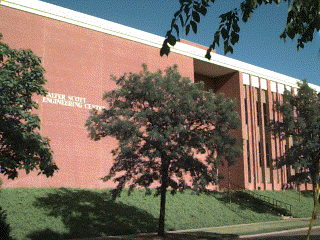
Department of Electrical Engineering :: University of Nebraska-Lincoln Nebraska Hall :: University of Nebraska-Lincoln Political Science Department :: University of Nebraska-Lincoln
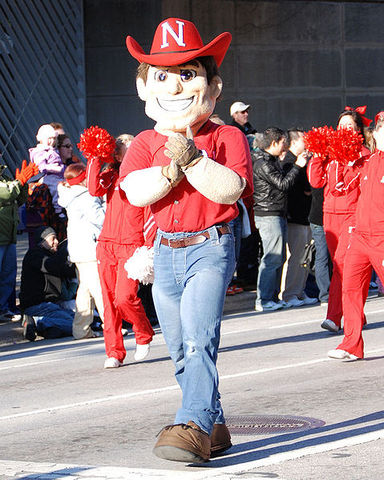
University building :: University of Nebraska-Lincoln UnivNebraskaLincolnCornhuskers :: University of Nebraska-Lincoln University of Nebraska Cornhuskers :: University of Nebraska-Lincoln

Financial Aid

Students must first complete the FAFSA form to determine eligibility of a number of financial opportunities. The forms should be completed by early March if students want to receive the best financial options. A few of the financial options for undergraduate students include Federal Pell Grants, Federal Supplemental Education Opportunity Grants, Federal Work Study programs, Federal Perkins Loans, Federal Direct Stafford Loans, and Federal Direct Plus Loans.

Graduate students may qualify for a number of loans, including Federal Direct Unsubsidized Stafford Loans, Federal Direct Subsidized Loans, and Federal Direct Grad Plus Loans. Other ways to finance an education as a graduate student include University Tuition Assistance Grants (UTAG), Federal Work-Study, Fellowships, and Assistantships.

Students may also qualify for scholarships offered by the university, departments within university, and various outside scholarship opportunities. Other options include short-term loans, emergency loans of up to $1000.00 offered by the university, and Alternative Loans (loan options for students who do not meet the requirements for financial assistance under the FAFSA requirements). Many of the alternative loans depend heavily on credit score so the creditworthiness of students is a huge determining factor for this source of funding. Students can find many financial assistance sources on the financial aid page of the University of Nebraska-Lincoln

Student Financial Aid Details

Ranks 4035th for the average student loan amount.
Secrets to getting the best scholarships and financial aid in Nebraska.

Students

The Greek population is very significant of the campus of the University of Nebraska-Lincoln. There are currently 30 fraternities and 15 sororities that students may join. A few of the fraternities include Acacia, Beta Sigma Pi, Chi Phi, Omega Psi Phi, Pi Tau Sigma, Triangle, Theta Chi, Theta Xi, and Phi Delta Theta. A few of the sororities on campus include Sigma Lambda Gamma, Alpha Chi Omega, Alpha Phi, Delta Gamma, Kappa Alpha Theta, Phi Mu, Pi Beta Phi, Delta Delta Delta, and Kappa Kappa Gamma. The sororities and fraternities offer numerous events on campus throughout the year for student enjoyment.

Nearly 40 percent of students live on campus in residential housing. The university is divided into two campuses: City Campus and East Campus. City Campus is located east of downtown Lincoln, and East Campus is located two miles east-northeast of City Campus. There are two on campus apartments (The Courtyards and The Villages) and 12 traditional housing options for City Campus. The traditional housing options include Smith Hall, Selleck Hall, Abel Hall, Cather Hall, Husker Hall, Kaufman Center, Schramm Hall, Sandoz Hall, Neihardt Hall, Pound Hall, Knoll Hall, and Harper Hall. East Campus has 3 traditional residential halls (Love Memorial Co-op, Burr Hall, and Fedde Hall) and 3 on campus apartments (The Courtyard, Robert E. Knoll, and The Villages).

The campus is home to the only set of comprehensive research libraries in Nebraska. There are 8 libraries on campus, including the Music Library, Mathematics Library, Geology Library, Engineering Library, C.Y. Thompson Library, Architecture Library, Don L. Love Memorial Library, and Marvin and Virginia Schmid Law Library.

Other interesting points of interest for students include the International Quilt Study Center, Maxwell Arboretum, Lied Center for Performing Arts, Architecture Hall, and the Headquarters of the National Society of Pershing Rifles. There are many amazing things to see on campus.

Student Enrollment Demographics

Student Graduation Demographics

Athletics

The University of Nebraska-Lincoln has great athletic teams. There are 21 varsity teams that represent the school. The Cornhuskers or Huskers belong to the NCAA Division I FBS division. The teams represent the Big 12 and Big 10. The school

Bibliography

  • University of Nebraska-Lincoln. 16 April 2011. Web. 16 April 2011.
  • Babcock, Mike. Journal of Nebraska Football Vault.Marceline: Walsworth Publishing, 2008. Print.
  • Knoll, Robert E. Prairie University: A History of the University of Nebraska. Lincoln: University of Nebraska Press, 1995. Print.

This website and its associated pages are not affiliated with, endorsed by, or sponsored by this school.
StateUniversity.com has no official or unofficial affiliation with University of Nebraska-Lincoln.