Gonzaga University

Introduction

Founded in 1887, Gonzaga University got its start when the school’s founder bought 320 acres of land in Spokane, Washington for $936 in silver dollars. The school opened its doors as a college for young men who wanted to go into the priesthood and enrolled 18 male students. who received their schooling from Jesuit priests, in its first year of operation.

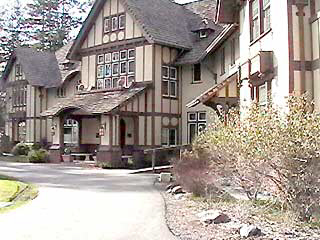
Today’s Gonzaga is a coeducation, private, four-year institution on a 131 acre campus on the banks of the Spokane River. The campus includes more than 105 buildings and continues to grow rapidly with new construction of a number of facilities. Enrollment is over 7,500 students, with the majority of those undergraduates.

The University’s educational philosophy is based on the Ignatian Jesuit model of educating the whole person

Videos

Information Summary

Ranks 2nd in Washington and 109th overall. See the entire top 2,000 colleges and universities list
Overall Score (about) 94.9
Total Cost On-Campus Attendance $59,795
Admission Success rate N/A
ACT / SAT 75%ile scores 30 / 1350
Student Ratio Students-to-Faculty 13 : 1
Retention (full-time / part-time) 94% / N/A
Enrollment Total (all students) 7,563

Academics

There are eight colleges and schools, including seven for undergraduate students and the School of Law for graduate students. In addition to the School of Law, students can enroll in the College of Arts & Sciences, the English Language Center, Peace Corps Master’s International School, the School of Business Administration, the School of Education, the School of Engineering, and the School of Professional Studies.

Students can pursue a bachelor of arts honors degree or a bachelor of science honors degree (if they qualify to enroll in the university’s Honors Program), which feature a rigorous core curriculum. The honors degree is available in all majors that offer the B.A. and B.S. Students can also graduate with a general bachelor of arts degree, some with a teaching option.

Majors include art, biology, Catholic studies, chemistry and biochemistry, classical civilizations, communications arts, criminal justice, economics, English, environmental studies, history, international studies, mathematics, modern languages, music, philosophy, physics, political science, psychology, religious studies, sociology, women

Most Popular Fields of Study

Gallery

University Building :: Gonzaga University
University Campus :: Gonzaga University

Admissions

Gonzaga expects its applicants to have completed a minimum of four years of high school English, three to four years of math, three years of history or social studies, two to three years of the same foreign language, and three to four years of natural or physical laboratory science. Guidelines for admissions include a grade point average of at least a 3.1, a minimum SAT combined score of 1070, or an ACT composite score of at least 23.

Other factors considered in student applications include curriculum and school attended, grade trends, college essay, high school activities and honors, and student character.

With the school’s Running Start program, high school students who have taken college courses can seek credit transfers on a course-by-course basis, and will consider awarding credit for individual AP subject exams taken by incoming freshmen. The university also grants college credit for scores of five or better on higher level International Baccalaureate exams.

If you’d like to visit and have already been accepted, you can try Gonzaga Experience Live, also called “GEL Weekend,” an annual preview event for high school seniors. The weekend offers prospective students the opportunity to experience Gonzaga’s academic programs and campus climate. Participating students spend a night in residence halls with student hosts. There is also a parent program.

You can also schedule a personalized visit to the university, which needs to be reserved in advance.

Preview days allow prospective students to spend 9 a.m. until 2 p.m. on campus, getting to know the admissions staff, current students, and faculty members. There are seven to eight preview days offered each year and are available in the fall, winter and spring. Preview days include a breakfast with speakers, an interactive student panel discussion, a financial aid session for parents and family members, a campus tour with school ambassadors, a catered lunch, and an academic information session in the student’s area of academic interest.

Financial Aid

All students who apply for admission are considered automatically for several merit scholarships. For freshman who qualify, scholarships range from $2,500 to $14,000 per year and are guaranteed for all four years for students who maintain good academic standing. Criteria for the merit scholarships include high school grade point average, SAT or ACT scores, extracurricular activities, recommendations, application essay, and difficulty of high school curriculum.

National Merit Finalists who name Gonzaga as their first choice college can qualify for the university’s National Merit Award, which is $6,250 per year for all four years. In addition, students who participate in Girls State or Boys State can qualify for the organization’s scholarships of $500. Four students are chosen from the states of Alaska, California, Idaho, Montana, Oregon and Washington.

12 of its own institutional scholarships are offered, including the Joseph M. Cataldo S.J. Scholarships of $5,000, the Charlotte Y. Martin Scholarships of $5,000, and the Ignation Leaders Scholarships of $5,000.

The university’s on-campus work-study program is available to all eligible freshmen and non-Washington State residents in a variety of campus departments. The award is based on financial need as determined by the student’s federal Free Application for Student Assistance (FAFSA)form.

Student Financial Aid Details

Ranks 1835th for the average student loan amount.
Secrets to getting the best scholarships and financial aid in Washington.

Students

GU’s undergraduate students live in 23 different residence halls, including suite-style halls, apartments, and traditional style halls with community hallway bathrooms. Suite-style halls offer two- or three-bedroom double units with a shared bathroom. They are coeducational by suite, and include Chardin House, Cushing House, Dillon Hall, Dooley Hall, Goller Hall, and Twohy Hall.

Traditional residence halls, most popular with the university’s freshmen, feature double rooms with a central corridor and a bathroom that serves each floor. They include Alliance House, Lincoln House and Welch Hall, all for female students; Campion House, Desmet Hall, and Roncalli House, all for male students; and the coed dorms Catherine/Monica Hall, Coughlin Hall, Crimont Hall, Madonna Hall, and River Inn Hall.

Juniors and seniors get the opportunity to live in apartment communities that feature a living room, bathroom, kitchens and either two double bedrooms or three double bedrooms. All of the apartment residence halls offer furnishings, campus Internet network access, cable TV and phone service. Some also feature community spaces and laundry facilities.

A number of themed interest communities also exist in the residence halls on campus. For example, Community and Leadership, Mind, Body and Spirit, and Global Engagement communities live in Coughlin Hall, an engineering community lives in Goller Hall, and an Outdoor Adventure and Leadership community lives in Marian Hall.

Students get a myriad of dining choices, although most restaurants and eateries on the campus are run by the same company, Sodexo. The main dining hall on campus is The Marketplace, which offers a variety of all-you-can-eat options including made-to-order deli sandwiches, a salad bar, The Grill, desserts, an international foods station and the Pizza-rette. Entrees for vegetarians and vegans are available daily.

At different locations around the campus, students can also dine at a variety of small restaurants, including Spike’s, a 24-hour restaurant that offers diner fare and is named after the Gonzaga mascot. There’s also Freshens Smoothie Company, Sub Connection, Jazzman

Student Enrollment Demographics

Student Graduation Demographics

Athletics

The GU Bulldogs, also known by the alternative nickname of the Zags, compete in NCAA Division 1 and the West Coast Conference. Varsity teams include men

This website and its associated pages are not affiliated with, endorsed by, or sponsored by this school.
StateUniversity.com has no official or unofficial affiliation with Gonzaga University.