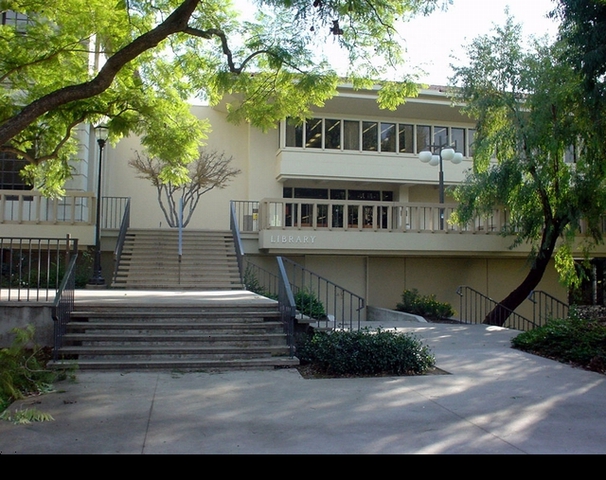
The phrase “urban oasis” is often used to characterize Occidental, and in many ways it’s
an apt description of the liberal arts college situated on 120 acres in Los Angeles, just eight
miles northeast of downtown. Students stroll about in nearly perpetual summertime and do
their reading sprawled on the grass by the quad; classes often migrate outdoors. And yet insofar
as “oasis” conjures a disconnect from the world beyond, it’s misleading; Oxy students and
faculty are deeply involved in wider cultural and civic life.
Oxy graduates are rightfully proud of their intellectually rigorous and broad liberal arts
education, and will tell you that the work here is highly demanding. Current students love to
gripe—and alumni, to brag—about the comprehensive exams or theses that all twenty-nine
majors require prior to graduation. And yet learning at Oxy is far from a harsh and competitive
exercise; with a student-to-faculty ratio of ten to one, and a faculty as stirred by teaching
as by their own research, it’s impossible not to get to know your professors on an individual
level. Professors regularly mentor students who choose to embark on independent patterns of
study, sponsor student research and grant applications, and hang out with students at barbecues
or even invite them to holiday dinners. It’s learning in the truest sense, the sort that mingles
lectures with life, and an education here inspires in students real intellectual
curiosity—a majority of students go on to attend grad school, and they are highly competitive
for national honors and awards (Occidental is one of the country’s top producers of student
Fulbright Award winners).
At Oxy, professors knew me on a first-name basis. I had their home
phone numbers and could call in the middle of the night, tell them I’m applying
for this or that scholarship, last-minute, that I need a letter of recommendation.
I developed this great relationship with the Bio chair; she didn’t say, ‘You’re an
English major, you can’t do a research project on biodiversity.’ I went to a sustainability
conference in Vietnam. None of my requests to do undergraduate
research were ever turned down. —Libby Evans, ’06, English major
Diversity, in all its forms, is a fundamental value at Occidental, and its 1,846 person student
body is one of the most racially, geographically, and socioeconomically diverse in the
nation. In our increasingly interconnected world, intellectual muscle is most useful when combined
with cultural and social literacy, and in this sense Oxy students learn much from each
other. Roughly three quarters of students receive financial aid, and elite prep school graduates
blend with those from inner-city public high schools. Almost every world religion is represented—
more than a dozen Protestant denominations, plus Catholics, Jews, Muslims, Hindus,
Buddhists, and Sikhs—and all are welcome to worship at the nondenominational Herrick
Chapel. First-year students share a residence hall with the people in their core classes, and
classroom discussions spill into the dorms. There is a feeling of community and camaraderie among students and a common desire to unite the
intellect with the heart, theory with practice, to make
a difference in the world.
Some eighty percent of students live on campus,
while some upperclassmen choose to find housing
nearby. Most venture out regularly into LA, on organized
excursions or on their own, partaking in the endless
panorama of music, theater, art, dance, food,
nightlife, and culture. It’s a quick drive to the coast—
to some of the most famous beaches in the world—or
to the Angeles National Forest where students often go
to hike and perhaps take a dip in the natural pools
around Switzer Falls. Campus, all the while, remains as
busy as ever: a quarter of students participate in twenty
intercollegiate sports and hundreds more compete in
intramural and club sports such as rugby, lacrosse, and
Ultimate Frisbee. Some one hundred clubs sponsor all
manner of events. Theaters on campus hum with student
plays, dance productions, and concerts.
Filming Location
First-time visitors to the picturesque
Occidental College campus may encounter
déjà vu—the place seems perennially
familiar. This makes sense given that Oxy
has been a popular film and TV location for
more than eighty years, beginning with
MGM’s Cup of Fury in 1919. Its proximity to
Hollywood and its unique and beautiful
campus make Oxy a favorite of directors
and location scouts. Students often drop by
the shoots to watch the process unfold in
front of their eyes—before seeing it again
on-screen. You might recognize Occidental
from such movies as (from old to new):
m Horse Feathers (1932) with the Marx
Brothers
She Loves Me Not (1934) with Bing
Crosby and Kitty Carlisle
That Hagen Girl (1947) with Shirley
Temple and Ronald Reagan
Pat and Mike (1952) with Katharine
Hepburn and Spencer Tracy
The Tall Story (1960) with Jane Fonda
and Anthony Perkins
Midnight Madness (1980) with Michael
J. Fox and Pee Wee Herman
Real Genius (1985) with Val Kilmer
For the Boys (1991) with Bette Midler
and James Caan
Clueless (1995) with Alicia
Silverstone
Jurassic Park 3 (2000)
Orange County (2002) with Colin
Hanks and Jack Black
The Holiday (2006) with Cameron
Diaz, Kate Winslet, and Jack Black
Or from such TV shows as The L Word,
Dragnet, The West Wing, Charmed, and
Beverly Hills 90210.
Occidental would echo that sentiment. Students at Oxy
are encouraged to appreciate the innate value and joy
in education, rather than seeing it as merely a precursor
to future prestige. High school students might consider
embracing a similar mindset. At least, know that
if you choose to apply to Occidental, you will be evaluated
as a unique participant in a wonderfully complex
world. There is no universal yardstick by which to measure
us all.
Oxy is a small, diverse, vibrant intellectual community,
set in one of the most stimulating and creative
cities in the world. The combination of its mission and
location produce “an institution with intimate scale
and infinite scope,” as former Oxy president Ted
Mitchell describes it. Los Angeles serves at once as a
playground and a laboratory for students and faculty,
while campus remains alive with energy and activity.
Students immerse themselves in a chosen discipline—
and simultaneously receive wide liberal arts training
that puts individual phenomena and ideas into context.
They participate in a multitude of sports and
clubs, conduct independent research, and study
abroad all over the globe. It is a uniformly full and
meaningful experience for most students. That said, no
single college is right for everyone, and whoever is
interested in Oxy is advised to come for a visit, if possible.
Arrange with the Admissions Office for an
overnight stay in the dorms, if you’d like, or just drop by
and have a look around. Knock on doors, chat with students
and professors, visit classes, lounge about on a
bench with a book, and enjoy the sun.
Occidental College
Academics
Academic work at Occidental is consistently challenging, but not in a dry and overly cerebral
way. Students are encouraged to integrate life experience into intellectual conversation and
to apply academic ideas toward understanding and navigating our complex and interconnected
world. The broad diversity of the student body is of great service in this regard, and all are
encouraged to engage the alternate worldviews of their peers—particularly in first-year cultural
studies seminars and colloquia, which set the tone for the rest of the Occidental experience.
First-year students choose from seminars in a variety of disciplines, each designed to examine
large liberal arts questions; recent subjects include: “Visions of the Floating World: Painting and
Prints of Edo Japan” (art history and the visual arts), “Urban Fictions: The Modern City in
Literature and Other Arts” (English and comparative literary studies), “Whose Music Is It
Anyway? Issues of Appropriation in Hip Hop” (music), and “The Taming of Infinity” (mathematics).
Seminars are capped at 16 students, all of whom live together in the same dorm.
My freshman year I lived in a dorm at the top of campus, and in the morning
a bunch of us would head down the hill together to our core seminar, an art history
course called ‘Reading and Writing about Visual Experience.’ That stroll, and
lunch afterwards in the quad, was as much a part of the seminar as was our time
in the classroom. I don’t mean to imply that we spent our days and nights engaged
in a formal debate about Griselda Pollock’s feminist critique of modernist art history—
but rather that as our intellectual and personal lives intertwined, conversation
bridging the two realms began to feel natural and fluid. Late on a Tuesday
evening a few of us might’ve been tossing a Frisbee in the hallway at the dorm,
laughing about an improv show we’d seen earlier that evening, and brainstorming
ideas for a paper contrasting the scholarly worldviews of Michel de Certeau
and Dick Hebdige. Occasionally, our professor would come to us instead of the
reverse, trekking up the hill and holding class or office hours in the common room
of our dorm—and we scarcely had to change out of our pajamas.
The first-year cultural studies seminars and colloquia, and the communities surrounding
them, are an essential part of the college’s Core program, which is designed to support rich
liberal arts values throughout the Occidental experience. Students at Oxy become conversant
across a wide breadth of academic disciplines and learn to approach their chosen field from an interdisciplinary perspective that also takes into account the intermixture of cultures, languages,
religions, and historical narratives that constitute the world today. One society or set
of ideas is hardly understandable these days in isolation from its neighbors, as underscored by
our increasingly effective and affordable technologies of communication and transportation,
and postmodern interpretations of self and country. As such, the Core program emphasizes
global literacy and requires that all students take at least three courses that touch on at least
three disparate geographical areas, for instance, Africa and the Middle East; Asia and the
Pacific; Europe; Latin America; and the United States. Further, all students fulfill requirements
in the fine arts and in the sciences, mathematics, or other courses that address formal methods
of reasoning; they also become proficient in one or more foreign languages. Finally, students
must demonstrate proficiency in writing, a skill that develops organically given the large
amount of writing that many classes require.
Of course, this liberal arts framework would be meaningless without stellar teaching,
which is the fundamental ingredient of an Occidental education. Professors engage passionately
in their own research, but their first and foremost responsibility is in the classroom.
Consequently, Oxy attracts professors who genuinely love to teach and who bring with them an
infectious enthusiasm for the subject at hand. Class size is small—average lecture size is 21;
laboratory, 16; regular course, 17—and discussion is integral to many courses. No introductory
courses are taught by graduate students. Professors are very much part of campus life outside
of the classroom, and you will often find professors and students ambling about together,
engaged in lively intellectual conversation. Few professors adhere strictly to posted office
hours and will generally tolerate—if not welcome—unarranged knocks on their doors.
The professors are the best part about Oxy. I went to a high school where
my graduating class was nineteen kids. I was close to my teachers there, but I
was even closer to my professors at Oxy. In fact, I still keep in touch with my professors,
all the time, and they’re still there for me two and a half years after I
graduated. I have a couple of professors to thank for helping me get the job I have
now, as an assistant producer at National Public Radio. They knew me well
enough to make strong recommendations, and helped me get good journalism
internships when I was in school. Of course, you have to show initiative—but if
students show initiative, the support is there for them. —Ben Bergman, ’04, politics major
Students at Occidental commonly seek out
internships and independent research opportunities,
and faculty serve as willing mentors and advocates.
Over the past eight years, more than 800 Occidental
students have received funding to undertake joint
summer research with faculty, which often results in
coauthored publications in peer-reviewed journals.
Occidental traditionally sends more student presenters
to the Southern California Conference on
Undergraduate Research than any other participating
school, and over the past four years has sent eightynine
students to make presentations at the National
Undergraduate Research Conference. Undergraduate
students from all majors are invited to pursue
research opportunities that at larger universities are
typically open only to high-achieving graduate students,
and the college is routinely recognized for
excellence in this realm, such as by the National
Science Foundation, which conferred on Occidental
its Integration of Research and Education Award in
1998. As far as internships go, opportunities in Los
Angeles are limited only by the imagination, and students
fan out to a wide array of organizations, such as the Los Angeles Times, NASA’s Jet
Propulsion Laboratory, UCLA Medical Center, and DreamWorks Studio.
Research Opportunities
Students at Occidental have access to a
wide breadth of research opportunities and
funding sources as early as their freshman
year. For instance, Oxy is one of only a
dozen institutions selected to participate
in the Richter Summer Research Program,
which has awarded more than $1 million
in research grants to students since 1969.
Oxy students of all majors may apply to
receive Richter grants to support independent
research or creative work abroad;
past projects include:
m Geothermal Energy in Iceland—
Applications in the United States
The Role of Indigenous Knowledge
System in Fighting AIDS in Botswana
Act Like You Care: Photography and
Leadership for Inner-city Girls,
Los Angeles
The Fusion Music of the British Asian
Dance Club and Concert:
Contemporary Ethnic Identity of
Anglicized Second Generation
Protestant Pentecostal Faith
As an institution dedicated to educating citizens of a pluralistic world, Occidental
encourages all students to participate in off-campus study. Each year, roughly a third of the
junior class heads off to more than fifty programs in dozens of countries; a student might study
tropical biology at a field research station in Costa Rica, perhaps, or research international
development and democratization in Hanoi, Vietnam. Some students choose to take part in
domestic exchange options, such as the semester-long Occidental-at-the-United Nations
program, the only of its kind in the country, in which students live and take classes in New York
City while interning in the United Nations Secretariat or with a related institution. Students
who wish to pursue research abroad may also participate in off-campus summer research programs. Occidental is one of a dozen institutions selected to participate in the Richter Summer
Research Program, which funds independent research projects or creative work; recent
Richter projects by Occidental students include “Media Freedom in Post-1997 Hong Kong,”
“Illicit Asian Art Trade, London, England,” and “Ideology and Normalcy, Paris, France.”
Even when abroad, students remain solidly connected to the Occidental community
back in Los Angeles. Friends and professors clamor for updates—with pictures, if possible. It
wasn’t long ago, after all, that these savvy world travelers were arriving to that first freshman
seminar, then heading back to the dorms with their sixteen pals. It’s remarkable how enduring
those friendships can be. And likewise, the Occidental ethos—defined differently by
whomever you ask, but certainly including intellectual curiosity, cultural engagement, and
service to the community—sticks with students and continues to influence them, whatever
direction they may take.
Most Popular Fields of Study
The top 5 fields of study completed at Occidental College.
This is the section that sets hearts racing and
palms sweating. “If only I had started taking SAT prep
courses in middle school,” you think. “If only I had
joined fifteen clubs and sports teams instead of twelve.
If only . . . ” As is the case with the rest of the schools
listed in this book, the admissions statistics at
Occidental are impressive and daunting. The acceptance
rate currently hovers around thirty-nine percent
and will likely continue to fall, as it has nearly every
year for the past decade. More than ninety percent of accepted students in the class of 2012 were in the top fifth of their high school class. Keep in
mind, however, that a student’s place on the statistical continuum is only one factor among
many; Occidental evaluates applicants in a holistic manner that takes into account the whole
person, the wide variety of passions and circumstances that GPA and SAT scores do not
reflect. Students here often recall being pleasantly surprised by an admissions process that
viewed them as human beings rather than reducing them to the sum of their statistically measurable
parts.
Occidental seeks to enroll students who bring to the table a wide variety of talents and
experiences, and who possess the intellectual curiosity and muscle necessary to take full
advantage of its rigorous and stimulating liberal arts education. Competition for admission to
Occidental and other top colleges is fierce and becoming fiercer, which can have the unfortunate
effect of transforming high school into an anxiety-ridden experience. Too often in high
school, frantic and shallow resume-building takes the place of other more valuable modes of
exploration and maturation. Enrolling in every AP course and participating in a full load of
extracurricular activities can be positive, certainly—but not if doing so impinges significantly
on your ability to pursue your truer interests. Oxy is most interested in students who excel from
a place of personal authenticity, rather than boilerplate candidates whose search for collegiate
prestige undercuts their individuality. This does not imply that test and GPA scores don’t
count—they do—but there are also candidates who stand out from the crowd by capitalizing
on their own uniqueness.
It goes without saying, then, that applicants to Occidental should opt for honesty and
openness. Don’t attempt to shoehorn yourself into the role you think Oxy wants you to play,
which will inevitably cause you to come off as wooden and uninspired. Writing the essays will
of course be challenging, but it shouldn’t prove unduly painful. You’ve already done the heavy
lifting—years of coursework, sports games, club meetings, living life—and here’s your chance
to tell your story to a friendly audience. The application for fall admission is due on January 10
and may be submitted by mail or electronically via the web site; the common application is also
accepted and must be accompanied by a supplemental form. Early Decision applications
should be filed by November 15. Either the SAT or ACT is required (average SAT verbal score
was 640, math, 640; ACT, 29). High school course requirements include four years each of
English and math, three each of foreign language and science, and two each of social studies
and history. The writing sample and interview are voluntary, but they will help the admissions
committee get to know you—and therefore are a very good idea.
Financial Aid
The price tag of an Occidental education can be intimidating, but keep in mind that
over seventy percent of students receive some form of financial aid, which renders the cost
comparable to those of public institutions. Oxy is dedicated to maintaining a socioeconomically
diverse student body, and financial difficulties should not keep anybody from applying.
Students hail from a smorgasbord of backgrounds, and those arriving via public high schools
actually outnumber their prep school peers. Applicants are automatically considered for a
variety of merit-based scholarships, from the Margaret Bundy Scott scholarship ($20,000 annually) to the Honors Scholarship ($5,000 annually). Merit scholarships are highly competitive
and are awarded to students who have demonstrated outstanding academic and
extracurricular achievement. Need-based assistance comes in the form of grants, work-study,
and student loans. It’s important that applicants file the requisite forms on time; the Free
Application for Federal Student Aid (FAFSA) and the College Scholarship Service (CSS)
Profile are due on February 1, while the Cal Grant application, required of California residents,
is due on March 2. In 2007–2008, the average freshman award was $30,648, and the
average financial indebtedness of a 2008 graduate was $21,002.
My family was in an unusual financial situation when I applied to
Occidental, and it looked on paper like we could afford to pay more than we actually
could. If the financial aid office had relied strictly on numbers in putting
together my award, I probably would not have been able to attend Occidental.
Instead, a financial aid counselor suggested that we submit a letter fleshing out
our financial picture, and then promptly responded with an award that was
commensurate with the reality of our situation. As is the case with administrators
and professors throughout the college, financial aid officers treated me as an
individual and sought to understand the nuances of my circumstance. It felt as
if we were working together to make this happen, with plenty of goodwill on both
our parts.
Student Financial Aid Details
How many students use Financial Aid, and how much do they use?
Occidental College 3761st for the average student loan amount.
Secrets to getting the best California scholarships and financial aid
Living in Los Angeles is inextricably part of the Occidental experience, and even the most
extroverted students find that by graduation they’ve exhausted only a fraction of the resources
the city has to offer. A student interested in museums, say, might begin by exploring the Norton
Simon Museum, home to one of the world’s finest collections of European, American, and Asian
art, situated just a few miles from Oxy in bustling Old Town Pasadena. In the months and years
following, he or she might spend time at the LA County Museum of Art, the Japanese American
National Museum, the Getty Center and the newly redesigned Getty Villa, UCLA’s Hammer
Museum, the Museum of Neon Art, and countless other museums and art galleries throughout
the city. The theater and music scenes are equally robust, as you might expect in a city brimming
over with world-class actors and musicians. Thousands of restaurants serve up every possible
type of cuisine, and bars and nightclubs run the gambit from kitschy karaoke dives to swanky
Hollywood hot spots. Some students have cars, while others catch Bengal Busses—free shuttles
named for the Oxy mascot, a Bengal tiger, that ferry students to and from rotating destinations
throughout the city. An Oxy club, Arts L.A., sponsors biweekly outings to museum exhibits, plays,
film festivals, and other arts events.
Walking is also a very good option. Occidental is nestled in the northeastern Los Angeles
neighborhood of Eagle Rock, which has become increasingly hip in recent years, with colorful
boutiques and eateries joining such long-time student hangouts as the burrito joint Señor Fish
and the Italian restaurant Casa Bianca, serving arguably the best pizza in Los Angeles.
(New restaurants aside, some Oxy students claim that the tastiest food comes from homegrown “taco trucks” that set up shop each evening on nearby avenues.) The area immediately surrounding
Oxy is mostly residential, a multicultural and mixed-socioeconomic neighborhood
where many professors choose to live. Students are actively involved in the Eagle Rock community,
particularly those affiliated with the Occidental Urban and Environmental Policy
Institute, a college major which also serves as an umbrella organization for a variety of research
and advocacy programs addressing work and industry, food and nutrition, housing, transportation,
regional and community development, and urban environmental issues.
Regardless of the many adventures to be had in this vast metropolis, however, the Oxy
campus remains filled with life; drop by for a visit, and you’ll understand why students choose
to stick around. The campus itself is airy and beautiful, a pocket of tranquility amid urban
sprawl, and given the small student body it’s rare to go anywhere on campus without bumping
into friends. Come mealtimes, students choose between two dining options: the Tiger Cooler,
popular for lunchtime and late-night snacking, is a grill serving all manner of hot and cold sandwiches,
wood-fired pizza, sushi, smoothies, and frozen yogurt. The Marketplace, where most
students take dinner and breakfast, is organized by station; for instance, there are stations for
deli, home-style, grill and wok, and pasta, as well as a bakery and a fully stocked salad bar.
Much of the food at the Marketplace is cooked-to-order—try the salmon and asparagus over
rice, a perennial favorite. Suffice it to say that students remain well and happily fed.
The college maintains a full schedule of programs
and entertainment, such as student plays and
other theater productions held in two large theaters
or outside in a Greek-style amphitheater, movies, concerts
given by students and professional musicians,
wildly popular dance productions, a variety of lecture
series, and on-campus parties such as the elaborate
casino-style themed shindig, “Da Getaway.” There are
always plenty of unofficial parties and get-togethers
on and off campus, including those thrown by Oxy’s
modest Greek community (six percent of men belong
to fraternities; thirteen percent of women, to sororities).
Clubs and groups meet all over campus; find your interest among the many choices—
chess, choir, orchestra, improv comedy, musical theater, either side of the political spectrum,
student government, photography, forensics, Occidental College Radio (KOXY), religious communities. Student publications include the Occidental Weekly newspaper, yearbook, and
various literary magazines. Students interested in investing can apply to serve on the board
of the Blyth Fund, a six-figure portion of Occidental’s endowment managed solely by students.
Opportunities for quietude and relaxation mingle with the hustle and bustle; enroll in
Tai Chi, actually a course in the theater department, or head down to the gym for a yoga
class, kick back poolside, or stroll up a dirt pathway to the highest point on campus, a rustic
eminence dubbed Fiji Hill. Here you can listen to owls hoot and gaze out across the elegant
downtown skyline, the San Gabriel Mountains, or the coast.
Student athletes abound at Occidental, and there are resources for athletes of every
level. The college is a member of NCAA Division III, and some twenty-five percent of students
participate in women’s and men’s varsity sports such as basketball, cross-country, golf, soccer,
softball, baseball, swimming, tennis, track and field, volleyball, and water polo. Many others
play in intramural leagues, and the fields around campus teem with all sorts of balls, sticks, and
discs (rugby, lacrosse, Ultimate Frisbee). Surfers lug their boards seaward, and broomball players
clear out residence hall common rooms for their gregarious and popular matches.
Athletics are an integral part of the well-rounded Occidental education—“the sweatiest
of the liberal arts,” one coach calls them—but even top varsity players are expected to keep
scholarship on the front burner. Through all that studying, however, teams manage to excel—
take the men’s basketball team, for instance, which in 2003 became the first in the history of
the NCAA Division III tournament to advance from Oxy’s conference to the Elite 8. Oxy’s football
team has won the conference championship for three of the past four years. The Oxy athletic
program has produced All-Americans numbering in the hundreds, dozens of Olympians,
world record holders and national champions, and professional athletes and coaches. Alumni
remain enthusiastic boosters of the athletic program and through the Tiger Club raise hundreds
of thousands of dollars each year in support of Occidental athletics.
Student Enrollment Demographics
How many students are enrolled at Occidental College?
Students at Occidental learn quickly that
when your birthday rolls around, it’s best to
wear something that will survive a drenching.
You never quite know when it’s coming,
but at some point on your birthday,
friends may nab you, carry you down to the
Gilman Fountain at the front of campus,
and gingerly (it’s shallow!) toss you in.
Campus safety officers apparently dislike
this tradition, but they don’t do much to
stop it. The good news is that this is sunny
Los Angeles, so you can air dry on grassy
slopes nearby while you plot your revenge.
Alumni
Describing Occidental alums is no easy task; just as the school seeks to enroll a rich
diversity of students, so too do graduates head off to follow their bliss in every conceivable
direction. While generalizations in this realm tend to be inexact, it is safe to say that most students
leave Oxy with a keen sense of the world’s multilayered complexity and a framework
through which to navigate that complexity, an enduring intellectual curiosity, and a sense of
empathy and social responsibility. The focus at Occidental on merging education with action,
theory with practice, produces graduates who are raring to apply their expertise in the real
world, and they are highly competitive in the workforce, landing top jobs throughout the public
and private sectors. When given the choice, Oxy grads will often pass up a high-paying job
for one offering a clear benefit to community and society, and each year a good many choose to
exercise those muscles in the Peace Corps and in nonprofit organizations the world over.
While some graduates go directly into the workforce
and stay there, a majority head to grad school,
eventually winding up in academia, education, law,
medicine—an array of professions too numerous to
mention. Oxy students and grads also contend successfully
for national fellowships such as the
Fulbright, Marshal, Rhodes, Truman, Luce, Watson,
and National Science Foundation Fellowships.
Whatever students choose to do with themselves,
involvement with Oxy rarely ends on graduation day.
Freshman year dorm mates have evolved into lifelong
friends, professors are now enduring mentors.
These relationships will continue to mature and
evolve. Alums form the backbone of Oxy GOLD
(Graduates Of the Last Decade), whose chapters,
spread across the nation, sponsor all manner of mixers,
meals, and events. The Oxy Career Center and
other on-campus organizations remain invaluable
resources for graduates.
Prominent Grads
Occidental alumni achieve highly in a range
of fields and are generally united in their
ambition to use scholarly expertise to
address real-world problems and concerns.
Writers and Journalists:
Steve Coll, ’80, a Pulitzer Prize-winning
Staff Writer at The New Yorker
Bill Davis, ’80, President, Southern
California Public Radio
Erik Eckholm, ’71, Bureau Chief,
New York Times
Patt Morrison, ’74, Columnist,
Los Angeles Times and Emmy-winning
Public Radio Host
Rosalind Wiseman, ’91, Author of
Queen Bees and Wannabes: Helping
Your Daughter Survive Cliques, Gossip,
Boyfriends, and Other Realities of
Adolescence, which inspired the movie
Mean Girls.
Business Leaders:
Stephen Cooper, ’68, “Turnaround
Specialist,” Former CEO of Krispy Kreme
Doughnuts
W. Don Cornwell, ’69, CEO of Granite
Broadcasting
Bruce Fabrizio, ’74, President and CEO,
Sunshine Makers, Inc.; Founder of
EGBAR Foundation (Everything’s Going to
Be All Right), a National Environmental
Education Curriculum for Children
J. Eugene Grigsby, ’66, President and
CEO of the National Health Foundation
June Simmons, ’64, President and CEO,
Partners in Care Foundation, a Nonprofit
Dedicated to “Creating Meaningful
Change in Health Care Policy and in the
Delivery of Health Services”
Science and Medicine:
G. Brent Dalrymple, ’59, Awarded the
2003 National Medal of Science,
Professor Emeritus and Former Dean
of Oregon State University’s College
of Oceanic Atmospheric Sciences
Richard Casey, ’80, Cofounder,
Los Angeles Eye Institute
Eleanor Helin, ’54, Principal
Investigator for the Near Earth Asteroid
Tracking program (NEAT) at the Jet
Propulsion Laboratory
Doug McAdam, ’73, Director of the
Stanford University Center for Advanced
Study in the Behavioral Sciences
John McCosker, ’67, Chair of the
Department of Aquatic Biology,
California Academy of the Sciences
Kimberly A. Shriner, ’80, Founder of
The Phil Simon Clinic; Infectious
Disease and HIV Specialist
L. A. Luminaries:
Alice Walker, ’69, Commissioner of
the First Five California Children and
Families Commission
Ian Montone, ’89, Worldwide Manager
of the White Stripes and Other Artists
and Owner of Monotone, Inc.
Steve Roundtree, ’71, President of the
Los Angeles Music Center
Politics:
Jack Kemp, ’57, Played Professional
Football Before Going on to a Career in
Politics as a Congressman, Secretary of
Health, Education and Welfare, Vice
Presidential Candidate and Codirector
of Empower America
Barack Obama, ’09, U.S. President,
Began His Political Career at Occidental
before Transferring to Columbia
University
Demographics – Main Campus and Surrounding Areas
Reported area around or near Los Angeles, CA 90041-3392
Feel free to add comments or additional information regarding Occidental College, or discuss this school in the University Discussion Forum
over 2 years agoSusan
Accomplishments of recent grads need updating- especially this famous person-
Barack Obama, ’83, Senator from Illinois, Began His Political Career at Occidental before Transferring to Columbia University
This website and associated pages are not associated with, endorsed by, or sponsored by Occidental College. StateUniversity.com has no official or unofficial affiliation with Occidental College.
Accomplishments of recent grads need updating- especially this famous person- Barack Obama, ’83, Senator from Illinois, Began His Political Career at Occidental before Transferring to Columbia University