StateUniversity.com – U.S. University Directory [ Home :: University List :: Georgia ]
Atlanta, GA 30322
p. 404-727-6123
w. www.emory.edu
Emory University
General Information, Alumni, History, Campus, Students, Faculty, Address, and Tuition - a StateUniversity.com profile
- College and University Blog with many tips like acing the ACTs, SATs, college admissions, and preparing for college.
- University Forum and Discussion - Brand New Message Board For All Your Questions
- Information on Thousands of Careers - One-stop resource for very comprehensive, and up-to-date career information. Contains more than several thousand job profiles each with a job description, education and training requirements, salary information, working conditions, employment outlook and much more!
- Student Encyclopedia - Encyclopedia for reference and research from the Cambridge Collection.
Emory University Introduction
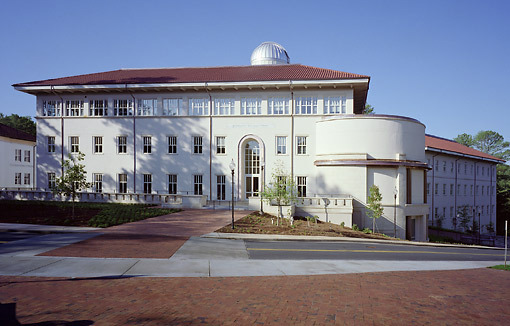
The white marble buildings and manicured lawns are the first clue when walking onto Emory’s campus that it’s not a typical college. Aside from the gorgeous setting that’s fifteen minutes northeast of downtown Atlanta, Emory’s combination of diversity and academic excellence drives its students to work hard and play hard. Since its inception as a small Methodist college in Oxford, Georgia, in 1836, Emory has become a nationally ranked university. The school offers a broad liberal arts education and sets students on a track for success in various fields and concentrations. Emory’s connections to highly accredited businesses and organizations in Atlanta, such as the Centers for Disease Control and Coca-Cola, help the university attract applicants from more than fifty countries and rank among the nation’s elite. Emory is known for its commitment to creating positive transformation in the world—it expects its students to do well and also do good for the world. Emory’s always changing and that’s directly seen by the constant construction on campus. The University continues its commitment to providing students with state-of-the-art facilities, including compensation of a $14.8 million expansion/renovation of the Cox Dining Hall, and a $20-million Sorority Housing Complex that opens this year on Fraternity Row. Additionally, ground has been broken on a brand new freshman residence hall, which will open in August 2007. This facility will eventually be part of a ten-building freshmen residential complex with a focus on new housing initiative and “learning communities.” The recently finished Cox Hall computer lab lets students create interactive projects with SmartBoards and DVD production software, and the new Math and Science Center helps students study constellations in the high-tech planetarium. The forty-two-acre Clairmont Campus offers apartment-style housing to juniors and seniors, equipped with a washer/dryer unit, full kitchen, and individual rooms with full-size beds. The Student Activity and Academic Center on Clairmont Campus lets students soak up rays beside the Olympic-size, heated outdoor pool, play sand volleyball, or study on the plush leather couches. The 90,000-square-foot Schwartz Center for the Performing Arts allows students to enjoy an orchestra concert, dance performance, or theater reading. These additions combined with the pedestrian-friendly, auto-restricted zones makes Emory accessible and unique for all its students.
Aside from the innovative buildings and designs, the students’ serious drive for excellence sets Emory apart from other schools. Almost 300 undergrads double-major in one of the college’s nine major academic divisions and 840 students play a varsity or club sport. Many come to Emory already sure that they want to pursue a terminal degree, and sixty-five percent of a recent graduating class went on to a graduate program in medicine, law, business, sciences, or the humanities within six months of graduation.
Students enjoy Emory outside of the classroom as well. There’s always an on-campus lecture by a renowned writer, a unique sub-Saharan art exhibit, or a band concert featuring popular artists, such as Common, The Roots, and Guster, that students can attend. Undergrads can also step off campus to attend a Falcons game, visit the Atlanta Botanical Gardens, or enjoy a meal at a trendy restaurant in smart Buckhead or the Virginia Highlands. For weekends and breaks, Emory’s location makes it convenient for students to take road trips to the coast of Georgia, the Panhandle of Florida, or the Louisiana bayou. Whatever the event, Emory students are seldom bored and can always find the perfect mix of academic, cultural, and entertaining events on or off campus.
During my four years at Emory, it always astonished me how people reacted when they heard I attended this university. Whether it’s my father’s coworker or a random person I met at an internship or in a doctor’s office, the “wow” reply never ceased to amaze me. People were taken aback by Emory, and recognized the institute as a respected, forward-thinking school. I am proud to say I attended one of the top twenty schools in the nation. As a graduate now, I constantly run into people through my new job who ask where I went to college and still receive that “wow” or “great school” comment. There’s nothing better than hearing a stranger be impressed by my collegiate choice.
Emory offers a unique, fantastic education to those who’re ready for a diverse and demanding education. Although Emory is probably not for everyone, students who seem to thrive on full schedules, big ambitions, and a work-hard, play-hard attitude will find themselves at home here. Emory offers a challenging, but supportive environment with great intellectual and cultural resources. Students learn a number of theories, but most important, they learn how to think critically and for themselves.
But facts and figures can offer only so much information; it’s impossible to describe the special atmosphere at Emory. Students find it difficult to quantify fond memories of ordering Dominos pizza at three in the morning while procrastinating for studying for a midterm, grabbing a drink with friends to celebrate a new job, or caravaning to the Coast for a weekend getaway. Graduates will always have a soft spot for something—a cold Coke or a burrito from Willy’s—that reminds them of their alma mater. Emory is more than a college education; it’s a glimpse into the copious opportunities of the real world that are framed by an outstanding network of professors, researchers, athletes, and artists. Whether a student wants to become an archeologist, doctor, politician, or writer, a solid Emory education will get him or her on the right track. The diversity of the school in the heart of Atlanta produces the comfort and adventure of a quintessential college experience that lucky students will have the chance to encounter.
I don’t think I could’ve landed such a good first job if it hadn’t been for my experience at Emory. I learned how to think for myself and be aware of my surroundings. After four years at Emory, I emerged as a confident and inquisitive woman with a new vision of what I wanted to do in life and what mattered, both professionally and personally. My only regret is not getting to spend more time at Emory. During senior year, I wish I wasn’t so antsy to graduate and begin working, because if I could, I’d be back there in a heartbeat.
This site is not sponsored by, affiliated with, nor endorsed by Emory University
Emory University Academics
At Emory, students take their academics seriously and professors expect a lot from them. With a student-faculty ratio of seven to one, students have abundant access to their professors, whether it occurs during office hours or individual appointments. Professors are more than willing to work with students’ schedules and genuinely care about their pupils’ performances. Expert faculty who love to teach choose Emory for the opportunity to work with intelligent and ambitious students. The academic environment is friendly, albeit competitive, as students support and push one another to execute their best. Students can always find a colleague to commiserate with regarding a sociology paper, or consult an upperclassman or teaching aid about a math quagmire. With the recent technology additions, Emory professors are implementing more group projects, allowing students to split up work and present innovative projects that incorporate programs such as Powerpoint and Dreamweaver. The university’s Writing Center continues to be a successful part of Emory’s academic life and allows students to bring outlines or rough drafts to selected undergrads and graduate students to help them sharpen their writing skills.
What’s more, Emory knows how much its students like to be connected, and have stationed kiosks around campus to allow students to stop and check their e-mail or surf the Web briefly between classes. The school’s computing services help students sift through various computer quandaries and will make on-campus trips to your dorm room to personally fix your computer glitch. The new EPASS (Emory Pathways to Academic Success for
Students) program offers online study tips, individual academic consultation, and science mentoring. Whatever a student needs academically, Emory offers a plethora of support that is easily accessible and shows the university’s commitment to educating its students.
Advising Systems
To further help collegians, Emory offers extensive advising systems that students can tailor to their majors and minors. Upon entering the college, freshmen are assigned to FAME (Freshman Advising and Mentoring at Emory) groups, in which older students, a faculty member, and staffer help first-years choose their schedules, discuss transitioning to Emory’s environment, and take field trips around Atlanta to a Braves baseball game or a symphony concert. This system allows freshmen to start on the right track in a cohesive atmosphere and a group’s faculty member remains their advisor until they declare a major. Once students choose their program of study, they often find one or two professors to advise them in the appropriate field. Professors devote a lot of time to their advisees and are more than willing to write recommendations for internships, scholarships, and jobs. They also offer personal advice about coping with stress, managing time, and making the most of Emory. Students can always pop their heads in to professors’ offices for a chat or a quick question.
Majors
Emory students’ majors and minors run the gamut, as four of the university’s nine academic divisions offer undergraduate degrees in almost any concentration. Emory College is the largest with 5,000 students, offering liberal arts classes with popular majors like biology, political science, and history. Students can attend Emory College freshman through senior years. Oxford College has 700 students and is on Emory’s original campus in Oxford, Georgia, about forty miles from Atlanta. Students go here for freshman and sophomore years, and most continue on to Emory for junior or senior years. The Nell Hodgson Woodruff School of Nursing has about 220 juniors and seniors pursuing a bachelor of business administration degree; you can apply here from Oxford or Emory College after your sophomore year. Emory is known for producing future doctors and lawyers, along with students who pursue Ph.D.s in the humanities or start nonprofit organizations. The diversity among majors and concentrations is indicative of the school’s vicissitude and its study abroad components further demonstrate students’ desires to explore global places. With the help of CIPA (Center for International Programs Abroad), 724 students studied abroad last year, either for a semester or over the summer. CIPA offers comprehensive assistance in planning a student’s time abroad. Advisors help students make sure credits transfer, visas are granted, and help organize any immunizations that are required. They’re available to talk about cultural differences and help students immerse themselves and readjust to the Emory community before and after their experiences abroad. Emory’s programs allow collegians to spend a semester in D.C., China, or Africa, or summers in England, Chile, or Spain. Wherever one chooses, Emory can help make studying abroad a life-altering experience.
Days before I left for Nairobi, I contacted my study abroad advisor to double-check that I had everything in order. She was so helpful in making sure my credits would transfer, my visa was granted, and I had received the multiple shots needed for my four months in Kenya and Tanzania. With the help of Emory, I was able to go abroad and not have to worry about the red tape surrounding my experience. Somewhere between sleeping in a dung hut on goatskins, helping commercial sex workers reform their ways, and hiking an active volcano, I realized how lucky I was to have had the opportunity to study abroad. I wouldn’t have been able to do it without Emory’s encouragement to go out and explore the vast lands of East Africa.
This site is not sponsored by, affiliated with, nor endorsed by Emory University
Emory University Admissions
Emory’s admission process is fairly standard. Applications must include test scores (SAT or ACT), an essay, and recommendations. Since little of the numeric information conveys much about a student’s personal ambitions, passions, or interests, it’s vital for an applicant to give the admissions committee some sense of his or her personal qualities in the essay portion of the application. What sets an Emory student apart isn’t so much his or her academic strengths, since all of Emory’s accepted applicants are strong students, but the combination of talent, energy, and ambition that’s apparent in Emory’s student body. The admissions committee often looks for advanced placement or honor courses, along with a varied extracurricular portfolio, in a student’s application.
For the 2005–2006 year, 14,222 students applied and 32 percent were admitted. Of those, 96 percent were in the top fifth of their class, 80 were National Merit finalists, 59 percent scored above 30 on the ACT, and the SAT I average was 680/verbal, 700/math.
Decision Programs
The Regular Admission deadline is January 15, but many students choose to apply through Emory’s Early Decision program. In a recent year, thirty-four percent of all enrolled students were admitted through Early Decision, and eleven percent of admitted students were Early Decision. Early Decision applicants have two chances to apply: the first deadline is November 1 and the second is January 1. This flexibility allows applicants to consider all aspects of other schools before making their decision. Last year, 488 of the 4,535 studentsaccepted were chosen through the Early Decision process. Applicants should mull over their decision to apply early, because both Early Decision options are binding and Emory expects accepted applicants to withdraw their remaining applications. Although the Early Decision option is a big commitment, it’s also a good way for a student to demonstrate his or her desire to attend Emory. Students will hear from the Admissions Office by December 15 if they applied in November, and by February 1 if they applied during the second Early Decision round. (Don’t forget that your financial aid forms must also be filed early if you choose this path.)
Campus Visit
The Admissions Committee and most Emory students agree that a visit to Emory’s campus is essential for prospective students, as it gives them a chance to get a sense of the school before making a decision. The Admissions Office can help those interested in visiting by arranging class visits or meetings with specific professors or program directors. For those who want to just tour the campus, the admissions staff prefers to schedule visits between Sunday and Thursday, so that students can get a sense of a collegian’s weekday schedule. If applicants can’t actually visit Emory, the Admissions Office can send those interested a “Video Visit,” or students can take a virtual campus tour on the Web. Be sure to check out the new Schwartz Center and Clairmont Campus while online.
I remember getting a slip of paper during an art history class in February of senior year, saying my mother had called regarding Emory. I returned her call, my heart beating, while I dialed the number. When she answered, she sounded excited. “You got in; you know where you’re going,” she said. I shouted with joy and ran to tell my friends. I still remember how relieved I felt, knowing I had an excellent college to attend in the fall. When the rest of my friends worried in April, I was able to sit back and await their decisions, without worrying myself.
This site is not sponsored by, affiliated with, nor endorsed by Emory University
Emory University Financial Aid
Emory is committed to helping its students find a way to finance their education. Last year, fifty-nine percent of freshmen and sixty percent of continuing students received some sort of financial aid. Through on-campus jobs, grants, loans, or scholarships, the Emory administration works with students to help them finance their education with as little stress as possible. If you hope to receive financial aid, be sure to fill out the CSS/Profile or FAFSA forms by the appropriate deadline. Early Decision applicants must turn in their forms with their applications. The average freshman financial aid awarded last year was $26,335. Of that amount, $21,616 was need-based aid. Emory encourages its applicants to spend the time to apply for financial assistance and devotes a portion of its sizable resources to student support in the financial realm.
Merit Scholarships and Programs
One of Emory’s financial aid strengths is the plethora of merit scholarships it makes available to students each year. The most prominent of these is the Emory Scholars program, which students must be nominated for, and includes the most prestigious award, the Woodruff Scholarship. The Woodruff Scholarship offers selected students full tuition, room, and board for their four collegiate years. Emory scholars receive extremely generous awards and the university program currently has 377 students in the Scholars program. The Admissions Office receives more than 2,000 nominations for the scholarships that are renewed each year for students’ four-year stints at Emory. Scholars have access to a number of special academic and cultural opportunities, ranging from research grants and funding for study abroad programs to small “coffee talk” discussions with speakers invited to Emory. They frequently attend events in Atlanta, such as the Atlanta Symphony and Ballet, as well as sporting events, concerts, and funded group dinners.
For those not initially selected as Scholars, there’s also the possibility of becoming an Emory Scholar after one’s freshman or sophomore year by receiving the Goodrich C. White Scholarship. Around sixty of these scholarships are available each year, and recipients usually have a college G.P.A. of 3.9 or higher.
One of the other unique programs available at Emory is the Kenneth Cole Fellows Program. Emory alum and world-renowned fashion designer Kenneth Cole built the program with social consciousness in mind to give undergraduates the opportunity to help build communities and spur social change in the Atlanta area. The twelve-month program gives students the opportunity to work with professors and community partners to rebuild inner-city neighborhoods and promote community initiatives.
Aside from Emory scholarships and programs, the school acknowledges National Merit Scholarships, the HOPE Scholarship for Georgia residents, and funding for summer and study abroad programs. For seniors, the Robert T. Jones Scholarship enables recipients to live and study in St. Andrews, Scotland, for one year. In addition to this internal award, Emory works hard to help students win outside scholarships, such as Fulbright fellowships, Luce scholarships, and James Madison scholarships.
In addition to offering scholarships, Emory holds copious meetings throughout the year to coach interested students in the scholarship/award application process. Emory students can engage in mock interviews, essay workshops, and hear from scholarship recipients on how to strengthen their applications. Emory’s administrators, professors, and career counselors are more than willing to help students throughout the processes and students are encouraged to apply for these awards. Those interested in learning more about these programs and others can visit www.college.emory.edu/current/achievement/careers.
The Atlanta Ballet, a Counting Crows concert, the NCAA Elite Eight games, and stimulating conversation at the Atlanta Fish Market with other scholars are just a few of the occasions I enjoyed while participating in the Emory Scholars program. Emory Scholars have an impeccable academic background and drive, which the program supports through an array of academic, research, and study abroad opportunities. I received supplementary scholarship money to study abroad the summer before my senior year, and I applied this toward linguistic studies in Spain. The program allows Scholars to leave an individual, lasting mark; by the time I graduated, I had sat on the advisory board, created new Emory Scholars events, and interviewed potential incoming scholars. These qualities make the Emory Scholars program truly unique among the merit based scholarship programs offered at the country’s top schools.
This site is not sponsored by, affiliated with, nor endorsed by Emory University
Emory University Students
There are plenty of activities to keep Emory students entertained, both on and off campus. Collegians have been known to work and play hard and numerous organizations help them maintain a good balance of academics and amusement. Students perform through Theater Emory, write opinions for The Emory Wheel, and read books to inner-city children through Volunteer Emory. Off campus, students can intern at the Carter Center or CNN or spend an autumn afternoon at Six Flags Over Georgia. Well-known guests are invited to speak year-round; Maya Angelou, Naomi Wolf, and Kenneth Cole have made recent appearances on campus. One of the special events specifically orchestrated for freshmen is the annual Carter Town Hall Meeting, in which former president Jimmy Carter addresses questions asked by the new students about foreign policy, national issues, and local politics in a relaxed environment. He’s also been known to lecture to certain political science classes and offers many internships to Emory students through the Carter Center, located a few miles from campus.
Greeks
Another aspect of Emory’s activities is the Greek system. Thirty-three percent of under-grads pledge one of the fifteen fraternities or thirteen sororities. Emory’s Greek life is known to be laid back, fun, and productive, as Greeks often are seen organizing a run for cancer, cooking dinners for ill children, and raising money for various charities. Students go through Greek recruitment second semester, which gives collegians the chance to make plenty of friends outside of an organized social group when they first arrive on campus. The unique thing about Emory’s Greek life is that it’s not exclusive; many students who pledge an organization say their best friends aren’t in a fraternity or sorority.
Activities On and Off Campus
Aside from Greek organizations, Emory offers a plethora of activities for undergrads to enjoy on campus. Students go to parties, attend film screenings, and see concerts on campus. Undergrads can always find a friend to toss a Frisbee with and watch a band concert on McDonough Field, or nosh on free food at a club meeting. For a break, students can grab a gourmet cup of coffee in the recently renovated café on the top floor of the Michael Graves-designed Michael C. Carlos Museum, or listen to a poetry reading outside Cox Hall. Off campus, Atlanta provides plenty of adventures for undergrads. Students can go to Six Flags Over Georgia for the day, dance at a trendy club in Buckhead, grab eclectic food on Ponce de Leon, or attend a show at the Fox Theater. Some of the most popular off-campus activities include attending a Braves game, visiting the local Sweetwater Brewery and wandering around the High Museum of Art.
This site is not sponsored by, affiliated with, nor endorsed by Emory University
Emory University Athletics
There’s a long-standing joke among Emory students that the football team is still undefeated. That’s because Emory, a Division III school in the NCAA, doesn’t have a football team. But that doesn’t stop students from gearing up for sporting events. There are sixteen intercollegiate sports at Emory, including basketball, soccer, swimming, and diving. Emory’s varsity athletic successes have proved that the college is both an academic and athletic powerhouse. Emory has been in the Top 10 in the Sears Cup since 2000–2001. It finished number four in the nation among 418 NCAA Division III schools in the NACDA Directors’ Cup Standings and secured three national championships! Teams placing in the top 10 nationally were women’s tennis (first), men’s tennis (first), women’s swimming and diving (first), men’s swimming and diving (third) women’s volleyball (fourth), golf (eighth), and baseball (ninth).
For those not on varsity teams, Emory has over forty intramural or club sports for students to engage in. The competitive intramurals can make any student think he or she is at a championship game, as fraternities, sororities, and other organizations go head to head in flag football, soccer, and softball. Sometimes these are the most exciting games to watch!
The primary gym boasts an Olympic-size swimming pool, a 3,000-seat gymnasium with four basketball courts, an indoor and outdoor track, rock climbing wall, and an impressive array of exercise equipment. Students can take yoga, step aerobics, kick boxing, and spinning classes, as well as dance and weight training through the university’s physical education system. On the new Clairmont Campus, basketball courts, outdoor tennis courts, sand volleyball courts, and a weight room equipped with cardiovascular machines, that’s open until midnight, let students sweat a bit at any hour they need a break.
Unofficial Mascot
To spur school spirit, Emory’s students flock to Dooley, the unofficial mascot. Though the Emory Eagle is the official mascot, Dooley illuminates students’ enthusiasm through his unexpected and impromptu visits all over campus. Dooley is a skeleton that is always accompanied by black-clad, white-gloved bodyguards who relay his messages to the student body. The saga says that Dooley was adopted in the early years of the university when some Emory students developed an unusual attachment to a lab skeleton in one of their classrooms. Ever since, Dooley has been the spirit of students and he always dons a skeleton-painted shirt, dapper top hat, and long black cape. His identity is a strictly kept secret and students never know when or where he’ll appear. He’s present at major student events, leaning on his cane while crossing the floor, and will show up unannounced in any classroom during the school’s annual Dooley’s Week. During his week, he’s given license to release any class he chooses with a slow wave of his arm and a message from one of his escorts. If a professor refuses to excuse his or her class, the teacher will hear groans from discontented students and receive a water-gun assault from Dooley himself. He always departs with the same motto: “Students may come and students may go, professors may come and professors may go, presidents may come and presidents may go, but Dooley lives on forever.”
This site is not sponsored by, affiliated with, nor endorsed by Emory University
Emory University Traditions
Don’t Drink a Pepsi on Campus
Emory’s large endowment can be credited to the Candler and Woodruff families, the early owners of the Atlanta-based Coca-Cola Corporation. The university has been associated with the families and the company ever since Atlanta pharmacist Asa Griggs Candler sent a keg of Coca-Cola syrup to his son at Emory in 1895. Today, several buildings on campus are named after members of the Candler and Woodruff families and Emory doesn’t serve any beverages that aren’t Coke-produced on campus. An urban legend still circulates among students that a couple of seniors placed a Pepsi vending machine on the quadrangle one year, sending the administration into a frenzy, and they immediately ordered the removal of it. Resident Advisors even joke that they’ll make periodic dorm raids to make sure that students are drinking the “right” cola.
This site is not sponsored by, affiliated with, nor endorsed by Emory University
Emory University Alumni
Emory graduates are among some of the most successful alumni nationwide. Many graduates go on to become doctors and lawyers, while others pursue Ph.D.s in the humanities, join the Peace Corps, or work on political campaigns. Emory’s Career Center is very active and can assist students by hosting career fairs, to critiquing personal resumes, to helping Emory’s graduates attend the school or land the job of their dreams. The Center also helps students find summer or semester internships that can lead to potential full-time jobs. Whatever the desire, the Center helps undergraduates and alumni get in touch with the staff and make use of their resources. More than 250 companies recruited on campus each year, and motivated students can usually find a post-graduation position in Atlanta or beyond. Or, if a career isn’t the initial desire of grads, the Center helps student hone in on postcollegiate study. Of the 2005 graduating class, sixty-five percent were enrolled in graduate school within six months of graduation. Whether it is medical school or graduate school for art history, the Center will keep students’ recommendations on file and send them out when requested to help ease the application process. For more information on these services, visit the Career Center’s Web site.
During January of my senior year, I still wasn’t sure what I wanted to do. I’d attended job fairs, applied for positions online and wasn’t sure what would be my next path. The Career Center counselors helped me focus on several options. I applied and was admitted to graduate school for international affairs and landed a summer job prior to graduation. I couldn’t have done this without the resume critiques and advice from the Career Center. My summer job has turned into a full-time position and it’s nice to say I’m now able to pay my own bills!
Prominent Grads
- The Indigo Girls—Amy Ray and Emily Saliers, musicians
- Kenneth Cole, Fashion Designer
- Sam Nunn, Former U.S. Senator
- Reverend Bernice King, Daughter of Martin Luther King, Jr.
- Newt Gingrich, U.S. Representative
- Ashley Puleo, Miss USA 2004 Pageant Second Runner-up
This site is not sponsored by, affiliated with, nor endorsed by Emory University
Information Summary
Ranks 71st overall and 2nd in Georgia
| Overall Score
On StateUniversity.com (about) |
95.8 |
|---|---|
| Total Cost
On-Campus Attendance |
$46,956 |
| Admission
Success rate |
32% |
| ACT / SAT
75 %ile scores |
33 / 1470 |
| Student Ratio
Ratio of students to faculty |
16 : 1 |
| Retention
(Full-Time / Part-Time) |
94% / N/A |
| Enrollment
Total (all students) |
12,338 |
Demographics – Main Campus and Surrounding Areas
Reported area around or near Atlanta, GA 30322
| Surrounding community | Large suburb (inside urban area but outside city, pop. over 250,000) |
|---|---|
| Total Population | 1,724 (1,724 urban / N/A rural) |
| Households | 3 (1.67 people per house) |
| Families | 1 (3.0 people per family) |
| Pop. — African American | 143 |
| Pop. — Asian | 304 |
| Pop. — Pacific Islander | 4 |
| Pop. — American Indian / Alaskan Native | 4 |
| Pop. — White (incl. Hispanic) | 1,291 |
| Pop. — Other | 26 |
Carnegie Foundation Classification
Research Universities (very high research activity)
| Undergraduate | Arts & sciences focus, high graduate coexistence |
|---|---|
| Graduate | Comprehensive doctoral with medical/veterinary |
| Undergraduate Population | Full-time four-year, more selective, lower transfer-in |
| Enrollment | Majority undergraduate |
| Size & Setting | Large four-year, highly residential |
General Characteristics
| Highest offering | Doctoral degree |
|---|---|
| Calendar System | Semester |
| Years of college work required | N/A |
| Variable Tuition |
Special Learning Opportunities
| Distance Learning | |
|---|---|
| ROTC — Army / Navy / Air Force | |
| Study Abroad | |
| Weekend College | |
| Teacher Certification |
Student Tuition Costs and Fees
What are the typical tuition costs and fees for attending Emory University?
Ranks 93rd for total cost of attendance
| In District | In State | Out of State | |
|---|---|---|---|
| FT Undergraduate Tuition | $33,900 | $33,900 | $33,900 |
| FT Undergraduate Required Fees | $436 | $436 | $436 |
| PT Undergraduate per Credit Hour | $1,413 | $1,413 | $1,413 |
| FT Graduate Tuition | $30,800 | $30,800 | $30,800 |
| FT Graduate Required Fees | $476 | $476 | $476 |
| PT Graduate per Credit Hour | $1,283 | $1,283 | $1,283 |
| Total Cost of Attendance — On-Campus | $46,956 | $46,956 | $46,956 |
| Total Cost of Attendance — Off-Campus w/out Family | $35,336 | $35,336 | $35,336 |
| Total Cost of Attendance — Off-Campus with Family | $35,336 | $35,336 | $35,336 |
Student Tuition Costs for Professional Fields
What are the typical tuition costs and fees for getting a professional degree?
| In State | Out of State | |
|---|---|---|
| Medical Degree — Tuition | $39,300 | $39,300 |
| Medical Degree — Required Fees | $576 | $576 |
| Theology Degree — Tuition | $14,800 | $14,800 |
| Theology Degree — Required Fees | $346 | $346 |
| Law Degree — Tuition | $37,800 | $37,800 |
| Law Degree — Required Fees | $376 | $376 |
| Other Degree — Tuition | $37,200 | $37,200 |
| Other Degree — Required Fees | $476 | $476 |
Student Tuition Cost History and Trends
Three year history and trends on the cost of attending
| In District | In State | Out of State | |
|---|---|---|---|
| Published Tuition & Fees | $30,794 |
$30,794 |
$30,794 |
| Cost (regardless of residency) | |||
|---|---|---|---|
| Books & Supplies | $1,000 |
||
| On-Campus – Room & Board | $9,752 |
||
| On-Campus – Other Expenses | $1,300 |
||
| Off-Campus w/out Family – Room & Board | N/A |
||
| Off-Campus w/out Family – Other Expenses | N/A |
||
| Off-Campus with Family – Room & Board | N/A |
||
Admission Details
| Application Fee Required | N/A |
|---|---|
| Undergraduate Application Fee | $50 |
| Graduate Application Fee | $50 |
| First Professional Application Fee | $80 |
| Applicants | 14,222 (5,660 male / 8,562 female) |
| Admitted | 4,535 (1,902 male / 2,633 female) |
| Admission rate | 32% |
| First-time Enrollment | 1,340 (596 male / 744 female) |
| FT Enrollment | 1,340 (596 male / 744 female) |
| PT Enrollment | N/A (N/A male / N/A female) |
| Total Enrollment | 12,338 |
Admission Criteria
What criteria does Emory University use for admissions?
| Open Admissions | |
|---|---|
| Secondary School GPA / Rank / Record | |
| College Prep. Completion | |
| Recommendations | |
| Formal competency demo | N/A |
| Admission test scores | |
| TOEFL | |
| Other tests | N/A |
Admission Credits Accepted
What types of credits does Emory University accept?
| Dual Credit | |
|---|---|
| Life Experience | |
| Advanced Placement (AP) |
Athletics - Association Memberships
| Sports / Athletic Conference Memberships | NCAA |
|---|---|
| NCAA Basketball Conference | University Athletic Association |
| NCAA Baseball Conference | University Athletic Association |
| NCAA Track & Field Conference | University Athletic Association |
ACT Test Admission
Ranks 15th for 75pctl scores
| Applicants submitting ACT results | 42% |
|---|---|
| Verbal scores (25/75 %ile) | / |
| Math scores (25/75 %ile) | / |
| Cumulative scores (25/75 %ile) | 29 / 33 |
SAT Test Admission
Ranks 36th for 75pctl scores
| Applicants submitting SAT results | 93% |
|---|---|
| Verbal scores (25/75 %ile) | 640 / 730 |
| Math scores (25/75 %ile) | 660 / 740 |
| Cumulative scores (25/75 %ile) | 1300 / 1470 |
Student Services
| Remedial Services | |
|---|---|
| Academic / Career Counseling | |
| PT Cost-defraying Employment | |
| Career Placement | |
| On-Campus Day Care | |
| Library Facility |
Student Living
| First-time Room / Board Required | |
|---|---|
| Dorm Capacity | 4,710 |
| Meals per Week | N/A |
| Room Fee | $6,284 |
| Board Fee | $3,936 |
Student Financial Aid Details
How many students use Financial Aid, and how much do they use?
Emory University Ranks 1565th for the average student loan amount.
| Average | Users | % of Attendees | |
|---|---|---|---|
| Federal Grant Aid | $4,641 | 196 | |
| State & Local Grant Aid | $3,881 | 419 | |
| Institutional Grant Aid | $18,863 | 755 | |
| Student Loan Aid | $5,146 | 596 | |
| Any financial aid type | 1,018 |
Student Enrollment Demographics
How many students are enrolled at Emory University?
| Men | Women | Total | |
|---|---|---|---|
Non Resident Alien | 622 | 562 | 1,184 |
Black Non-Hispanic | 343 | 942 | 1,285 |
Hispanic | 162 | 243 | 405 |
Asian / Pacific Islander | 691 | 907 | 1,598 |
American Indian / Alaskan Native | 6 | 23 | 29 |
White Non-Hispanic | 3,049 | 4,003 | 7,052 |
Race Unknown | 355 | 430 | 785 |
| Total | 5,228 | 7,110 | 12,338 |
Student Graduation Demographics
How many students graduated at Emory University?
| Men | Women | Total | |
|---|---|---|---|
Non Resident Alien | 23 | 12 | 35 |
Black Non-Hispanic | 32 | 96 | 128 |
Hispanic | 17 | 28 | 45 |
Asian / Pacific Islander | 108 | 116 | 224 |
American Indian / Alaskan Native | 4 | 2 | 6 |
White Non-Hispanic | 484 | 537 | 1,021 |
Race Unknown | 33 | 40 | 73 |
| Total | 701 | 831 | 1,532 |
Most Popular Fields of Study
The top 5 fields of study completed at Emory University.
| Men | Women | Total | |
|---|---|---|---|
| 299 | 155 | 454 | |
| 116 | 199 | 315 | |
| 114 | 107 | 221 | |
| 124 | 51 | 175 | |
| 28 | 130 | 158 |
Student Completion / Graduation Demographics
How many students are successful graduates?
Faculty Compensation / Salaries
Emory University Ranks 19th for the average full-time faculty salary.
| Tenure system | |
|---|---|
| Average FT Salary | $109,401 ($117,975 male / $93,878 female) |
| Number of FT Faculty | 697 (449 male / 248 female) |
| Number of PT Faculty | 396 |
| FT Faculty Ratio | 2 : 1 |
| Total Benefits | $22,061,610 |


Comment and Corrections Make a comment …
Familiar with this University? We would love to hear about your experience. Feel free to add comments or additional information regarding Emory University.
about 1 month ago
Patricia Hamilton
Only one of the Indigo Girls graduated from Emory-the other from Agnes Scott College,another excellent school.