About This Data

StateUniversity.com – U.S. University Directory   [ Home :: Franklin Pierce Law Center ]

See also:

    Franklin Pierce Law Center, Franklin Pierce Law Center Law School History

    Increase your salary, get your degree in your spare time - FREE Application to University of Phoenix for a limited time

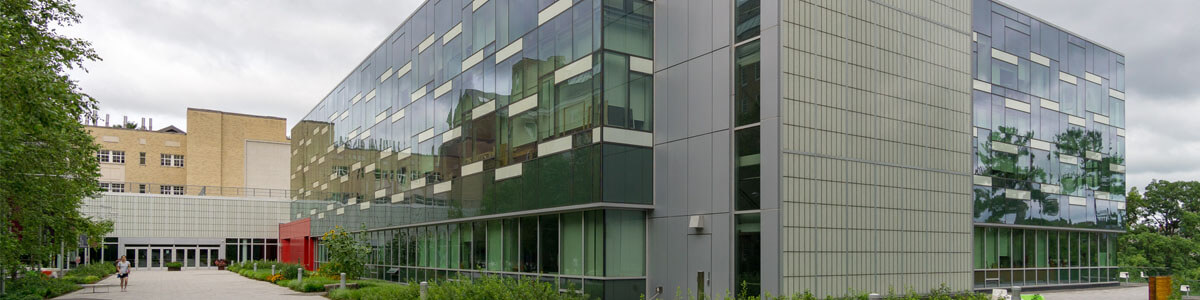
    Franklin Pierce Law Center was established in 1973 and is independent. The 1-acre campus is in a small town 70 miles north of Boston, Massachusetts. The primary mission of the law school is to create a learning environment that produces highly capable, confident professionals who will serve clients, employers, and the public with integrity and excellence. Students have access to federal, state, county, city, and local agencies, courts, correctional facilities, law firms, and legal aid organizations in the Concord area. Facilities of special interest to law students consist of the attorney general offices and city, state, and federal court clerkships. Housing for students is available around the school’s residential setting. About 95% of the law school facilities are accessible to the physically disabled.

    Franklin Pierce Law Center, Franklin Pierce Law Center Law School Academics

    In addition to the J.D., the law school offers the LL.M. and Master of Intellectual Property Law; Master of Commerce and Technology and Law, and Master of International Criminal Law and Justice. Students may take relevant courses in other programs and apply credit toward the J.D.; a maximum of 8 credits may be applied. The following joint degrees may be earned: J.D./M.C.T. (Juris Doctor/Master of Commerce and Technology Law), J.D./M.I.C.L.J. (Juris Doctor/Master of International Criminal Law and Justice), and J.D./M.I.P. (Juris Doctor/Master of Intellectual Property).

    The Franklin Pierce Law Center offers concentrations in corporate law, criminal law, entertainment law, family law, intellectual property law, international law, juvenile law, litigation, tax law, legal services, and regulatory and administrative law. In addition, Pierce Law operates 6 clinics in offices designed to emulate a state-of-the-art law office; second- and third-year students represent actual clients in a range of matters. Students receive either 4 or 5 credits. Clinics include the Intellectual Property & Business Transaction Clinic, Administrative Advocacy Clinic, Consumer & Commercial Law Clinic, Criminal Practice Clinic, Appellate Defender Program, and IP Amicus Clinic. Research seminars are offered in medical decision making, supreme court issues, and advanced legal research. Externships are available to students after the third semester. Externships are part time for 4 credits or full time for 12 credits. The school has a large number of regular placements and students may design their own externship as long as it is appropriate for the number of credits and with an experienced practitioner who has committed to educating the student. Second-and third-year students may also take independent study with a specific faculty member for a maximum of 4 credits. Periodically, speakers are invited to the school to lecture on a variety of subjects, including civil rights, health law, patent law, and corporate law. Study abroad is possible through programs provided by ABA-approved schools. In addition, Pierce Law sponsors the Intellectual Property Seminar Institute in Beijing, China (with Tsinghua University) and the eLaw Summer Institute in Cork, Ireland (with University College Cork). Computer tutorial programs are offered to all students. The Academic Success Program works with students individually and in small groups. Teaching assistants are available for individual consultation; all first-year courses have teaching assistants for discussion and explanation. Various student organizations bring in speakers, special programs, and conferences throughout the year. The most widely taken electives are Evidence, Copyright and Trademarks.

    To earn the J.D., candidates must complete 85 total credits, of which 39 are for required courses. They must maintain a minimum GPA of 2.0 in the required courses. The following first-year courses are required of all students: 1 legal perspective course, Civil Procedure, Constitutional Law, Contracts, Legal Skills I and II, Property, and Torts. Required upper-level courses consist of Administrative Law, Criminal Procedure I, and Professional Responsibility. The required orientation program for first-year students is a 3-day orientation program that includes an introduction to the Career Services Center and student organizations, a demonstration of briefing cases, service as a juror for a mock trial, and social events such as an evening with a faculty host at their home.

    In order to graduate, candidates must have a GPA of 2.0, have completed the upper-division writing requirement, and have completed 85 credits, have 6 full-time semesters of residency, offset all credits below C- with an equal number of credits of B- or above, have satisfied any terms of academic probation or financial obligation, and not be the subject of an alleged Honor Code violation.

    Franklin Pierce Law Center, Franklin Pierce Law Center Law School Unique Programs

    Library

    The law library contains 260,165 hard-copy volumes and 545,214 microform volume equivalents, and subscribes to 1227 serial publications. Such on-line databases and networks as CALI, DIALOG, Legal-Trac, LEXIS, LOIS, NEXIS, WESTLAW, Congressional, Jstor, BNA IP Library, CCH IP Library, U.S.L.W., UN Treaty Collection, Oceana Tiara, and CCH Tay Research Network are available to law students for research. Special library collections include an intellectual property special collection, a repository for the World Intellectual Property Organization (WIPO), a federal GPO selective depository, and an education law special collection. Recently, the library expanded and renovated the ground floor and third floor with updated carpeting and lighting, new chairs and reading lamps. The ratio of library volumes to faculty is 10,840 to 1 and to students is 591 to 1. The ratio of seats in the library to students is 1 to 2.

    Special Consideration

    The law school recruits minority and disadvantaged students by participating in minority programs such as the Council on Legal Education Opportunity (CLEO) and the Puerto Rican Legal Defense Fund, actively recruiting self-identified minorities through the Law School Admission Council, and offering diversity scholarships. Students are also invited to submit a supplemental statement addressing their challenges and achievements. Requirements are not different for out-of-state students. Transfer students must have one year of credit, have a minimum GPA of 3, and have attended an ABA-approved law school.

    Franklin Pierce Law Center, Franklin Pierce Law Center Law School Admissions

    Increase your salary, get your degree in your spare time - FREE Application to Search Online Universities for a limited time

    In the fall 2007 first-year class, 1123 applied, 559 were accepted, and 138 enrolled. Two transfers enrolled. The median LSAT percentile of the most recent first-year class was 53; the median GPA was 3.22 on a scale of 4.3. The lowest LSAT percentile accepted was 20; the highest was 99.

    Applicants must have a bachelor’s degree and take the LSAT. The most important admission factors include maturity, academic achievement, and motivations. No specific undergraduate courses are required. Candidates are interviewed.

    The application deadline for fall entry is April 1. Applicants should submit an application form, LSAT results, transcripts, a personal statement, TOEFL for non-English speaking (native), a nonrefundable application fee of $55, and 2 letters of recommendation. Notification of the admissions decision is on a rolling basis. The latest acceptable LSAT test date for fall entry is June. The law school uses the LSDAS.

    Franklin Pierce Law Center, Franklin Pierce Law Center Law School Financial Aid

    About 76% of current law students receive some form of aid. The average annual amount of aid from all sources combined, including scholarships, loans, and work contracts, is $34,900. Awards are based on need and merit. Required financial statements are the FAFSA, Pierce Law application, and tax return. The aid application deadline for fall entry is open. Special funds for minority or disadvantaged students include diversity scholarships that are available to members of groups currently underrepresented in the law center community. They are awarded based on academic and community involvement factors. First-year students are notified about their financial aid application on a rolling basis after application and acceptance.

    Franklin Pierce Law Center, Franklin Pierce Law Center Law School Students

    In a recent year, about 40% of the student body were women; 12%, minorities; 1%, African American; 6%, Asian American; 3%, Hispanic; and 2%, International. The majority of students came from the Northeast (42%). The average age of entering students is 27; age range is 21 to 51. About 33% of students enter directly from undergraduate school, 17% have a graduate degree, and 67% have worked full-time prior to entering law school. About 8% drop out after the first year for academic or personal reasons; 90% remain to receive a law degree.

    Student-edited publications are IDEA: The Journal Of Law and Technology and Pierce Law Review. The Annual Survey of New Hampshire Law, which publishes articles focusing on recent opinions of the New Hampshire Supreme Court, is a 4-credit, 2-semester course in which second-year students write articles and a third-year student serves as editor. Moot court competitions include the required appellate argument for second semester first-year students. Students annually enter the Giles Sutherland Rich Intellectual Property Moot Court, Saul Lefkowitz Moot Court Competition, National Health Law Competition, Association of Trial Lawyers of America, and Student Trial Advocacy Competition. Students enter legal essay writing contests on a volunteer basis. Law student organizations, local chapters of national associations and campus organizations, include Student Intellectual Property Association, Women Law Students Association, Licensing Executive Society, Minority Law Students Association, Phi Alpha Delta, International Law Students Association, Student Bar Association, and Black Law Students Association.

    The law school operates on a traditional semester basis. Courses for full-time students are offered both day and evening and must be completed within 3 years. There is no part-time program. New students are admitted in the fall. There is a 7-week summer session. Transferable summer courses are offered.

    Comment and Corrections Make a comment …

    Familiar with this University? We would love to hear about your experience. Feel free to add comments or additional information regarding Franklin Pierce Law Center Law School.