Logo-stateuniv

StateUniversity.com – U.S. University Directory   [ Home » University List » Minnesota ]

100 Church Street SE
Minneapolis, MN 55455-0213
p. 612-625-5000
w. www1.umn.edu/twincities/index.php

University of Minnesota-Twin Cities

Minneapolis, MN

University of Minnesota-Twin Cities Rating: 4.0/5 (6 votes)

Request Info Compare This School What's my Chance of Admission?

Related Schools

Related schools and/or departments

Nearby Schools

Schools geographically nearby

Similar Schools

Schools similar in rank, size, etc.

Information Summary

Ranks 8th in Minnesota and 165th overall
See the entire top 2,000 colleges and universities list
» See more detail

Add an image …

University of Minnesota-Twin Cities School Images

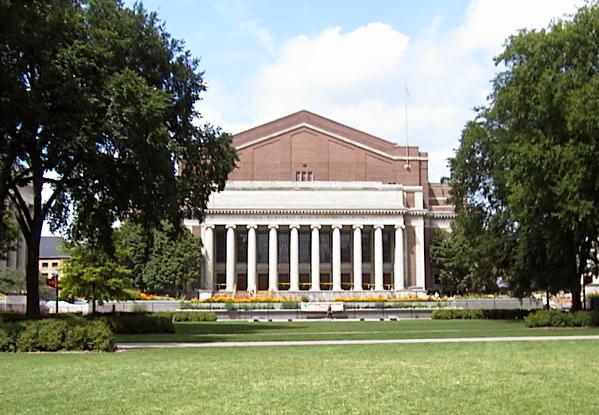
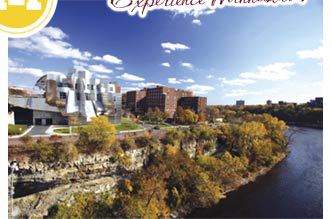
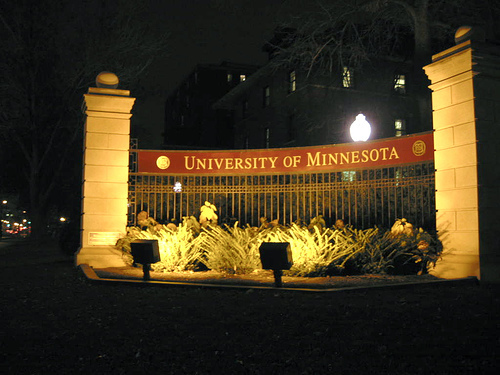
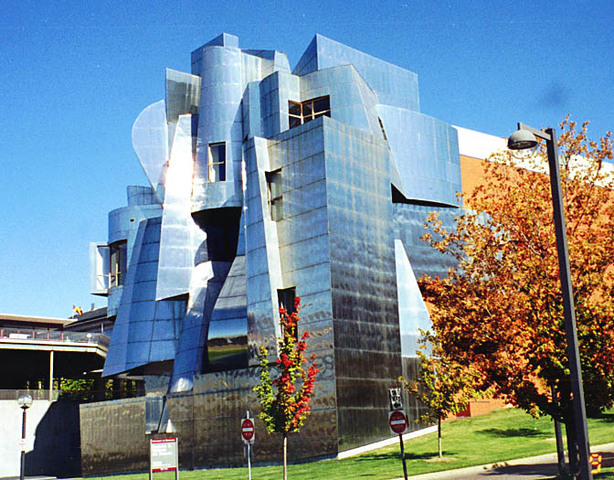
Entrance :: University of Minnesota-Twin Cities Weisman Art Museum :: University of Minnesota-Twin Cities Northop Auditorium :: University of Minnesota-Twin Cities Twin city :: University of Minnesota-Twin Cities University of Minnesota-Twin Cities

University of Minnesota-Twin Cities Introduction

The University of Minnesota TwinCities (U of M) is the oldest and, with over 51,000 students enrolled at any particular time, the largest university in the state of Minnesota and the fourth-largest in the nation. U of M began as a preparatory school, but it was reclassified as a college in 1869. The original campus was located at the top of Saint Anthony Falls on the Mississippi.

Campus

U of M has one small campus in St. Paul and two main sections in Minneapolis, facing each other on either side of the Mississippi. The East Bank is the larger portion, encompassing 307 acres.

Within the East Bank section are several smaller sub-sections. The Knoll, in the northwest, houses most of the humanities departments, including the College of Education and Human Development and The Institute for Advanced Study. The Northrop Mall is home to the Cyrus Northrop Memorial Auditorium, Coffman Memorial Union, the College of Liberal Arts, and the College of Science and Engineering. In the southeast portion of the East Bank is the Health area, which contains the College of Pharmacy, the School of Nursing, the School of Denistry, the Medical School, the School of Public Health, and the Fairview Hospitals and Clinics. The Frederick R. Weisman Art Museum, on the East Bank campus, was designed by architect Frank Gehry. The East Bank is also home to Greek row, a collection of fraternities and sororities.

The West Bank encompasses 53 acres on the west side of the Mississippi, and includes the theater, dance, music, and art facilities as well as most of the social sciences, including the Carlson School of Management, the Hubert H. Humphrey Institute of Public Affairs, and the law school. Several buildings are connected by pedestrian tunnels called “The Gopher Way” for the convenience of students during notoriously cold Minnesota winters. Students can cross from one side of the campus to the other via the double-decked Washington Avenue Bridge.

Because many students take classes on both the Minnesota and St. Paul campuses, the university runs a shuttle service between the campuses. The shuttle is free for students.
University of Minnesota-Twin Cities Academics

There are 19 schools and colleges at U of M with 150 degree programs. Schools include the Center for Allied Health Programs, College of Biological Sciences, College of Continuing Education, School of Dentistry, College of Design, College of Education and Human Development, College of Food, Agricultural, and Natural Resource Sciences, Law School, College of Liberal Arts, Carlson School of Management, Medical School, School of Nursing, College of Pharmacy, Hubert H. Humphrey School of Public Affairs, School of Public Health, College of Science and Engineering, and College of Veterinary Medicine. Several different accrediting and evaluating agencies consider U of M to be one of the top research universities in the United States.

Online Education

U of M is a leader in online education, offering bachelor’s master’s, doctoral, and specialty degrees entirely online. Financial aid awards can be used equally for online education as for on-campus education. Students interested in online classes will need a personal computer, a high-speed internet connection, a newer version of a standard web browser, and access to email, word processing, and other standard programs and software. Some individual classes have further requirements.

Most Popular Fields of Study

The top 5 fields of study completed at University of Minnesota-Twin Cities.
» See more detail

University of Minnesota-Twin Cities Admissions

Admission to U of M is highly competitive, with SAT averages of admitted students in the 1300s. Around 70% of applicants are admittied in any given year.

Financial Aid

U of M is committed to meeting the financial of needs of their students to the best of their ability. About 75% of enrolled students receive financial aid. In addition to the range of financial aid options available to any college or university student in the U.S., U of M offers a wide range of unique scholarships based on both merit and need. As of 2011, a single scholarship from U of M could pay up to $48,000 over the course of an undergraduate career. The University of Minnesota Promise Scholarships program guarantees a scholarship to any eligible new Minnesota resident undergraduate with a family income under $100,000.

Student Financial Aid Details

How many students use Financial Aid, and how much do they use?
University of Minnesota-Twin Cities 1322nd for the average student loan amount.
Secrets to getting the best Minnesota scholarships and financial aid
Effective as of 2010-09-21
» See more detail

University of Minnesota-Twin Cities Students

There are hundreds of student organizations on campus, including all three branches of the ROTC.

Student Publications

Two daily student papers are produced at U of M: The Minnesota Daily, which is the largest student-run paper in the nation, and Minnesota Reporter. Both papers come out in print from Monday to Thursday with an on-line edition on Friday. Students also produce a weekly news and opinion magazine, The Wake Student Magazine, and Liminal, a literary journal. The Independent Press Association named The Wake the nation’s best campus publication in 2006. Another monthly magazine, Minnesota Republic, represents a conservative viewpoint.

Student Radio and Television

KUOM, also known as Radio K, is the student-run radio station. It broadcasts independent music at 770 AM during the days, 106.5 FM during the evenings and weekends, and online at www.radiok.org. U of M also broadcasts television channel KTCI, the local PBS affiliate.

Student Government

Unlike most colleges and universities, U of M’s student government is called by the name of their state. Minnesota Student Association (MSA) represents undergraduates in administrative and policy matters. MSA runs a late-night bus service called The MSA Express.

The Graduate and Professional Student Assembly (GAPSA) is the counterpart for graduate students. It is the largest graduate student governmental body in the United States, with over 16,000 members.

Housing and Residential Life

The Housing and Residential Life Office offers on-campus housing in an assortment of residence halls and apartments. Their goals are to provide facilities for any student who desires them, including apartment complexes for students with families. The largest residence hall on campus, Middlebrook Hall, is home to 900 students, while the most popular campus housing is the group of residence halls known as the Superblock, which takes up four city blocks with four very large dormitories—Territorial, Frontier, Pioneer, and Centennial Halls. The office also works to enhance housing opportunities for students living off-campus and to coordinate transportation for these students as necessary.

Residential dining at U of M at any of the school’s six dining halls offers a wide range of options, including vegetarian choices, vegan choices, organic choices, and gluten-free choices. The dining program uses a significant amount of locally grown produce, including some farmed and produced right on campus, such as cheese from the U of M Cheese Lab, meat from the U of M Meat Lab, and the student-run Cornercopia Farm.

In addition to traditional residential dining the U of M campus features a large number of coffee shops, convenience stores, fast food outlets, and sandwich shops. Students can order food online at a small selection of campus restaurants. For an upscale meal on campus, students may visit the dining room at the Minnesota Landscape Arboretum. On special occasions the Arboretum hosts traditional English teas, complete with scones, trifle, and tea with lemon and cream.

Student Enrollment Demographics

How many students are enrolled at University of Minnesota-Twin Cities?
» See more detail

Student Graduation Demographics

How many students graduated at University of Minnesota-Twin Cities?
» See more detail

Athletics

The athletics department is known as the Golden Gophers, and the mascot is Goldy Gopher. The fight song, Minnesota Rouser, was written for U of M by John Phillip Sousa. U of M belongs to NCAA Division 1-A in football and Division 1 in men’s and women’s basketball and in ice hockey. The university belongs to the Big Ten Conference and the Western Collegiate Hockey Association. U of M’s archrival in football is the University of Wisconsin-Madison. Every year, these two teams play each other for a trophy known as Pau Bunyan’s Axe. The hockey team is particularly well known nationally and internationally for its excellence for the program’s tendency to stock the team almost entirely with players from Minnesota.

Alumni

The list of notable alumni from U of M is enormous and contains several Nobel Laureates, Pulitzer Prize winners, and other prestigious award winners. Several members of Congress, U.S. Ambassadors, diplomats, governors, federal judges, Attorney Generals, and other notable politicians are alumni. Vice-Presidents of the United States Hubert H. Humphrey and Walter Mondale both attended U of M.

Well-known alumni in the arts and entertainment industries include Loni Anderson, Maria Bamford, Carol Bly, Jessica Blank, Bob Dylan, Henry Fonda, Garrison Keillor, T.R. Knight, Ron Perlman, Robert Pirsig, and Yanni. Especially renowned professional athletes who attended U of M include Ric Flair, Bobby Bell, Herb Brooks, Rene Capo, Carl Eller, Paul Giel, Jack Hannahan, Kevin McvHale, Mark Merrill, Darrell Reid, Festus Tierney, Rick Upchurch, Ben Utecht, Krissy Wendell, Lindsay Whalen, Charles “Bud” Wilkinson, and Dave Winfield.

Faculty

The huge and star-studded faculty at U of M include too many well-known academics and intellectuals to name in their entirety, but some of the best-known include political commentator Hyman “Hy” Berman, Green Revolution creator Norman Borlaug, poet Michael Dennis Browne, Poet Ray Gonzalez, Beowulf scholar Frederick Klaeber, saxophonist Eugene Rousseau, poet Allen Tate, and Pulitzer Prize-winning author Robert Penn Warren.

Bibliography

Admissions. University of Minnesota Twin Cities. Web. 20 Apr. 2011.

Digital Campus. University of Minnesota Twin Cities. Web. 20 Apr. 2011.

Dining. University of Minnesota Twin Cities. Web. 20 Apr. 2011.

Fiske, Edward B. Fiske Guide to Colleges 2011. Chicago: Sourcebooks, 2010. Print.

Housing. University of Minnesota Twin Cities. Web. 20 Apr. 2011.

Pope, Loren. Looking Beyond the Ivy League: Finding the College That’s Right for You. New York: Penguin. 2007. Print.

Campus Crime Statistics

» See more detail

Demographics – Main Campus and Surrounding Areas

Reported area around or near Minneapolis, MN 55455-0213
Surrounding communityLarge city (inside urban area, pop. over 250,000)
Total Population2,036 (2,036 urban / N/A rural)
Households6 (3.33 people per house)
Median Household Income$66,250
Families1 (2.00 people per family)
» See more detail

Add a video …

University of Minnesota-Twin Cities School Videos

Comment and Corrections

Make a Comment …

Feel free to add comments or additional information regarding University of Minnesota-Twin Cities, or discuss this school in the University Discussion Forum

Fred about 1 month ago Fred


The main problem with this school is its high cost of attendance in relation to the market. The tuition is higher than the market value yet the board continues to hike tuition because they don't have the mental capability nor courage to balance their budget. While tuition rises, spending does too. Each year they spend millions on upgrades and "improvements." a prime example is Folwell Hall. They spent about 2 million dollars renovating it. What did they change? They replaced the old air conditions with modern ones because they are "too load" and "disrupt class discussion." When I toured the renovated classrooms, they replaced the utilitarian student desks with chair-desks that had no functionality because the desk park is smaller than a textbook closed! These chairs seemed to have no function other than to look nice and modern--what a farce. When the U increases its tuition right on schedule every year, they boast that they are giving away more and more scholarship, like the U promise scholarship. What Joy! My poverty stricken friend received a whopping $200 for the year. Big Whoop, at least he can pay for 2 of the 15 books he needs for the year. The next plan for tuition hikes is a $2000 increase in undergrad tuition for any students in the Carlson School of Management. They say it won't affect the students much because the degrees they are getting are more profitable. They plan, of course, to spend the extra increase in revenue to add 2 professors who would only teach one class and spend the rest of the time on research. Public Schooling at its best! Hopefully in the near future they will realize that some students can't afford to pay 100000 in debt for an undergrad degree. Oh, and by the way, the majority of students don't graduated in four years. Most graduate in five or six years or have to leave because they can't afford the minimum payments and get nailed with the repayment all at once. If you have parents who make 250000 a year or more, the U is a great choice, unless they want you to pay by yourself (in that case, your screwed because they don't reward financial aid to those of wealthy lineage.

vienna almost 5 years ago vienna


for the school do you need 2 years of a high school language? im only 15 but I'd like to know if I'll need to take one to get into your college. sincerly, Vienna Opine

This website and associated pages are not associated with, endorsed by, or sponsored by University of Minnesota-Twin Cities.
StateUniversity.com has no official or unofficial affiliation with University of Minnesota-Twin Cities.


App_store_badge

Click here to download our new iPhone/iPod app.
Find the closest or best matched schools for you!